 ChatGPT
 Claude
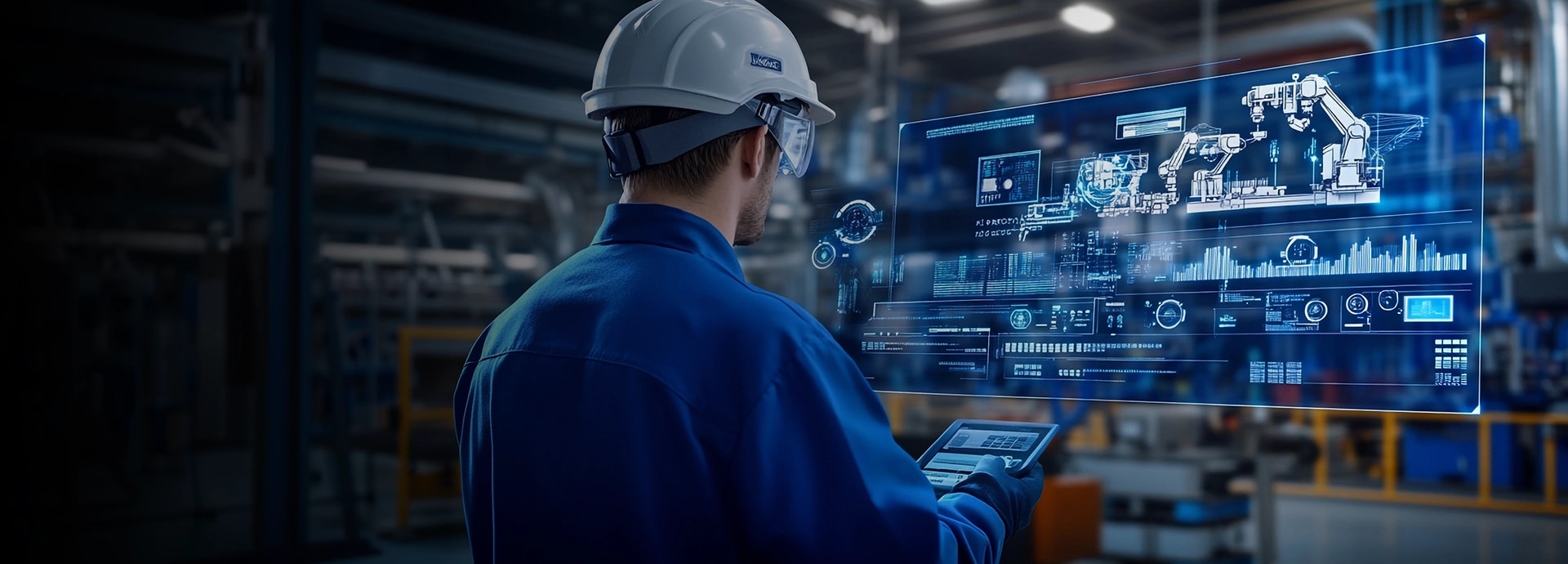
Manufacturing is moving into a new era where machines, people, processes, and data work as one connected ecosystem. This transformation is at the heart of the Digital Factory- where digital technologies help manufacturers improve visibility, productivity, quality, and decision-making.
The goal is no longer just to automate individual machines. It is to connect the entire manufacturing operation, enabling information to move seamlessly from the shop floor to engineering, quality, maintenance, and management teams.
A connected Digital Factory forms a strong foundation for Smart Manufacturing and Industry 4.0.
What Is a Digital Factory?
A Digital Factory connects physical production systems with digital technologies to monitor, analyze, and improve manufacturing operations.
Traditional factories often have data spread across machines, MES, ERP, SCADA, quality systems, spreadsheets, and other applications. These systems may work independently, but disconnected data makes it difficult to understand the complete production picture.
A Digital Factory brings these systems together.
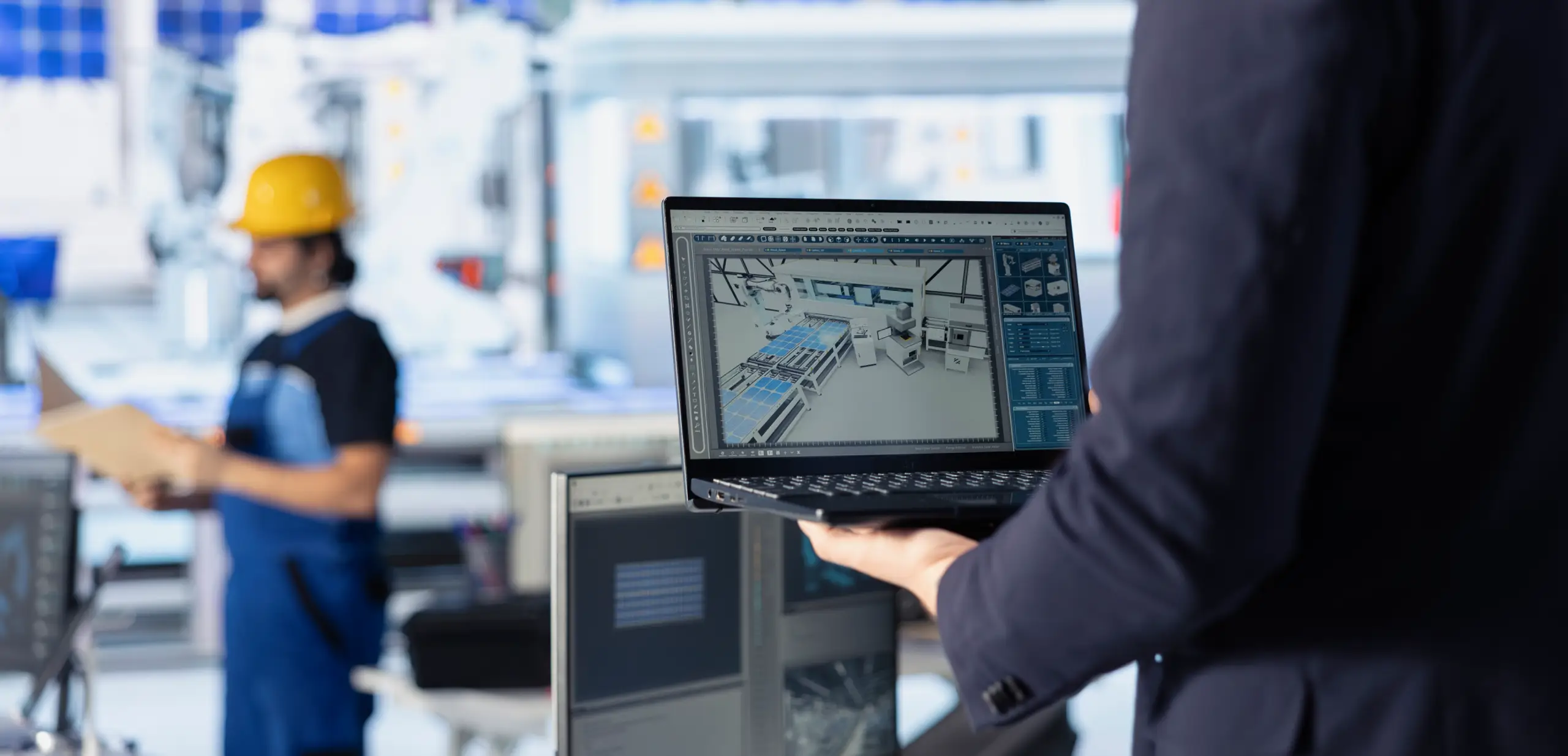
Data from PLCs, sensors, CNC machines, robots, MES, ERP, and other applications can be captured, integrated, and analyzed to provide actionable insights.
This allows manufacturers to move from:
What happened? → Why did it happen? → What could happen next?
Connecting People, Processes, and Production
Technology alone does not create a Digital Factory. The real value comes from connecting people, processes, and production.
People
Operators, engineers, supervisors, quality teams, and plant managers need the right information at the right time.
Real-time alerts and dashboards can help operators respond to machine issues faster, while engineers can use historical data to investigate recurring problems and managers can monitor performance across production lines.
Processes
Manufacturing processes such as production planning, quality inspection, maintenance, and material movement are closely connected.
When these processes share data, manufacturers gain better traceability and root-cause visibility.
For example, a quality issue can be linked back to the production batch, machine, material, or process conditions involved.
Production
The shop floor generates valuable data every second- cycle time, downtime, output, temperature, vibration, energy consumption, and machine utilization.
The challenge is not collecting this data. It is turning it into information that production teams can act on.
The Technology Behind a Connected Factory
A Digital Factory typically brings together several technology layers.
Industrial connectivity connects machines, PLCs, sensors, CNCs, and robots using technologies such as OPC UA, Modbus, IoT platforms, and edge computing.
Data integration connects information from MES, ERP, SCADA, quality, maintenance, and other systems.
Analytics and AI transform operational data into insights, helping identify patterns, anomalies, and potential issues.
Dashboards and applications bring these insights to operators, engineers, and decision-makers so they can take action.
Together, these layers create the digital backbone of the factory.
From Data to Intelligent Decisions
Simply collecting data does not make a factory digital. The value comes from using that data to make better decisions.
Consider machine downtime.
In a traditional environment, downtime may be recorded manually and reviewed at the end of a shift. In a connected factory, machine data can be captured automatically, downtime events can be categorized, and recurring patterns can be identified.
With AI and advanced analytics, manufacturers can go further by detecting abnormal machine behavior and identifying patterns that may indicate a potential failure.
This creates a shift from reactive maintenance toward predictive and condition-based maintenance.
The same approach can be applied to OEE improvement, quality inspection, production monitoring, energy management, and asset performance.
Key Benefits of a Digital Factory
A connected and intelligent manufacturing environment can help organizations achieve:
- Improved visibility through real-time production dashboards
- Higher productivity by identifying bottlenecks and inefficiencies
- Better quality through digital and AI-powered inspection
- Reduced downtime through continuous equipment monitoring
- Improved traceability by connecting production, machine, material, and quality data
- Faster decision-making with timely operational insights
- Better energy management through machine- and line-level monitoring
Industry 4.0 Is a Journey
Manufacturers do not need to transform an entire factory at once.
A practical Digital Factory journey can start with a specific, high-value business problem- such as reducing downtime, improving OEE, increasing production visibility, or improving quality inspection.
Once the use case delivers measurable value, it can be scaled across additional machines, production lines, and plants.
A simple approach is:
Identify the problem → Connect the data → Apply analytics and AI → Measure value → Scale
The focus should always be on solving a business problem rather than implementing technology for its own sake.
From Connected Operations to Manufacturing Intelligence
Connecting machines, systems, and production data is only the first step. The greater opportunity lies in bringing that information together, interpreting it in context, and turning it into action.
This is where NexOps by TVS Next comes in.
NexOps is a Manufacturing Intelligence Orchestration Solution that brings together shop-floor data, enterprise systems, analytics, and AI to create a connected view of manufacturing performance.
By connecting signals across production, quality, maintenance, energy, and asset performance, NexOps gives teams the context to understand what is happening, why it is happening, and where action is needed.
The progression moves beyond connectivity:
Connect the data → Add context → Apply intelligence → Orchestrate action → Improve continuously
The result is a more intelligent manufacturing operation where data, AI, and human decision-making work together to improve performance at scale.
The Future of Manufacturing is Orchestrated
The future factory will not be defined simply by how connected it is, but by how effectively manufacturing intelligence is translated into action.
A connected Digital Factory creates the foundation. The next step is to bring together insights across production, quality, maintenance, energy, and asset performance to support faster, more informed decisions.
The shift is clear:
Connected operations → Manufacturing intelligence → Orchestrated action
With NexOps, TVS Next brings these layers together through a Manufacturing Intelligence Orchestration Solution that turns fragmented shop-floor signals into actionable intelligence.
Ready to move from connected manufacturing to orchestrated intelligence? Explore NexOps.