
 ChatGPT
 Claude
What is Agile & why is it Important?
This way of working has become the most talked about topic in the past few years and yet unknown to many! One would be living in a stone age of Technology if this term is still unheard. Agile is everywhere: You name it and there you have it.
Since Agile is not a methodology but a mindset, there is still room for it to grow not only in the software development spectrum but across other businesses as well such as manufacturing, food & beverages, automobile industry and more. Agile mindset is a great asset to help businesses grow and come up with new products & services. Although Agile does not fall under the traditional business management techniques which are generally taught in top-notch business schools around the world, the good part is that the Agile mindset will not only survive in the coming years, but it will also show us the way to develop our mindset in business.
It`s not a surprise to hear why the new age organizations are trying hard to implement this. So, it’s important to understand what Agile means and why it is important.
Agile History: From where it all started
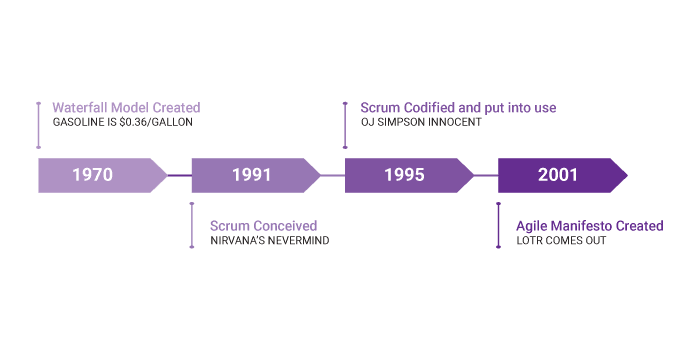 Going back to the history, the term Agile is derived from the Latin term “agilis” which means “nimble or quick,” and from the term “agree” which means “to set or keep in movement”.
Why is it becoming popular?
Agile has completely restructured the way the software industry works. This way of working has definitely boosted the success rate of projects by creating a great and new age work culture. With respect to the other ways of working, Agile process is quick enough to adjust to changes requested by the clients throughout the development lifecycle.
What is Agile Project Management?
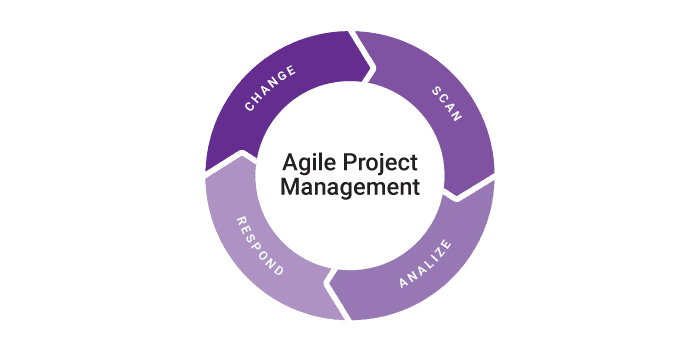 – As per the Agile Manifesto (2001) approach, Agile project management is an iterative approach to product delivery & it incrementally starts from the very start of the project instead of trying to deliver the entire product at once near the end.
– Agile works by breaking projects down into little bits of user functionality, prioritizing them, and then continuously delivering them in 2-4-week cycles called iterations or sprints. The customer’s priorities are well analyzed, prioritized and the team estimates how much time work will take in an iteration, as well as how to do the work.
– Performance is measured by customers at the end of the iteration. The lessons learned in each iteration are captured in retrospectives and used in future iterations. In this way, the products are constantly improved and the process for developing them also improved.
Need for Agile Principles and Agile Methodology
Do we know why some organizations are tending toward Agile Project Management?
Agile Project Management helps:
– To create a High-Quality product
– In providing Higher Customer Satisfaction
– Faster ROI
– To increase Product Control
– To help increase team performance, improve customer satisfaction and increase project versatility
– To be able to respond to market dynamics well
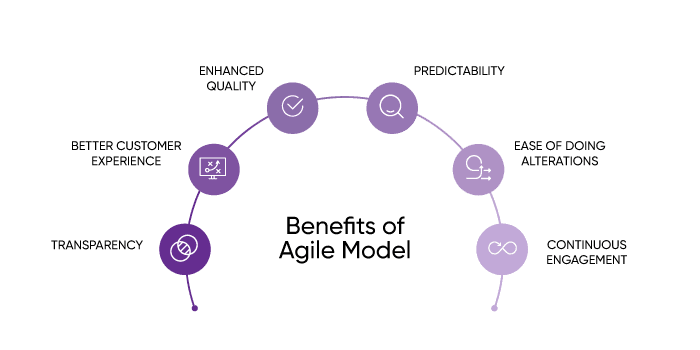 – Companies to embrace the idea of delivering business value early in the process making it easier to lower risks associated with development.
– During the project, end-user involvement is encouraged, providing visibility and transparency. There is continuous planning and feedback throughout the process, delivering value to the business from the beginning of the project.
Need for Agile Trainings:
– Agile trainings can clear up many misconceptions / misunderstandings about the operations of Agile.
– It can also help expose the underlying Agile concepts and clarify the differences between the various implementation method.
– Having all project team members (both technical and business) attend common training, ideally in the same class, can eliminate some of these problems. The shared understanding among the team members strongly increases the probability of the team inspecting and adapting together using a common language and practices, thus reducing conflicts in the future.
Conclusion: “Future in the Market”
Agile ways of working have become mainstream today and most of the organizations which leverage Agile ways of working and the culture of Agility are going to dominate their industries in coming future. Those organizations that do not take advantage of Agile are going to struggle to retain both customers and talented employees. At some point, their lack of business agility is going to threaten their very survival. Think about it, scale yourself because it’s now or never!
And it’s rightly said:
“Agility is principally about mindset, not practices” – Jim Highsmith