
Engineering Intelligence for NPD

From CAD file to a confident engineering decision.

NexForge connects CAD, PLM, ERP & RFQ history, accelerating quotes, part reuse & early design validation. Recommendations remain traceable, with engineers controlling approvals.

The engineering challenge

New products. Existing knowledge. Intelligence that connects the dots.

Across discrete engineering and enterprise systems, useful designs, part histories, manufacturing knowledge and previous RFQ decisions often remain difficult to discover and reuse.

NexForge connects these relationships through an engineering ontology—bringing parts, rules, costs and historical context together to inform the next engineering decision.

From disconnected records to connected engineering context
Three flagship use cases

Built for speed where it matters. Savings where they scale.

Design validation and part standardization reduce avoidable engineering iterations and duplicate work. RFQ intelligence connects this knowledge to more responsive, traceable customer proposals.

Intelligent Design Validation
01 / DESIGNIQ

Intelligent Design Validation

Assess engineering requirements, technical rules, historical designs and manufacturability context earlier in product development.

Value → Faster review & fewer avoidable iterations
Part Standardization
02 / REUSEIQ

Part Standardization

Discover existing designs, evaluate reuse suitability and connect standardization opportunities with available sourcing context.

Value → Reduced redesign & potential sourcing savings
Accelerated RFQ Response
03 / QUOTEIQ

Accelerated RFQ Response

Bring RFQ requirements, design files, similar parts, manufacturing considerations and cost information into a connected workflow.

Value → Faster RFQ drafts & customer responses
USE CASE 01 / DESIGNIQ

Validate earlier. Engineer with greater confidence.

Bring relevant technical rules, design history, geometry, manufacturing considerations and alternative-part intelligence into initial engineering evaluation. Keep human validation central to decisions.

  • Connect proposed designs with specifications and relevant rules
  • Review historical designs and potential alternatives
  • Carry engineering findings into team review and approval
Illustrative workflow
01 — Interpret design inputs and requirements
02 — Evaluate rules, context and comparable designs
03 — Surface validation findings and alternatives
04 — Engineer reviews decisions and next actions
Only demonstrated checks should be represented as automated. Final design approval stays with engineers.
TARGET RFQ DRAFT READINESS*~10–15 minDraft RFQ + AI insightsAfter required inputs are uploaded, subject to validated processing conditions.
Design decision velocityTrack time to preliminary engineering assessment.
Part standardization valueTrack usable design matches and verified avoidance.
RFQ responsivenessTrack time to technical draft and engineering review.
* Indicative timeline for initial RFQ draft generation, subject to input completeness and complexity. Final approval remains with engineers.
How the intelligence works

Beyond CAD. Connecting Engineering Intelligence

Multiple engineering analyses run on relevant inputs. An engineering ontology connects components, specifications, processes and historical records to provide shared context. Engineers review findings before decisions and approvals.
How NexForge engineering intelligence works
Customer RFQ / New Design Requirement / Existing Parts Catalog

Parallel Engineering Intelligence

CAD & DesignGeometry, drawings and specifications
Engineering AnalysisRequirements and rules
Engineering OntologyPart, design and process relationships
Similar PartsMatching and reuse
Historical KnowledgePrior designs and RFQs
Design Validation Insights
Part Reuse Opportunities
Draft RFQ & Cost Context
  1. Engineer Review
  2. Cross-Functional Collaboration
  3. Configured Approval / Workflows

Six capabilities powering the outcomes

01

CAD & Design Intelligence

Interpret geometry, technical drawings and design attributes.

02

Part Similarity & Reuse

Identify comparable components and existing designs.

03

Engineering Ontology & Context

Connect relationships across designs, parts, materials, processes and history.

04

Engineering Reasoning & Validation

Surface rule checks, alternatives and review findings.

05

Manufacturing & Cost Intelligence

Bring relevant process, cycle-time and cost context into engineering evaluation.

06

Engineering Copilot

Explore context-grounded answers and recommendations in natural language.

TVS Next
NexForge

CAD interoperability and geometry intelligence, engineering ontology and knowledge model, domain agents, validation workflows, RFQ and reuse applications, costing intelligence, and human-in-the-loop decision management.

Enterprise Data & AI Foundation

Secure, governed engineering data across structured and unstructured sources; semantic and contextual intelligence; enterprise AI services, search, agent orchestration, security, governance and scalable integration. Architecture can align with the customer's existing technology ecosystem.

Engineering Copilot

Ask better questions of your engineering data.

The GTM demo illustrates an engineering assistant that lets users explore part reuse, cycle-time drivers, cost context and design-rule considerations in natural language—with engineers reviewing the underlying information.

See NexForge in Action

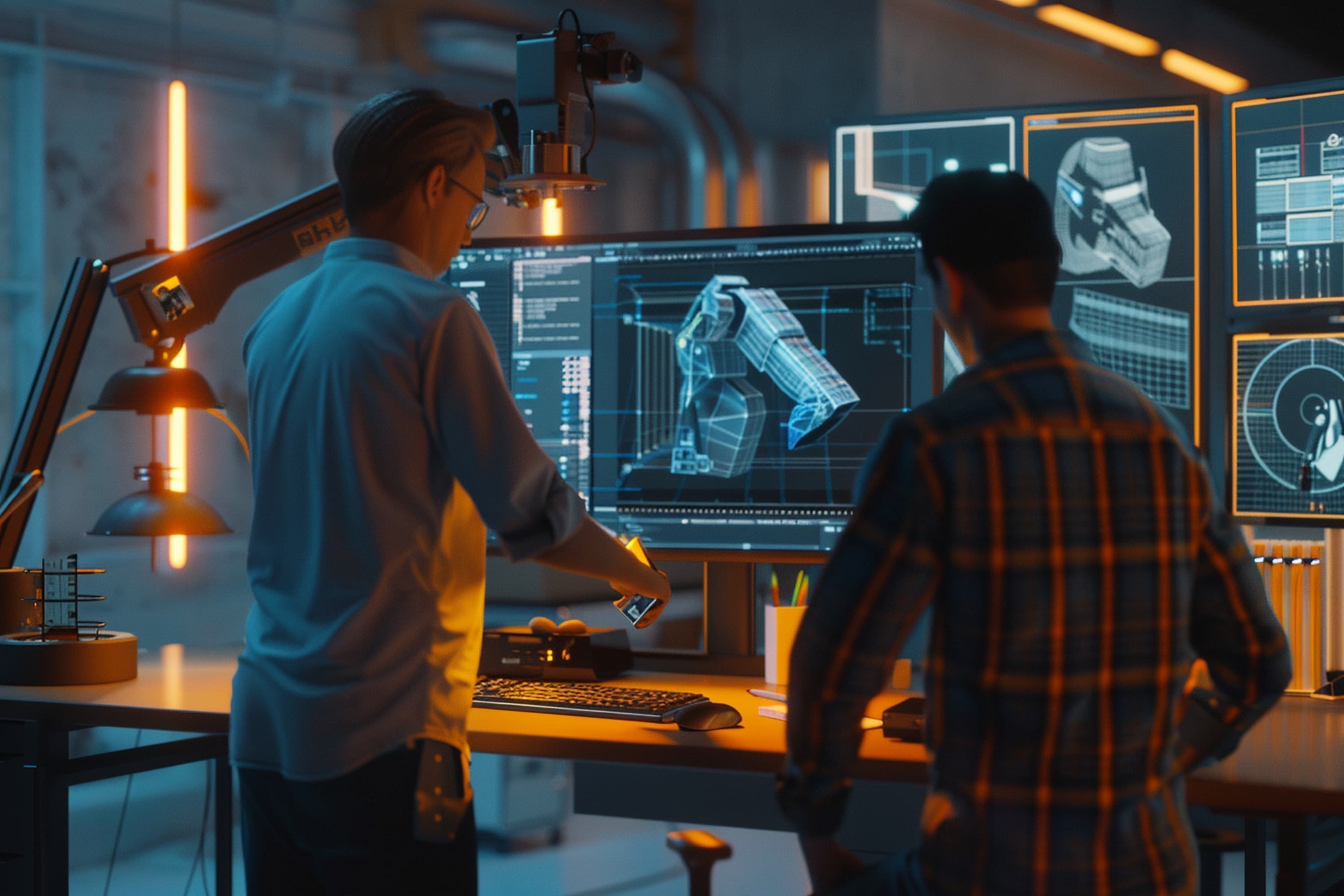
Engineer using the NexForge Engineering Copilot
Engineering CopilotIllustrative
Illustrative questions from the solution showcase
Can we reuse an existing part?
Part reuse assessment
  • Surface comparable components from existing engineering history.
  • Compare specifications, geometry and design attributes before reuse.
Illustrative evidence sources
  • CAD geometry
  • PLM history
  • engineering ontology
Illustrative content only; not connected to customer systems. Replace with approved product demo assets when available.
Engagement models

Start with measurable value. Scale Engineering Intelligence across the enterprise.

A phased commercial approach to establish quick value, prove outcomes and expand NexForge across engineering functions and business units.
1

RFQ Intelligence
Accelerator

Entry Offer
8–10 weeksIndicative pilot duration; validate against customer scope.
  • One product family and selected RFQs
  • CAD ingestion and engineering context
  • Historical design similarity
  • Initial process and cost estimation workflow
  • Human-approved proposal generation
2

Engineering Knowledge
Foundation

  • Engineering data integration and ontology
  • Historical design and RFQ knowledge discovery
  • Engineering rules and reusable knowledge
  • Broader product-family coverage
3

Enterprise Engineering
Intelligence

  • Scale across engineering functions and business units
  • Design reuse, validation and manufacturing intelligence
  • Advanced engineering agents and workflows
  • Enterprise integration and governance
Land-and-expand engagement with NexForge

Land-and-Expand Motion

  1. 01

    Land

    QuoteIQ pilot around one product family and a measurable RFQ bottleneck.

  2. 02

    Prove

    Demonstrate improvement in engineering turnaround and estimation consistency.

  3. 03

    Expand

    Introduce ReuseIQ and DesignIQ across product families, plants and business units.

  4. 04

    Scale

    Establish engineering intelligence as an enterprise capability on a governed data and AI foundation.

Industry showcase

Engineering Intelligence Drives Automotive

Reuters Automotive USA 2026, Detroit
Detroit | October 27–28, 2026

Reuters
Automotive USA
2026

Beyond the CAD File

PRESENTED WITH
NPD LAUNCH & SHOWCASE

Cross-functional AI workflows from concept to approval.

At Reuters Automotive USA 2026, we showcased our AI-powered NPD approach alongside Snowflake, connecting CAD, engineering history and manufacturing context to accelerate cross-functional engineering decisions.

Featured TVS Next speakers
Patrick SchwierkingPatrick SchwierkingChief Revenue Officer · TVS Next
Rupa MRupa MVice President – Data & AI · TVS Next
Explore the Showcase