
📢 TVS Next partners with Snowflake to redefine Data and AI outcomes.

Category Archive

Modernization

Creating and Executing an Actionable Digital Transformation Strategy in Healthcare

Digital Transformation in Healthcare

Digital transformation is the process of adding the latest digital technologies to improve how a business works.  Healthcare organizations will perform better by employing updated technology, and most of them are dealing with this shift by creating and implementing digital strategies. For healthcare leaders, this means creating a plan to update clinical workflows using technology, resulting in improved patient outcomes.

In this post, we will guide you in finding the right digital technology that best fits your organization’s vision and delivers better patient outcomes.

Going for Smart Digital System for the Future

Digital transformation is important for organizations. It helps them improve their services and meet the needs of their clients. But it is not always easy to find the right technology to meet your specific needs. That’s why it’s essential to understand your organization’s requirements before making the big move to a “digital first” model.

Healthcare organizations should regularly investigate how to deliver the best quality of care and be more efficient when it comes to customer experiences. Many times, this includes a review of the technology that is being used. Technology has revolutionized every industry, and healthcare is no different. By updating technology, you can simplify your organization’s workflows, leading to improved patient outcomes.

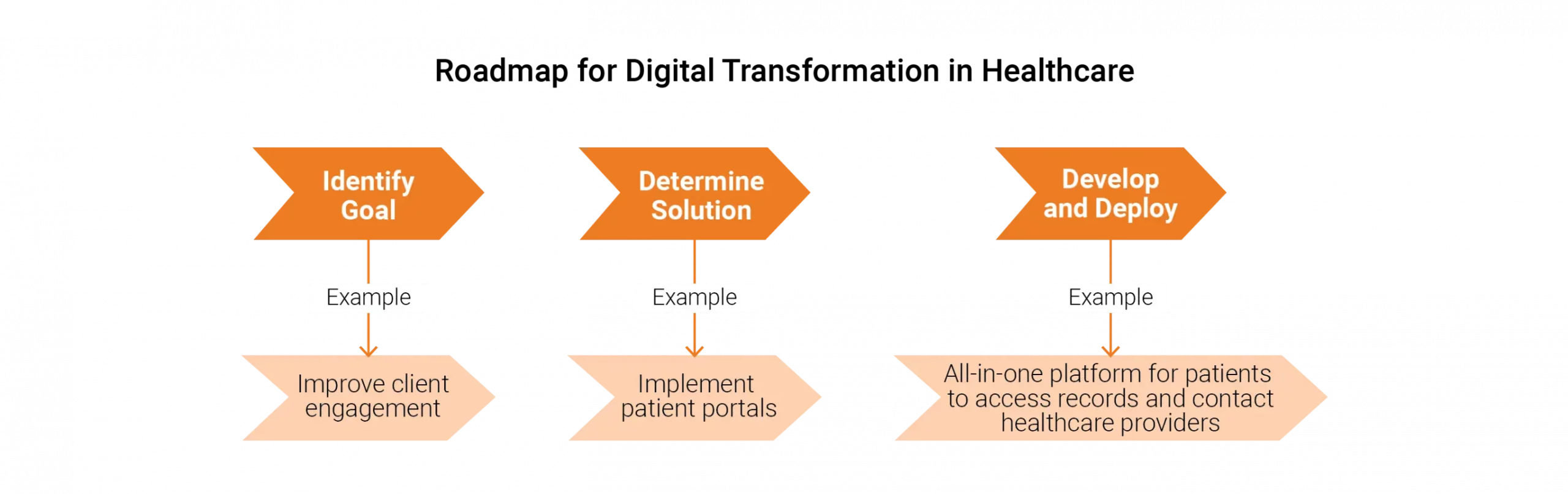
The first thing to develop is a clear understanding of what your organization wants to achieve. Are you looking to improve client engagement? Is there a loophole in your operations that’s draining your resources? Once you identify these problems, you will be better able to map out a plan for digital solutions.

If you plan to improve client engagement, you can start by implementing patient portals. It could be an all-in-one platform where patients can immediately access their health information. From here, they can contact their chosen healthcare professional when concerns arise.
Digital Transformation in Healthcare

Once you establish a clear direction, it’s time to search for reliable technology partners. This is crucial since you want to make sure you’re working with the right people and have the right team who can address the organization’s issues. Look for technologies that have a good track record of successful projects with other organizations.
Digital Transformation in Healthcare

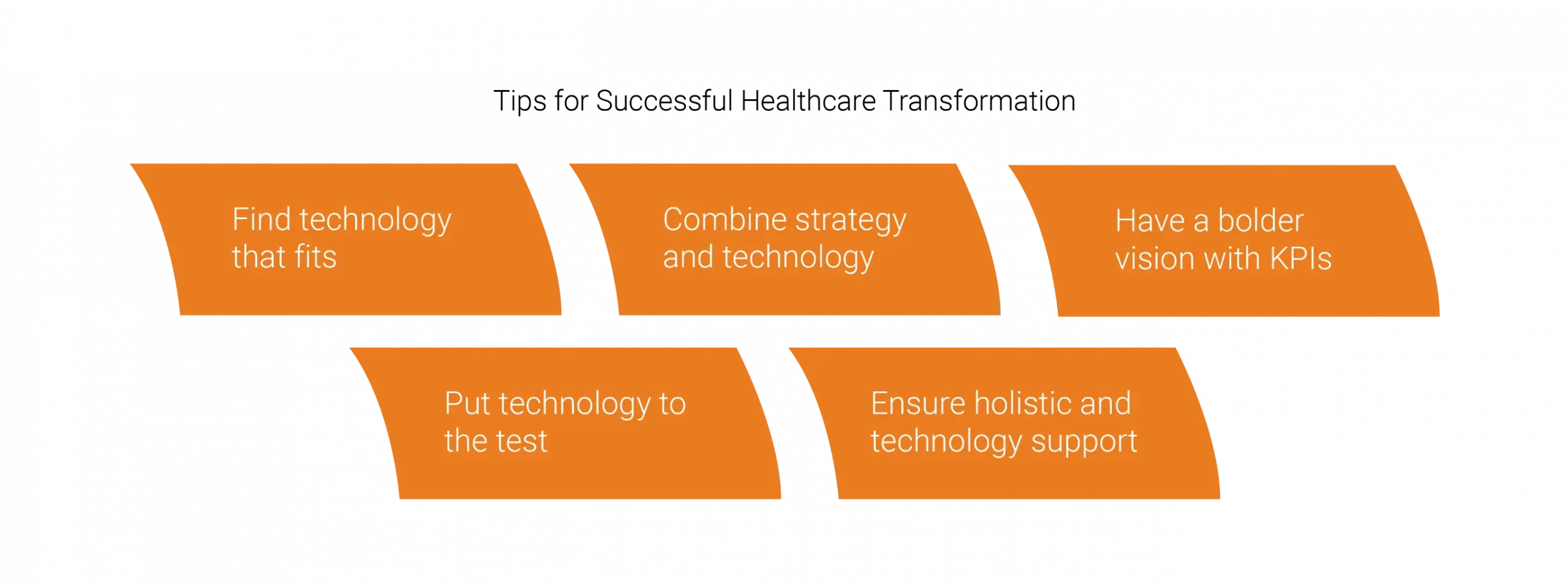
Find Technology that Fits

Data-driven decisions will help in the organization’s sustainability. Access to data is essential to making informed decisions and investing in the right technology combined with strategy.

The use of data analytics will help your team understand how your patients use the portal and the features they find most notable. Then, your team pairs this with technology and works on areas needing improvement.

Using data gives you information about the clinical interventions that are most efficient. You will find other aspects of care across the board that technology can solve.

When you use this information to make sound decisions, the digital transformation can go smoothly and help your healthcare organization to reach its goals.

Bolder Vision with KPIs

Executive health leaders must anchor decisions based on the organization’s ‘North Star.’ By doing this, organizations work on establishing a sustainable case for their business. Without this, it would be challenging to stay committed because of leadership misalignment.

Establishing a clear vision for digital transformation is pivotal for your organization. Furthermore, it will help set goals and KPIs to check the business strategy.

KPIs or Key Performance Indicators are crucial tools any organization should employ. It further helps track your digital transformation strategy’s performance, progress, success, and loopholes.

To improve patient engagement, you can use KPIs showing the frequency of use, patient satisfaction, and the number of booked appointments online. KPIs also help track the technology’s performance and adjust strategies as needed.

Joining Strategy and Technology Together

In the early planning stages, your organization should have already identified the technology that best fits the plan to put in place. During this phase, having key personnel identify their goals with technology will help you to start planning.

Also, with KPIs, digital transformation will help create scalable but realistic outcomes. Each step of this strategy will need a technology perspective, from doing research to roadmap creation.

Put technology to the test

Having a plan beforehand will help make a smoother transition from traditional to digital.

Establishing clear guidelines and responsibilities will help guide the team in what needs to be done and where they need to go. It also allows them to move more in implementing new initiatives with less confusion. The goal is to ensure everyone is on the same page and working toward a shared goal.

Once strategies are already in place, it’s time to put technology to the test before rolling it out for public use. Have a plan to test the digital platform and check for the efficiency of its functions. A process should be in place to help collect feedback and make changes moving forward.

Ensure holistic and technology support

Improving strategies and processes is crucial to your organization’s success. But, pairing this with the right technology makes it easier to scale your business.

With new initiatives, healthcare organizations need suitable infrastructures to support these endeavors. Organizations thrive with the right software, hardware, and networking capacities.

Like infrastructures, having the right people will help your organization adapt to these changes. Working with a reliable team of IT professionals will help. They can provide tech help and assist with installation during your digital transformation that aligns with your organization’s goals.
Progress Shouldn’t Be Delayed

Delaying digital transformation for your business means losing to the competition. Creating a clear strategy and plan ensures your business is up to date in addressing modern healthcare needs.

Incorporating digital technology is essential. Why? It ensures interactions are kept afloat, especially in the healthcare system. Key persons need to prepare for the future by taking the time to create strategies to solve current issues facing healthcare. Leveraging digital strategies ensures exponential growth and better management of resources.

Conclusion

We know that the healthcare system is shifting with the times. And for healthcare systems to stay ahead of the curve, adapting technology is the key to sustainability. And with it, businesses can have more room for growth in the future.

Digital transformation is a journey, not a destination. As you embark on this journey, it’s essential to remember that there is no one-size-fits-all solution.

The key is to find what works best for your organization and your patients. Use technology as leverage and a means to help your organization achieve success faster with fewer downtimes and costs.

By pairing a clear strategy with technology in mind, you can ensure that your healthcare organization is prepared for the future.

Should You Consider Terraform Enterprise?

Terraform Enterprise

One of the most popular infrastructure-as-a-code tools today, Terraform Enterprise works for small businesses and larger, enterprise-level corporations. Terraform Enterprise can support all public cloud platforms, also known as cloud-agnostic, but it can also work with the existing on-premise infrastructure of a company or organization.

Terraform Enterprise offers plenty of features that encourage collaboration and make the overall management of daily work practices more efficient. If you’ve been on the fence regarding the implementation of Terraform Enterprise, it’s crucial to understand what the employment of this platform might look like for you and if it makes sense for your company to use it in the first place. Understanding the capabilities and how they can improve your business are important considerations before taking the plunge regarding any software, Terraform included!

Understanding the Terraform Journey

There’s no question that the open-source version of Terraform Enterprise is the most popular. A massive reason for that is that companies typically begin using this version, utilizing a POC to work on growing an infrastructure. However, it’s common for many businesses to start using Enterprise over open-source as time passes and company needs evolve.

Launching your Terraform journey with a small team and a mutual understanding among that team regarding how to manage resources and files from a Terraform open-source perspective is advised. Companies use Terraform to configure the information they have stored in their cloud platform.

There’s no need to reconfigure and establish provisions all at once, so don’t be afraid to start slow, allowing Terraform to map out real-world (and real-time) resources that will assist in your application configuration and inevitably improve company performance.

Kicking off your company’s journey with Terraform means choosing the version that will keep you moving forward. Smaller teams will likely not need additional assistance other than the open-source version of Terraform to keep company-wide infrastructure in the right state.

However, as teams grow, or teams that are large from the start, will likely find a need to employ Terraform Enterprise. In a more substantial company, managing and maintaining the resources related to Terraform can become challenging. It’s common for administrative teams to develop a process using tools to help align Terraform’s integration.

While these new processes may help, there is often too much time spent creating a workflow that works around Terraform, which can defeat the original purpose of the software. Companies that work with remote teams need access to cloud service and better, more efficient access to cloud controls, and Terraform Enterprise can help safely manage that infrastructure. Still, companies need to determine the best way to implement a new way of doing without creating dependency on a specific team or team member.

Terraform Enterprise: Changing the Possibilities

Terraform Enterprise can change the way businesses of all sizes operate, but when employed incorrectly, it becomes a time-consuming challenge. In general, most digital modernization methods, including migration to the cloud, can harm business practices when done poorly. If you genuinely want to achieve operational efficiency, knowledge is the key.

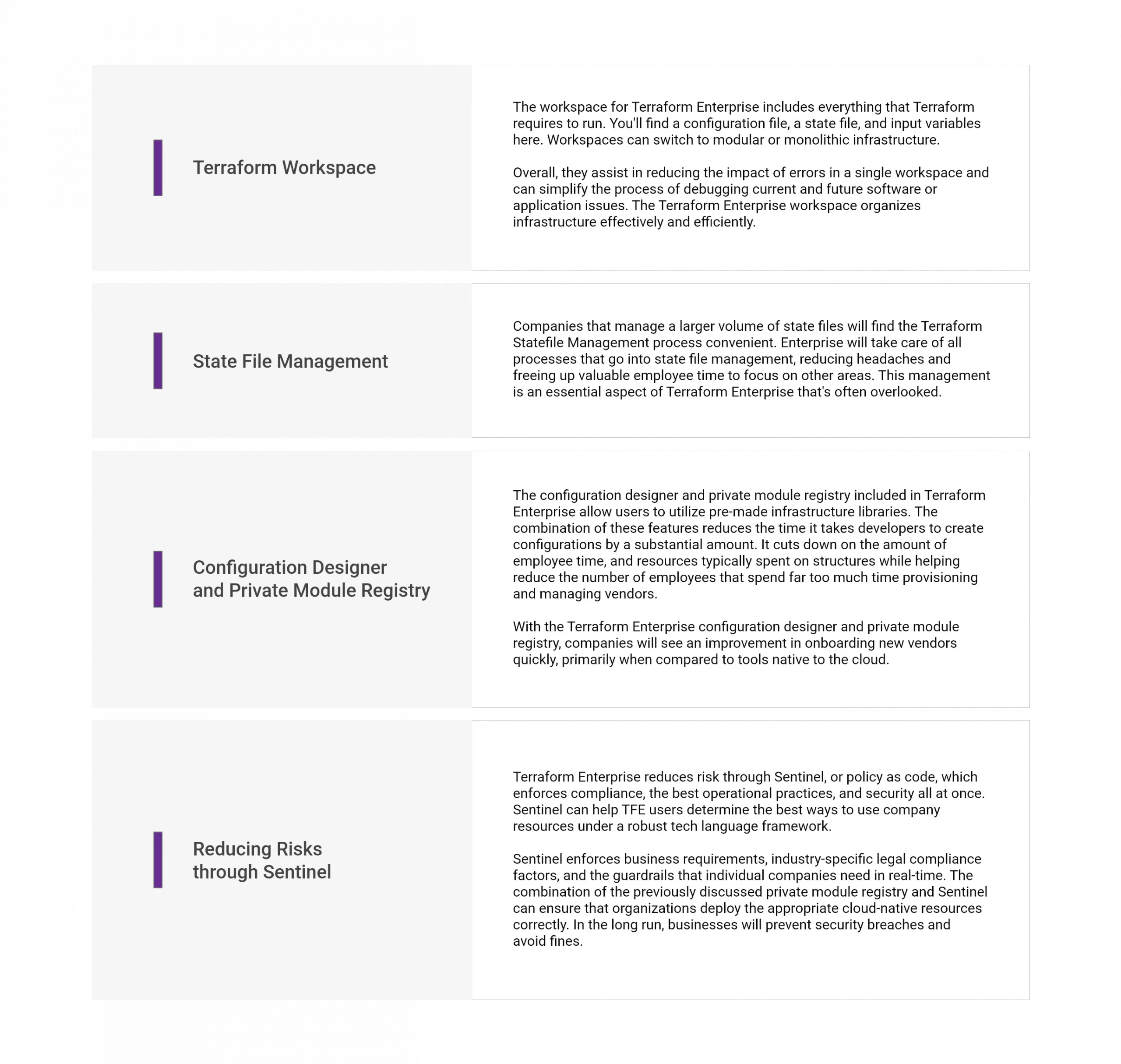
The features that come with Terraform Enterprise consist of most things that global development, operations, and IT teams are building from scratch. Not only does it have the capabilities that companies continue to chase through the modernization of legacy systems, but it can also assist in securely and consistently building infrastructure.

Let’s discuss some of the features that you’ll find with Terraform Enterprise, some of which may not apply to small businesses with few team members but still contain information that will be valuable in the future.

Terraform Enterprise

Choosing Terraform Enterprise

When choosing to implement a program like Terraform Enterprise, there is much to consider. First, it’s crucial to have a company team on hand that knows how to employ something like Terraform, or else you’ll end up working on new, unnecessary programs to help it function.

When you’ve got the teams in place, Terraform Enterprise is absolutely something to consider. From the collaboration capabilities to controlling cloud costs, Terraform Enterprise can be a saving grace for many businesses struggling to implement a time-saving workflow.

Cloud: Gateway to IT Infrastructure Modernization

IT Infrastructure Modernization

People used to have complete control over an organization’s assets and applications, but IT modernization is swiftly taking over. Current solutions give IT teams clear infrastructure visibility, real-time monitoring, and AI integration to automate management.

At first, the cloud was thought to make data centers obsolete, but the opposite is true. Enterprises are adopting a digital-first approach to business. Shifting business processes into the cloud while keeping a few workloads on-premises will accelerate digital transformation and enable IT modernization.

Installing infrastructure in data centers where IoT (Internet of Things) and edge computing operate will help lower latency and steady application performance.

Infrastructure modernization replaces legacy hardware systems and rationalizes and merges infrastructure by maximizing automation and cloud technology to improve productivity, redundancy, and availability.

Cloud Servers

The term “the cloud” refers to worldwide internet accessed servers and the software and databases that operate them. The cloud enables you to access files and applications from any location and almost any device.

Switching to cloud computing can help businesses save some IT and overhead costs. This is because they don’t need to update or maintain their servers; the cloud vendor does it. Small businesses that can’t afford their internal infrastructure can outsource their infrastructure requirements cheaply via the cloud.

How Cloud Computing Works

Cloud computing occurs through a technology called virtualization. Virtualization allows you to create a replicate, digital-only (virtual) computer that operates similar to a physical computer. Such a computer is termed a virtual machine.

Virtual machines can be sandboxed individually to prevent interaction with each other. This makes files and applications on one virtual machine non-visible to other virtual machines despite being hosted on the same physical computer.

Virtual machines also use their host hardware efficiently. Cloud providers can run many virtual machines simultaneously and serve numerous customers at a low cost. Users access cloud services through a browser or an app connected to the cloud via the internet.

Cloud computing differs from the traditional client-server version of the internet. In the conventional client-server version, clients place requests to servers, and servers respond. Conversely, cloud computing responds to requests, runs programs, and stores data on a client’s behalf.

IT Infrastructure Modernization

Types of Cloud Deployment

Cloud deployments depend on cloud servers’ location and how they are managed. The most common implementations are:

Private cloud — this refers to a data center, server, or distributed network allocated to one organization. Examples include Oracle Cloud Platform, Microsoft Azure Stack, and Cisco CloudCenter.

Public cloud – these are clouds shared by various organizations and run by external vendors. Different companies may also share each individual server (virtual machine). Examples of public clouds include Google Cloud, IBM’s Blue Cloud, and Sun Cloud.

Hybrid cloud – this is a mixture of private and public clouds. A company may use its private cloud for specific services and the public cloud for others. Examples include AWS Outposts, Azure Arc, and Google Anthos.

Multi-cloud — is a deployment where multiple public clouds are used. One company hires virtual servers and services from various external vendors. Examples of multi-cloud providers are Amazon Web Services (AWS), IBM, Microsoft Azure, and Google Cloud Platform (GCP).

What Is Containerization?

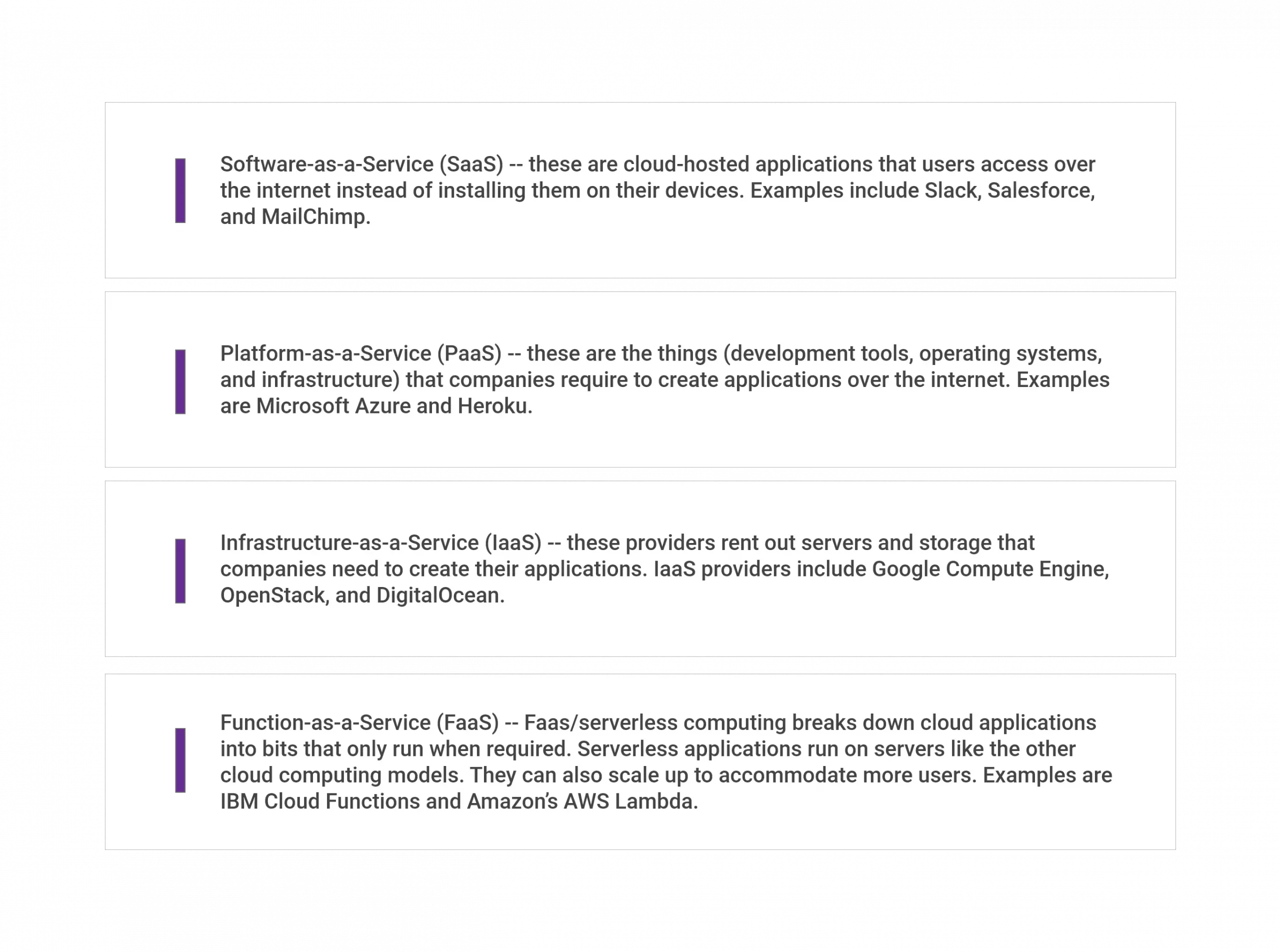
Containerization is a form of cloud virtualization technology where applications run in individual user spaces (containers) while sharing the same operating system. Containers are part of the Platform-as-a-Service (PaaS) model.

The container is abstracted from the host operating system, and containerized applications can run on different types of infrastructure without refactoring for each ecosystem.

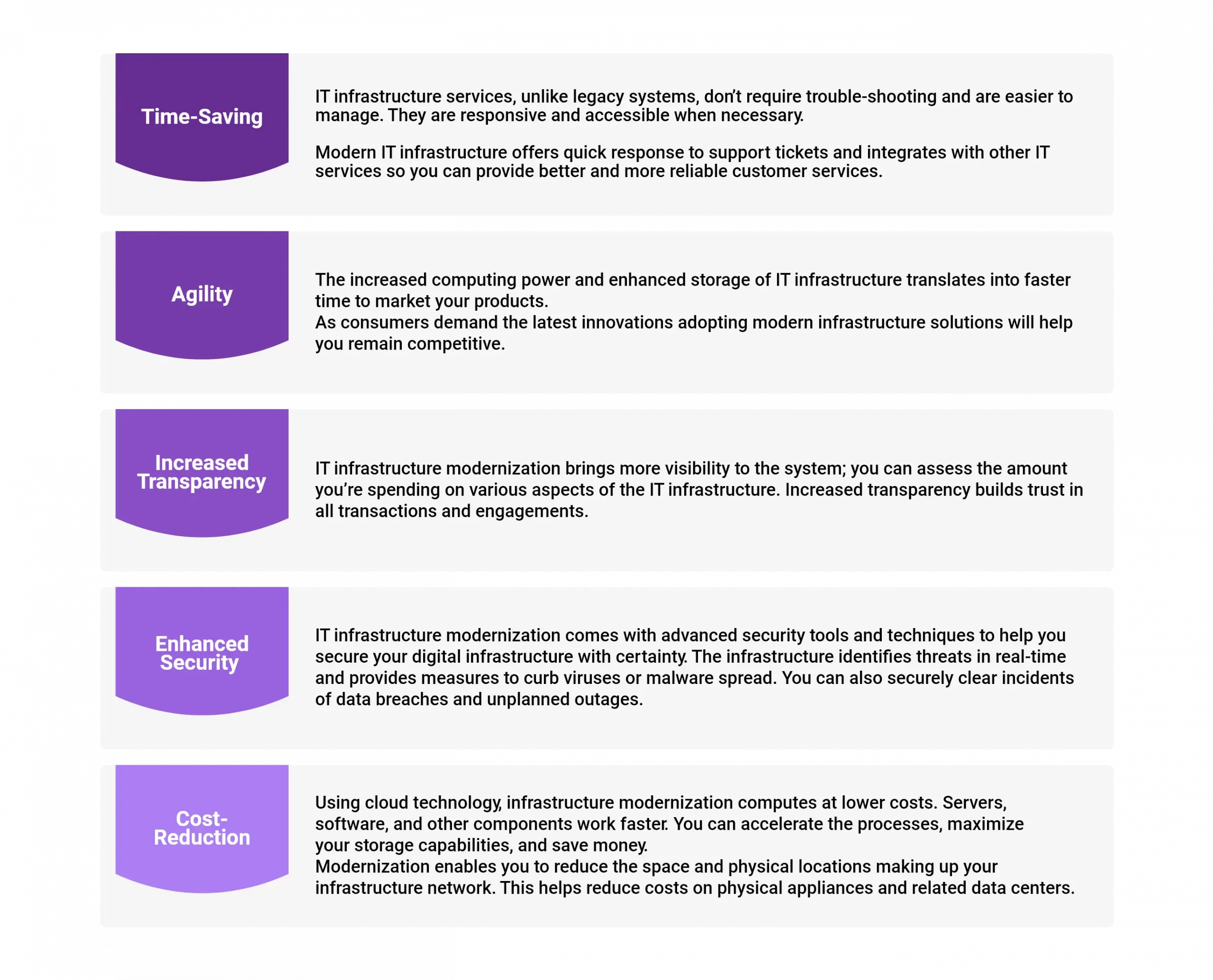
Benefits of IT Infrastructure Modernization

IT Infrastructure Modernization

How can Successful IT Infrastructure Modernization be Achieved?

IT infrastructure modernization can be achieved in two modes. Mode 1 focuses on existing assets and systems, while mode 2 concentrates on modernized infrastructure.

IT infrastructure is based on mode 2, which entails the latest technology, skills, and processes. IT personnel should optimize the existing infrastructure in mode 1 and address its complexity before upgrading to mode 2. This ensures that cost reduction and operational efficiency are achieved in the modernization process.

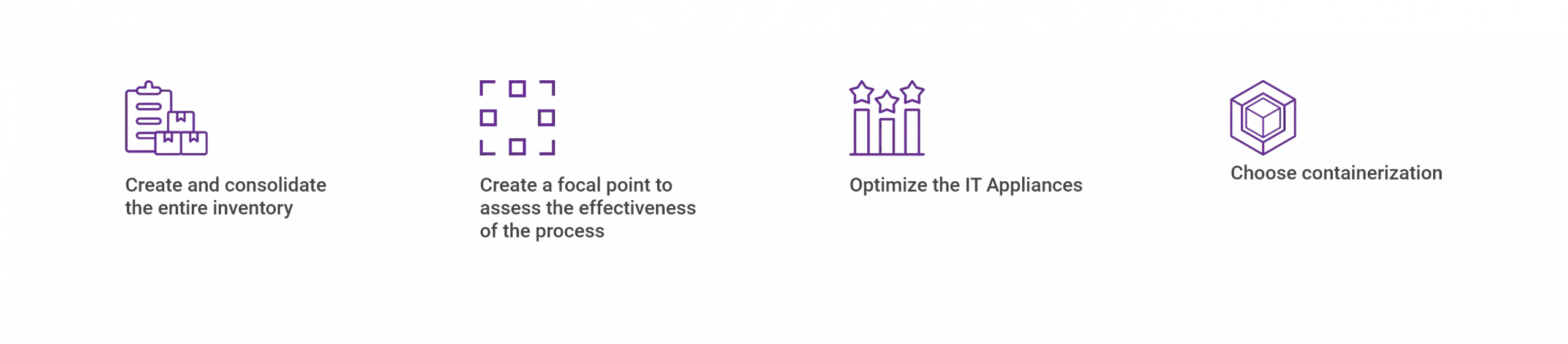
Steps for Infrastructure Modernization

IT Infrastructure Modernization

Resources and systems that are distributed randomly based on business requirements are frequently underutilized. Thorough optimization is required to make the modernization process efficient and seamless.

It is essential to create a hub with strategies and tools to interconnect modernization infrastructure and monitor its performance. The statistics collected will indicate the return on investments in the infrastructure modernization process.

Consolidating the IT infrastructure enables you to optimize physical server locations and ACs, and reduce maintenance costs.

Virtualization increases efficiency per server, but containerization does more. It allows you to manage dynamic requests and obtain more value and RoI from your infrastructure modernization process.

Final Thoughts

The cloud is a fundamental factor for IT infrastructure modernization. It is the only way companies can maximize the benefits of modernization, such as cost reduction, efficiency, and return on investment (RoI).

However, the cloud has many facets, and organizations need to understand the various services and deployments to choose the most suitable for their businesses. For instance, an organization should strive to balance multiple cloud deployments such as private, public, hybrid, multi-cloud, co-location, and edge to support dynamic business needs.

Reimagining Digital Transformation with Industry Clouds

Industry Cloud

If it weren’t for competition, companies would likely be resistant to transformation. Because we have to keep up with competitors, we’re almost forced into brainstorming new ways to improve our ROI, looking for innovation at every turn. Digital transformation is a massive component of helping us to innovate at an exponential rate, and we’re often looking to the competition to see which step we should take next.

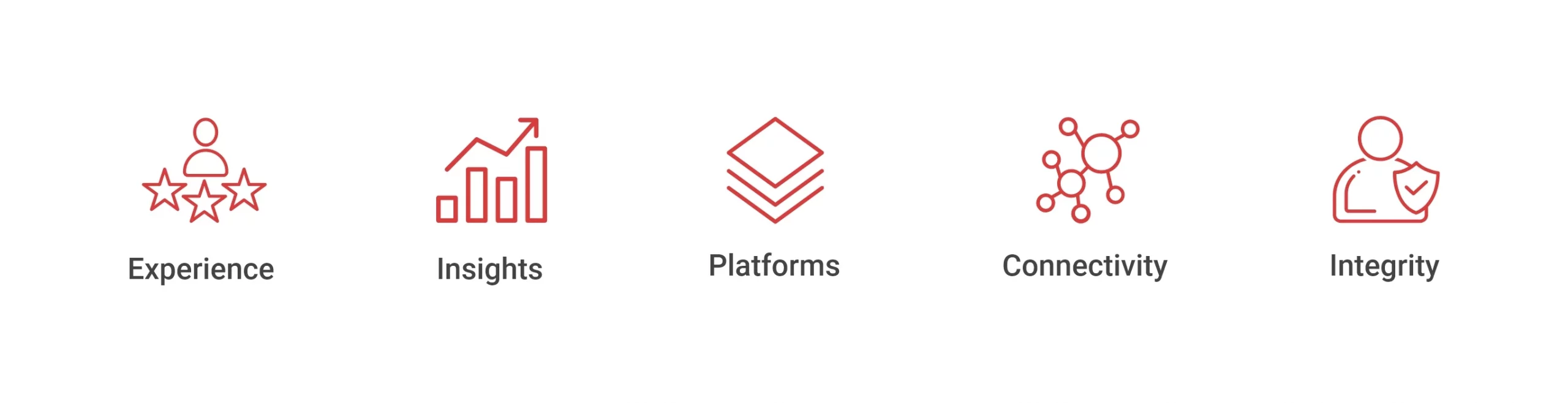
One of the most significant challenges businesses face today is the pursuit of digital transformation. It’s a never ending battle, typically uphill, and in this case, speed matters. Just because digital transformation is complex doesn’t mean that it’s impossible. Companies of all shapes and sizes are successfully implementing digital transformation measures by focusing on five imperative components:

Industry Cloud

When organizations across the board use this type of fundamental framework, it gives everyone a decipherable language to encourage collaboration for strategic transformation.

Enter: Industry Clouds.

The Adoption of Industry Clouds

Industry clouds can help advance the five components listed in the framework above. Cloud-enabled business solutions help businesses standardize the important modernization aspects of their competitors. This comparison allows them to focus on which capabilities their business has that differ from the competition.

Industry clouds can allow businesses to adapt to emerging cloud and digitization conditions continually evolving by establishing scalability, nimbleness, and options. Industry clouds present the possibility of collaboration when companies struggle to find the right solution.

Hyperscale companies like Amazon, Microsoft, and Google embrace the concept of industry clouds. The market is quickly gaining traction, and, at this point, all enterprises must know what industry clouds are and why they’re important to the future of business modernization.

Understanding the Industry Cloud

You know by now that industry clouds are essential for collaboration, competitive advantages, digital modernization, and preferred by hyperscalers, but what are they? Developed by cloud vendors, system integrators, and software providers, industry clouds are the building blocks that speed up the development of digital solutions specific to an industry niche.

When businesses use industry cloud services, they’ll have access to continuously evolving digital capabilities. Industry clouds provide a necessary blueprint for transformations specific to a particular industry. They allow for organizations of all sizes to innovate and modernize slowly, making for a more agile and sustainable modernization. Companies can focus on their digital modernization in increments instead of a risky and expensive replacement of existing legacy systems.

Changes can focus on the user experiences that matter the most, such as what matters most to consumers. In addition, businesses can take advantage of advanced technologies from industry clouds, including AI and machine learning (ML) models.

The industry cloud makes it possible for companies to stay in line with the competition without building a digital revolution from the ground up. Industry cloud solutions continue to emerge and evolve within every industry. They’re making the latest digital capabilities accessible to businesses everywhere, adopting a more flexible way of working.

Defining Your Industry Cloud Strategy

Though it might not seem apparent from here, the industry cloud can help your organization’s ability to pull ahead of the competition. The industry cloud concept indeed provides the exact solution to everyone, and it’s up to businesses to figure out how to differentiate, which is difficult, but by no means impossible.

The best way to help a business to the forefront of its industry is to select the technology in the industry cloud that suits what the company currently needs to move forward regarding technological advances. Once it’s established what will work as far as modernization is involved, it’s up to the company to fine-tune and maintain them. How can these innovative solutions and insights work in the long run, and how will we continue to apply them?

The industry cloud is something that we can upgrade whenever we want. A competitive edge while employing the cloud will come from how we focus the application of the services. Quick learners may gain advantage more quickly, but that doesn’t mean others can’t or won’t catch up.

However, those within an industry that has successfully deployed digital modernization in addition to the industry cloud will likely be more competitive. There’s no doubt that the industry cloud presents an issue for some organizations when adopting outside technology and the attempt to layer industry cloud innovation with a unique take.

The industry cloud is about establishing a balancing act. Strategic implementation of the industry cloud will focus on ROI and opportunities to drive demand, accelerating development far beyond what would be possible without turning to modernization.

Using a well-defined strategy to define top use cases will assist in the acceleration of development. When using the industry cloud, a piece of internal resources should focus on how businesses plan to differentiate from similarly-focused companies using the same technologies. This is the part of industry cloud utilization that companies will have to build themselves, so while some reliance on the cloud is acceptable, additional digital modernization tactics are essential.

Accelerating Change

With the industry cloud, organizations can shift and switch resources to focus on the strategies they plan to use to move ahead of the competition, which is a fantastic perk. However, the correct implementation of the industry cloud can allow an organization to embrace and actively seek out change.

The speed at which change happens will vary by industry and from company to company. The industry cloud can provide building blocks for redesigning business processes and introducing technology capabilities to keep companies ahead of the game and working toward the consistent innovation that the cloud can help them achieve.

The Shift to the Industry Cloud

Shifting to the cloud became inevitable for many businesses during the pandemic. Almost overnight, there was no choice other than embracing technology and updating legacy systems that had worked internally for years. Still, most organizations have barely scratched the surface of cloud adoption, at least publcially.

Though it seems odd to resist technological advances, the war between traditional on-premises data infrastructure and public cloud providers isn’t over. While some organizations stick to Dell, others explore options like Microsoft Azure. Industry clouds are a great place to meet in the middle because they provide direction but push for creativity and innovation.

The foundation to digitally modernize data exists, even for companies that have yet to take the plunge, because industry clouds are essentially collections of tools, cloud services, and applications pre-optimized for use within an industry. It’s almost like having a modernization freebie, but if businesses cannot apply the use cases to their own evolving needs, the industry cloud won’t be of much help. At least not in the long run.

When making the shift to the industry cloud, it’s crucial to understand that the cloud must meet the industry’s requirements. In healthcare, for example, there’s a high priority placed on improving patient experience, but the need for data protection, privacy, and security measures are extensive. If healthcare practices do not have security measures in place, they directly violate HIPPA compliances.

There is a high value placed on analyzing data and utilizing AI for customer insights and brainstorming product development in different sectors, like financial services. Like healthcare, financial services is a highly regulated industry, so the industry cloud must cater to those regulations just as it should the healthcare industry.

On another note, the retail industry cloud should address the need to collect and analyze large data sets to improve inventory management and all-around customer experience. When businesses genuinely grasp what utilization of the industry cloud means for them, the desire to make the switch becomes imminent. However, they cannot complete that switch without a concrete plan to differentiate from the competition and build their basis of digital modernization on top of the tools utilized within the industry cloud.

We cannot stress enough that for some industry requirements, like privacy and security regulations, the industry cloud is a fantastic place to start but might not be enough. The fear of needing more and a general lack of knowledge on how to migrate to the cloud continue to hold businesses back. Companies within competitive industries fall behind in the race to the cloud, mainly because they fail to recognize the value that public clouds can lend to their internal technology infrastructures.

A New Way to Digitize

Industry clouds offer a new way to digitize without dismantling old systems completely. Industry clouds are still in their early days, and some aren’t as valuable as others. In some cases, industry cloud providers can come off as more of a marketing service than a SaaS offering substantial change for industry-specific businesses. However, that will likely change.

In the meantime, companies who are seriously evaluating industry cloud services from public providers must do so with care. It’s crucial to compare the cloud offerings from varying providers and the general-purpose solution. What is the goal of the service, and how can it help the business? How much will we have to layer on top, and can we make our company stand out with the tools available?

Asking the right questions will help you find the right provider for you.

The Right Way to Transition from a Legacy Platform to a Modern Application

Modernize Legacy System

Digital transformation is so much more than a buzzword, even though the tech industry often uses it as such. From blog posts to services promising to digitalize your applications, digital transformation is everywhere.

Even though digital transformation is all the rage, it would be ill-advised to allow the hype surrounding it to overshadow the importance of actual implementation. Transforming existing products and processes to attract and retain more customers is one of the main selling points of digital transformation, as well as driving growth and staying competitive in your industry.

As we make our way through 2022, we can safely say that thousands of organizations, more than half, have excited their usage of digital technologies. This acceptance of digitalization transforms legacy platforms into applications that optimize the customer experience, fuel employee productivity, and solidify business resiliency.

Your digital modernization should include updating legacy systems and processes to infuse greater intelligence (both human and AI) across your business while increasing workflow efficiencies. It begins with the update of your legacy systems.

What Defines a Legacy System?

If you’re here, you probably know what constitutes a legacy system, but just in case, we’ll cover it briefly. In short, a legacy system is any older software, method, language, or technology that your organization relies on to stay up and running.

You can continue to use legacy systems and allow them to be an integral part of your institution. Still, they come with challenges if the out-of-date technology impedes your business’s fit, agility, or value. When legacy systems become an issue for IT in the form of complexity, risk, or cost, many business owners turn to the transition to a modern application.

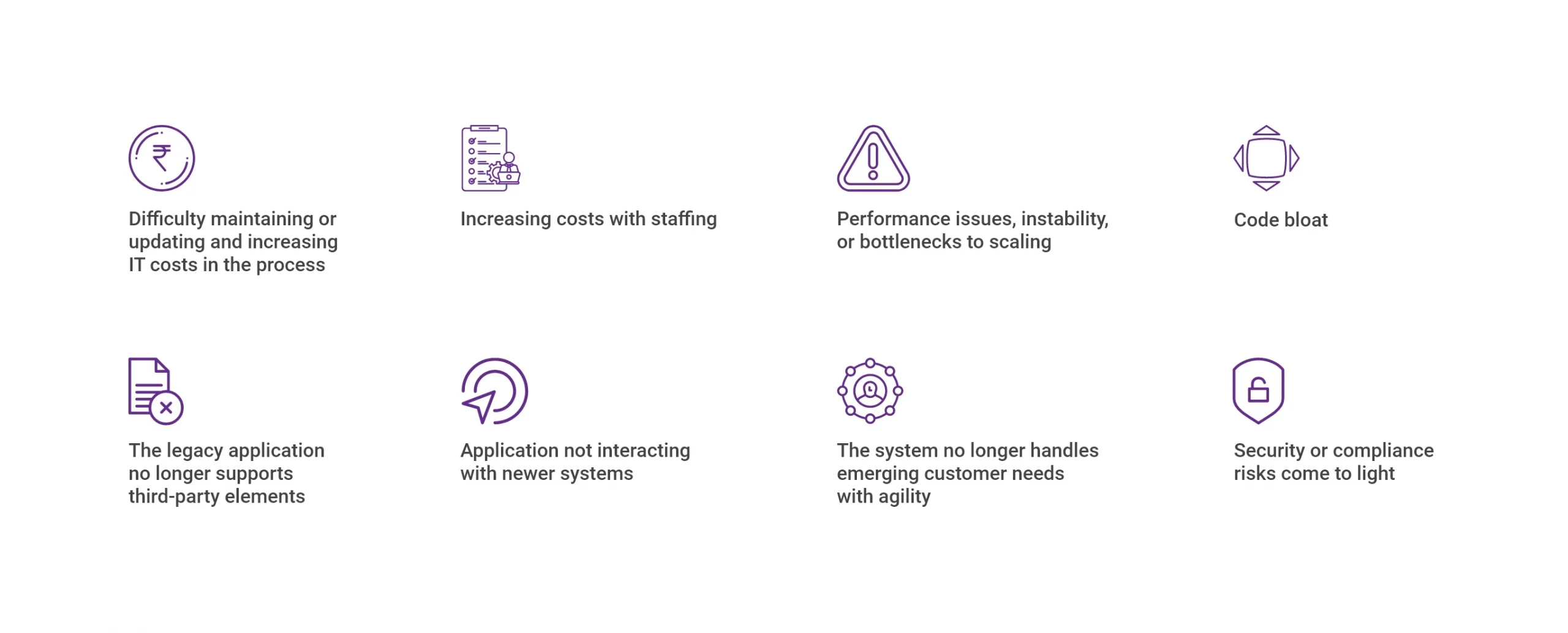
You can spot a legacy system from a mile away when they begin to introduce the following challenges:

Modernize Legacy System

Technology is changing rapidly, along with market dynamics and the need for organizational change, which often ends with updating or eliminating old legacy systems. If you’re struggling with your legacy systems built on ancient architectures contributing to a lack of connectivity and low efficiency, it’s time to consider application modernization.

What Does Application Modernization Mean?

If you’re unclear on what application modernization entails, it’s the process of taking a legacy system and updating it to a modern platform infrastructure or architecture. Application modernization can go in many directions depending on the state of your legacy systems and the problems your organization faces. It also relies heavily on the business goals that currently drive your desire for digital transformation.

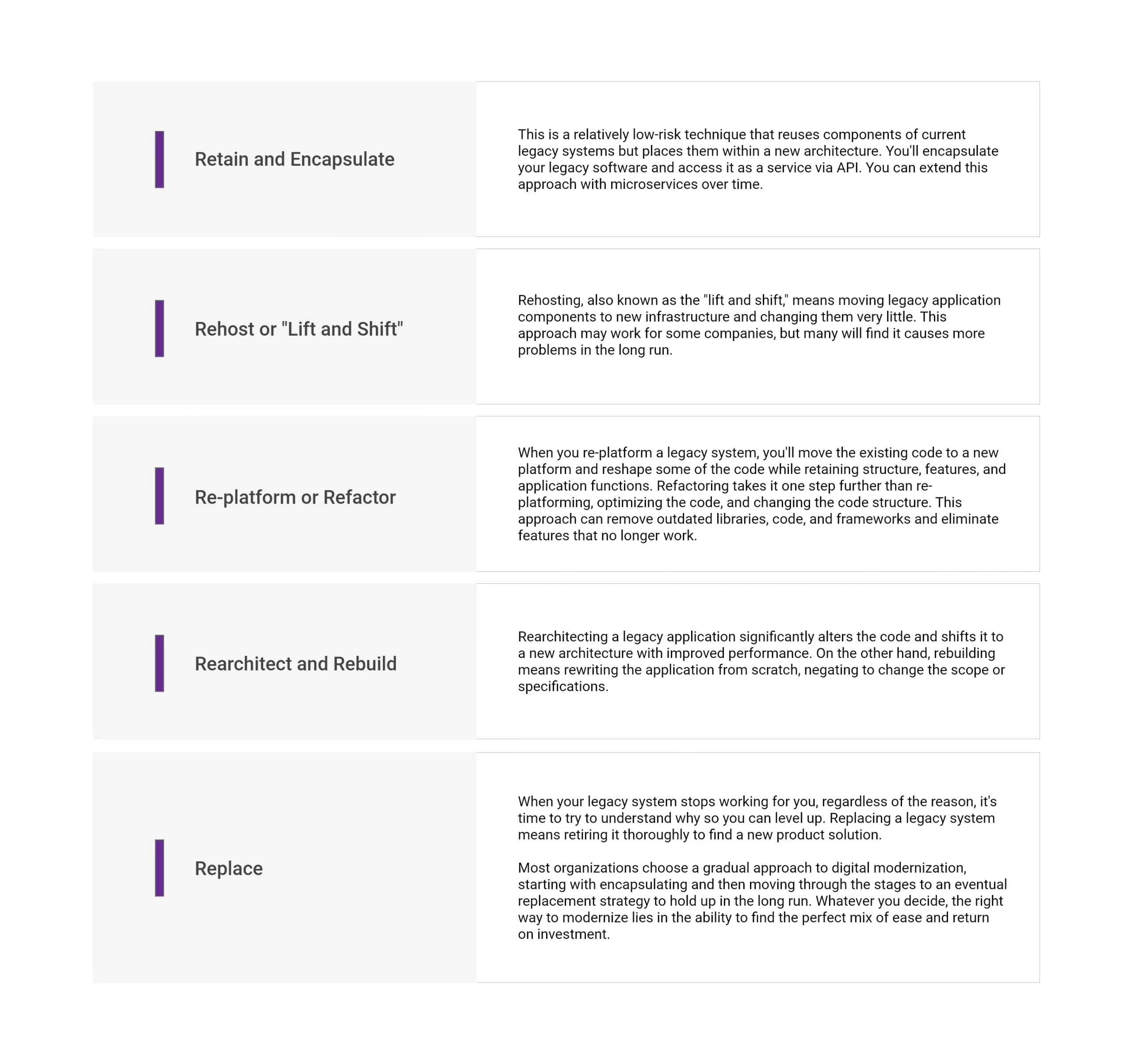
Application isn’t the act of simply replacing legacy systems. There are varying approaches to migrating, updating, and optimizing your legacy systems to turn them into modern, workable, relevant architecture. When you understand what drives your modernization, you can choose the right approach for each legacy update you conduct.

Why You Should Modernize Legacy Systems

Updating a legacy platform to a modern application stems from the fact that agility has always been an IT priority, and systems designed upward of five years ago probably can’t even attempt to embrace today’s technology changes. The business landscape, primarily in technology, is hugely competitive and shows zero signs of slowing down.

We understand that many legacy systems are critical for daily business operations, and this is why digital modernization is such a massive undertaking. However, IT managers and business executives have to study the cost of continuing to maintain a legacy system and compare it to the expenses of migrating to an updated application.

Decisions regarding legacy application updates have to reach beyond the cost. The importance of updating legacy systems and embracing cloud transformation is strategic, and the recent shifts in mindset show that businesses recognize the value of modern technology.

The main driver of digital transformation is meeting customer expectations, but the decision is more intricate than just that aspect. Employees are putting in more work to operate on outdated legacy applications, and it’s not uncommon for people to leave their jobs as a result. Organizations that prioritize digital transformation can increase revenue while decreasing internal costs. It starts with committing to the change.

Technologies to Modernize Your Applications

They say if you want something done right, you have to do it yourself. This statement isn’t always true, and if you plan to tackle application modernization without professional help, you might be in for a big surprise and, worse, poor results. Regardless, when we talk about modernizing applications, it typically means that your company should take advantage of one or more of these technologies.

The Cloud

Replatforming legacy applications on the cloud is a typical component of the attempt to modernize or automate a workflow. The cloud offers a variety of options, including public, hybrid, and private, while boosting scalability, lower cost, and overall agility.

Containers

Containers are a packaging method for deploying and operating software units within the cloud, leading to data portability and scalability. Organizations will sometimes utilize Kubernetes as well, a container system that automates the processes within a container system.

Microservices

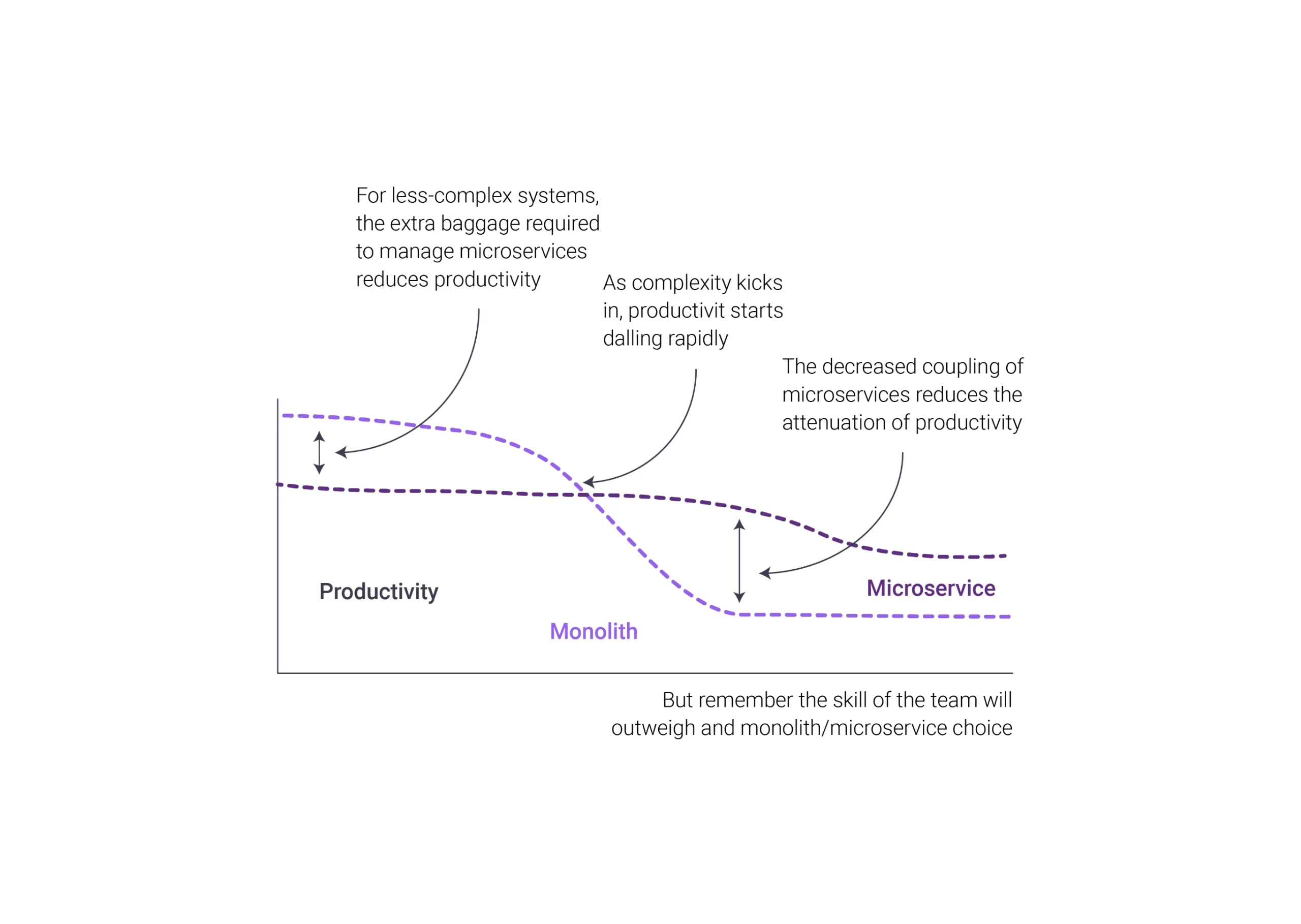
Most legacy platforms exist on a single-tier, self-contained, monolithic platform. A major playing factor in the modernization game is reaching company agility goals to work with the ever-evolving customer and employee needs. Many organizations employ microservices to emphasize linked services by API, allowing them to choose the best solutions to meet those changing expectations that they can scale as needed.

Orchestration and Automation

Workplace automation is becoming essential, primarily when it comes to redundant tasks. When executed correctly, automation can set up such processes to run on their own, while at the same time, orchestration automates multiple tasks and turns them into a workflow.

A Strategy to Modernize Your Legacy Systems

If you’re going to transition your legacy systems and embrace modern applications, you have to do it right.

Evaluate Current Legacy Systems

If you can determine that your legacy application does not meet the current needs of your business in a competitive landscape, you should modernize it. The more drivers to update that are present (not contributing to success, introducing risks, raising the cost of ownership), the greater the benefit of modernizing such applications.

Define Your Problems

When legacy systems no longer meet the IT needs, you have to define and refine them. Pinpoint the specific cause of the friction for users, both customers, and employees.

However, you should also be able to determine what aspects of your legacy software actually do work. You can decide which modernization approach you should implement when you know what works and what doesn’t, moving forward to evaluate and choose your application modernization options.

Modernize Legacy System

The Right Transformation for You

What works for one company may not work for another, and this rule applies to everything from marketing to digital upgrades. The right way to modernize your legacy systems is to choose which method flows with your company from varying perspectives. There’s no doubt that this type of transformation is a complex process, and it helps to have an experienced partner who can help you make your modernization venture a success.

How Data Fabric Can Resolve DWH and the Constraints of Data Lakes

data fabric

As the world of cloud computing modernizes digitally and finds more efficient, security-driven ways to store data continues to evolve; we see the evolution of data architectures everywhere. If you’re in the technology or business industries, you’ve likely heard of data fabric.

In short, data fabric is a relatively new data architecture pattern that operates by linking different data sources in a compact cloud environment. Data fabric allows business applications, data management tools, and end-users to securely access data that your company stores in various target locations.

Data fabric technology secures access to varying data storage systems in any location, whether on-premises, in the cloud or in a hybrid or multi-cloud environment. Data fabric allows your APIs to enable two-way access to your stored data. In short, data fabric acts as a security layer that stretches across your applications and data assets to ensure smooth and easy entry to different systems.

The Purpose of Data Fabric

There are a few targeted purposes of data fabric architecture. Aside from controlled and widespread system security, data fabric focuses on metadata management, data reusability, cross-application access, data standardization and quality, and data discoverability.

Data fabric looks to eliminate the days of one-way integration, making it possible for companies on an ever-evolving portfolio of products to interlink and exchange data between applications. While data warehouse (DWH) and data lake technologies aim to break application information barriers, they typically offer better connectivity and cloud-based storage than anything. For example, the purpose of a data lake is to store data until it’s retrieved for further examination and analysis.

Big data is everything. To be blunt, data-driven companies have more success than those that are not because the answers to their setbacks and roadblocks are right in front of them. There’s no doubt that data is the future, and the rapid growth of big data is proof of that.

As businesses on a global scale continue to migrate toward new data management approaches, the birth of new architecture designed to help work through the constraints of DWH and data lakes is necessary.

The Adoption of Data Fabric Architecture

Data-driven companies show substantial growth in contrast to those that operate on different approaches. Businesses that focus on analytics can anticipate changes in the market and understand consumer intent, creating the ability to outlast the competition and design a flawless customer journey.

It’s no secret that investing in analytics pays off, so why are companies hesitant to take the plunge? Regardless of the circumstances, we naturally want to see positive results, and it’s not uncommon for business owners to overlook the technical constraints that accompany relying on a mix of outdated legacy systems and cloud-native solutions for data management.

New architectures, such as microservices, tend to catch the eye of many leaders as possible resolutions. Still, when it comes to data management and exchanges, many data solutions do not coincide.

The Three Layers of Data Information

Typical modern businesses have three ways, or layers, to produce data-consuming applications. These include on-premise legacy systems, data warehouses to store and organize some data, and cloud-based platforms or integrations.

Most legacy software likely relies on older connectivity standards, while modern applications use newer architectures. Companies typically extract and transform data and load it into a targeted destination, like a data lake or DWH.

Many businesses exist on a half-migrated way of life regarding cloud-based solutions. The desire to make the complete migration is due to the multi-purpose business systems and functions of cloud computing. Customer relationship management and essential needs like accounting and HR systems are interconnected in the cloud, creating a ton of valuable data that ends up in a connected data lake in its raw state or, again, stored in a DWH.

How can businesses stop existing halfway on various data storage and operational platforms? There has to be a way to establish a secure and practical connection between the three layers of data information and fully transform into an organized, data-driven business.

Enter: Data Fabric

This connectivity issue is the exact challenge that data fabric intends to solve. Data fabric is unlike DWHs and data lakes because it doesn’t require businesses to move their data. Instead, data fabric architecture aims for better data monitoring between these connected systems, including on-premise legacy systems, cloud hybrids, or data lakes and warehouses.

How Data Fabric Initiates Change

Today, there’s no shortage of data anywhere, especially in business. Most companies have an extreme amount of data coming in from various locations. It can be incredibly challenging to figure out where to put that data and how to approach the analytics.

Data fabric architecture can help reduce the burden that many companies face regarding the complexities of data and analytics. There is quite a bit that falls under this umbrella.

Data Access

Company data has to be interoperable and, at the same time, remain compliant with data usage regulations and exhibit strict permissions. It can be hard to accomplish this level of regulated data access without overseeing many users.

Data fabric can help by enforcing the correct data governance practices automatically. The data fabric technology helps to standardize data formats and create codes for user access permissions and all usage rights. Data fabric is the perfect way to build siloed data infrastructures that offer insight into how different services and users consume company data.

Management and Distribution

Perfectly-timed access to data is essential for training AI models and predictive analytics solutions. Corporate insights are crucial for business leaders, but it’s challenging to deliver.

Even in major corporations, very few have analytics fully integrated into daily operations, which borderlines on absurd. Analytics is one of the essential components of making consumer predictions. The fact that giant, global companies don’t embrace them as they should proves that making the digital modernization leap isn’t something that happens overnight.

Data fabric can assist by centralizing data management, backed by data regulations and policies. Development teams can configure data fabric architecture to prevent unbalanced load allocation and optimize data workload assignments within your internal tech structure.

In this situation, data fabric allows users in any location to access the data they need at high speed. Data fabric architecture can provide the predictive analytics solution many companies need to thrive.

data fabric

Security

Few things are more important than data security, both from a consumer and business owner perspective. Dealing with leaked customer and sensitive business data is never desirable, but the rising rate of cyberattacks would suggest it’s never out of the question.

Security factors have made business owners incredibly reserved regarding which third parties they grant access to their data. Integrating additional partners into an already-sensitive business ecosystem is stressful and overwhelming, no matter how much experience you have in the business world.

As we move into a new way of doing, it will become impossible for companies to remain competitive while embracing a platform-based way of collaborating and exchanging data with differing organizations. It’s expansion at its finest.

Data fabric helps in the way of security by establishing standard security regulations for every connected API. As a result, this architecture can ensure consistent protection across all business data points, managing those security regulations from one platform. Data fabric has the potential to spark an ongoing evaluation of user access credentials and usage patterns. You will have the peace of mind of always knowing what is happening with your data.

Compliance

With the big data boom came an influx of regulatory compliance rules that companies must follow. Almost every industry faces high regulation, especially healthcare and finance, as consumer data within these fields are undeniably sensitive. Specific constraints have come into play, and as a result, businesses tend to ditch their analytics projects due to the cost of isolating sensitive data.

Data fabric can help with compliance by allowing unified standards when transforming and utilizing collected data. Also, you can configure data fabric architecture to trace data, which is a factor required by compliance provisions. It helps you comply with changing regulations while using your data to increase revenue. You’ll always know where your data rests, stores, and who has access to it.

Data Fabric vs. Data Lakes and DWH

Data fabric architecture does not intend to replace data lakes and DWH. Instead, it complements the issues within these data storage methods while focusing on compliance, access, and implementing analytics.

Data lakes and warehouses each hold their own space in business data storage. Still, they’re full of restrictions, including swamping, a lack of data strategy and management, low tech maturity, limited scalability, and higher operational costs.

Data fabric can fill in the gaps presented by data lakes and DWHs and better connect any application that draws data from them. Data fabric forces a reassessment of management approaches while creating a consistent approach to managing data safely and securely to make sense for big data and big business. In short, there is more than one way to store your data.

How to Know if the Multi-Cloud is Right for You and How it Can Help Your Business Succeed?

Multi Cloud

As the world advances toward new forms of technology, it can be challenging for business owners to decide what structures, formats, and applications will work for them. Internal technology teams must operate efficiently while adapting to ever-changing conditions in the workforce and consumer environments. 

Companies of every size should have an agile digital transformation strategy to improve adoption rates and come out of challenging periods (such as a global pandemic) above the competition. Agile, scalable, and secure infrastructures come from a future-ready cloud or multi-cloud platform.

If you remain entirely unsure whether a cloud program is right for your company, there are ways for your IT team to assess your business’s current and future needs to determine if the multi-cloud will work for you. Data modernization is essential to the future, but it’s up to you to decide your approach.

How to Assess the Applicability of the MultiCloud for Your Company

Though all businesses should embrace digital advancement, even in its most basic form, there are a few for which the multi-cloud approach may not make sense. The proper assessment is necessary, and through a strategic operational scrutinization, you can begin to establish if the multi-cloud will enhance your business practices. It’s all about knowing when the time is right to put a multi-cloud infrastructure into action.

Remember, adopting a multi-cloud strategy comes with some initial increase in costs and time spent. If your company does not have a legitimate reason to assume multi-cloud operations, you might take on too much complexity without tangible benefits regarding your ROI.

Compliance

Complying with industry regulations concerning security, for example, is a significant driver for many businesses to jump on the multi-cloud operational bandwagon. Legal concerns that could represent a potential risk to the company (whatever those may be) that can be rectified through cloud migration encourage most business owners to leap to the multi-cloud.

Flexibility

The flexibility of an organization is essential to operational efficiency. The multi-cloud allows business owners and IT teams to increase speed, create new user-friendly tools, and amp up their customer-based services and technologies.

The overnight transition from office-based work to working from home was a wake-up call to the world regarding the need for business flexibility. If flexibility within your company is a goal, then the multi-cloud is your answer.

Cut Out Downtime

Reducing the downtime for a suite of already containerized services can help your business achieve a consistent operational workflow. In the long run, this will optimize your return on investment. Though the initial switch to the multi-cloud is undoubtedly time-consuming and, for some companies, incredibly overwhelming, it’s worth the inevitable ROI increase.

Establishing the Resources

Any shift to a cloud platform requires substantial technical resources to execute the move correctly. If you think your team is ready for a multi-cloud approach, you have to fully grasp the capabilities and objectives of your organization and any potential tradeoffs, both short and long-term.

The Multi-Cloud and Success

Your business’s success in implementing a multi-cloud strategy depends on the strength of the resources that back you, though many aspects of the multi-cloud drive overall business success. Reasons to utilize the multi-cloud can go from simple to complex quickly, so let’s take a look at how the multi-cloud can help your business succeed.

Workload Optimization

A multi cloud strategy allows companies to pick and choose vendors that can best help them optimize their workload and operational services. Working from a multi-cloud perspective makes it easy to assess different vendor strengths and weaknesses and apply them to your needs.

Cloud environments have a way of operating similarly and differently all at once. While one platform may have a great test environment, another might be better for production. The good news is that a multi-cloud platform allows you to work with more than one vendor, thereby creating a workflow that fuels your output on every level.

Reliability

One of the most appealing aspects of the multi-cloud for business owners is its reliability. Multiple-cloud infrastructure often supports potential disaster and business continuity plans, should it be met in the face of an old legacy system data breach, extreme weather, a power outage, or a global pandemic.

It only makes sense to use (at least) two different cloud systems to form your disaster backup. However, you’ll want to pay attention to geography here, primarily from an extreme weather perspective. Choose cloud providers that host data far enough apart that if one provider loses power to severe weather, you still have data online in another location.

When you utilize the multi-cloud, you have your data up and running when you need it, no matter what is happening in the outside world. That alone can set your business far apart from your competition when it comes to consumer trust.

Security and Compliance

We mentioned compliance and security above as one of the main reasons businesses venture into a multi-cloud platform to start. The utilization of more than one multi-cloud provider could help many organizations succeed in stellar security measures and comply with the level of security required within their specific industry.

Many enterprises keep data stored in a private or public cloud within the national borders to comply with security regulations relevant to the business. Whatever security or data center best meets your compliance needs is the one you should choose within your multi-cloud approach.

Migrating to the Multi-Cloud

It’s not to say that a migration to the multi-cloud comes without its challenges. There are undoubtedly many of them, present on different levels, for every business attempting the switch. The proper preparation and allocation of resources can help.

Moving to a multi-cloud infrastructure when you’re not ready consumes unnecessary cash and time. The process has to begin with you understanding what the cloud and multi-cloud entail and determining if what the platform offers (as a whole, not broken down into vendors) is relevant to your business needs. Though multi-cloud technology may not suit you now, the odds are high that it will work in the future.

The Data Modernization Challenge

data modernization challenges

Data modernization and artificial intelligence are taking over the business world. These days, you can’t turn around without hearing phrases like “machine learning” or “digital modernization.”

Every business owner everywhere has at least a small stake in wanting to digitize their business. After all, it’s near impossible to remain relevant without modernizing legacy technology platforms. Data challenges are no stranger to every company on Earth since modernization is the driving factor behind those data challenges.

While many major corporations, big businesses, and modern start-ups have gotten a handle on modernizing their digital processes and embracing cloud computing, smaller but established companies are struggling to make the change. For the most part, these struggles relate to time and capacity.

Data Management in the Modern World

As data management continues to revolutionize, enterprises of all shapes and sizes are experiencing issues with data quality and integrating cloud-based technology platforms. While many businesses are right in the middle of an attempt at modernizing their current data, the way companies keep their data is evolving from an on-premise-centered approach to hybrid architecture.

Shaping Modern Data Architecture

As companies target legacy technology modernization across the globe, leaders in the tech industry have identified some significant players regarding how businesses choose to manage their data. Though the companies may be radically different, the data management elements remain the same.

Open-Source Frameworks

These templates for software development, typically designed by a social network of software developers, are extremely common among businesses shifting how they manage their data. Open-source frameworks are free to use, and they allow all companies to access the big data infrastructures necessary to implement modernization.

Cloud-Computing

Overall, cloud computing is relatively simple regarding user-friendliness and data storage. Many providers boast cloud storage and other cloud-related perks for relatively low prices. The availability of cloud-hosting companies is encouraging businesses to invest by integrating or moving their legacy systems to the cloud. Migration to the cloud is one of the leading players in data modernization, without question.

Analytics Tools

The evolution of analytics tools is playing its part in the desire that many companies have to modernize their data. Overall, analytics and end-user reporting are better (and more sophisticated) than they have ever been before.

The addition of the Citizen Analyst role is prevalent in many modernizing companies that focus heavily on analytics. A Citizen Analyst is a person who is knowledgeable in analytics and machine learning (ML) systems and algorithms. Your CA, should you choose to have one on staff, will assist the modernization process by identifying profitable business opportunities.

data modernization challenges

Data Challenges and Modernization Barriers

As the world races toward an even newer and more modern digital era, it’s clear that there are companies left behind. It was once possible to forego a presence on the internet as a business, but those days are long gone. To remain relevant and in line with, or above, your competitors, you have to focus on modernization and your customer journey.

Data challenges and modernization barriers are prevalent, but they don’t have to stop a business from being profitable digitally. However, it’s almost impossible to maintain profits while ignoring modernization.

Data Quality

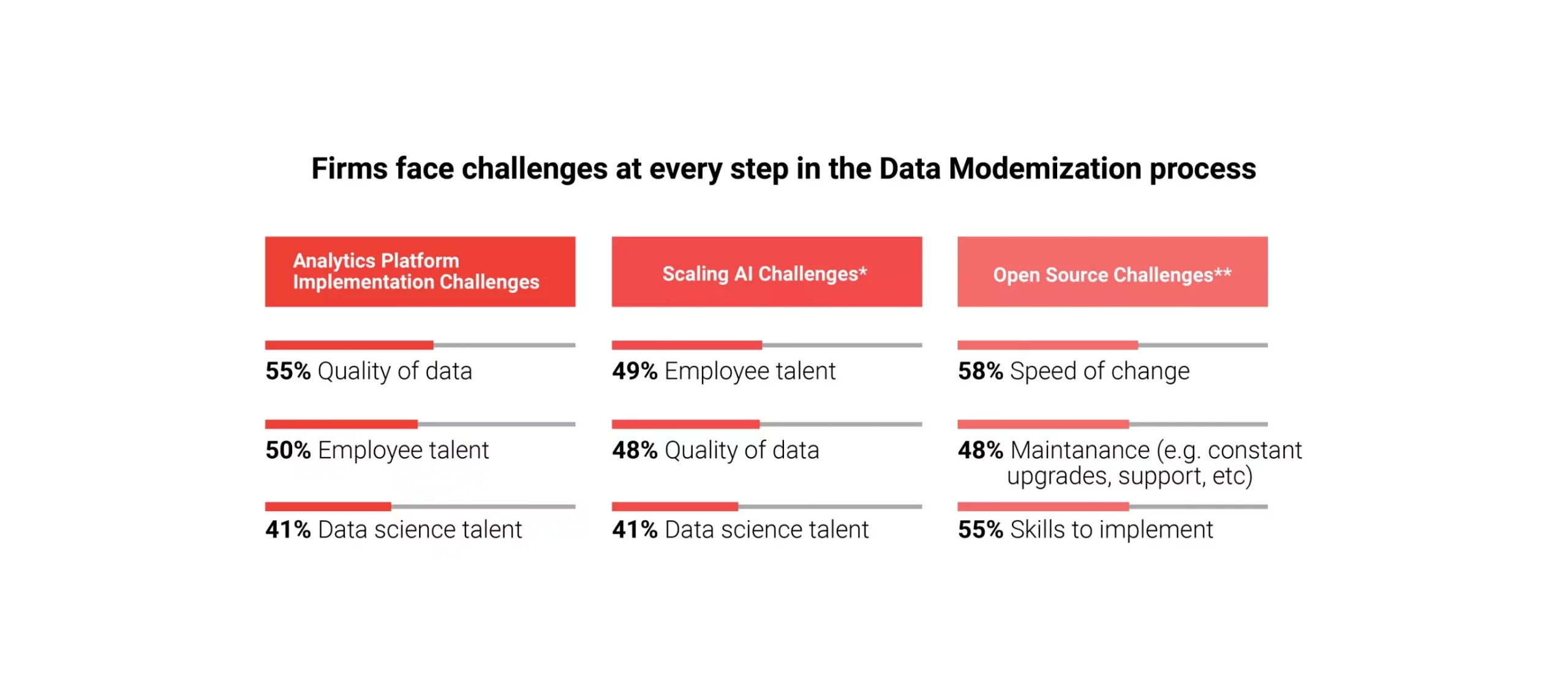
We touched on this very briefly at the beginning of this article, but data quality is a massive hindrance regarding the mechanical aspects of modernization. Data issues, such as inconsistency and incompleteness, impact company migration to the cloud. Most of them stem from the inability to keep high-quality data both during and after the transition.

Data Sprawl

It can be incredibly challenging to integrate cloud data and on-premise data. The amount of various digital information created, collected, shared, stored, and analyzed by businesses make up their data sprawl. Depending on the size of the enterprise, the sheer size of this data may be overwhelming to move, primarily if you’re dealing with the data showing up as incomplete.

The Role of “Big Data”

Modernization through data strategy is a fantastic concept if properly embraced. Thousands of companies are not using a “big data” platform or data stored in a greater variety, with increasing volumes and more velocity.

This lack of use has nothing to do with the effectiveness of storing data on a “big data” platform. Instead, it suggests that companies have trouble finding the role that “big data” should play within their existing data. They know they have to modernize, but they don’t know where to start, and this state of overwhelm is one of the most significant data modernization challenges in existence.

Compliance Concerns

Data challenges are prevalent in the form of compliance concerns. With the consistent modernization and movement of primarily sensitive data, plenty of regulations and data protection mandates are rising to the surface.

Obviously, we need rules and regulations in place to protect sensitive data for businesses and consumers. However, many companies worry about the inability to meet ever-changing compliance regulations, potentially facing fines.

The need for regulated data safety isn’t going anywhere anytime soon, so companies must find a way to comply if they’re going to focus on digital modernization and the up-leveling of their business. Regardless of your feelings on the topic, there’s no question that it’s definitely a challenge for data modernization.

Successfully Modernizing Data

Harnessing the power of your current (and ever-growing) database is essential to achieving growth and excellence in your business operations. Successfully modernizing legacy systems means complying with mandates, enabling priceless analytics for your company, and providing a fantastic consumer experience.

Modernization barriers tend to come in the same form for every business, but this doesn’t mean you can’t succeed at launching a digital revolution. However, you’ll have to clear a few roadblocks (other than data quality) along the way.

Misaligned Employee Skills

More often than not, the current skill set of your employees does not align with your data management needs. Everyone struggles (to a certain degree) to find talent for their workforce. When it comes to data modernization, the amount of knowledge your employees have or don’t have can directly impact data management and the implementation of new solutions.

For example, you’ve hit a wall if you’re attempting to employ an advanced analytics platform that your employees do not have the skill set to use. Data Science professionals are essential to data modernization, so this is a problem for many companies.

Open-Source Hurdles

Even though open-source tools open the world of data modernization to almost everyone, many businesses are too wrapped up in security concerns to consider using them. When utilizing an open-source platform, the speed of change is significant, affecting the entire organization if everyone is operating on different pages.

Digital modernization requires company-wide support and effort. Maintenance is also a challenge for open-source, as is the implementation of the applications. As you can see, workplace talent is crucial to pulling off successful data modernization.

Early Stages of Basic Solutions

The most basic data storage solutions are in the (very) early development stages for many businesses, which is quite troublesome. Data lakes and data governance tools are foundational for data-driven companies. Still, because so many of these businesses are in the early stages of fundamental data storage, problems are sure to arise regarding the ability to move forward to a more modernized approach. They’re simply not ready.

Unsatisfied with Implementation

If there’s one thing that many companies have learned throughout attempting to modernize their data, purchasing or downloading the framework to upgrade the way you keep your digital information doesn’t automatically mean you have a complete solution.

Many organizations remain unhappy with the way their data tools are governed or implemented and their analytics platforms and data lakes. It’s not to say that this dissatisfaction comes from the tool itself, but instead that it lacks the ability to meet the needs of the business.

data challenges

Our Recommendations

With so many companies stuck in the middle of a digital modernization mess, we understand that the bottom line for businesses is to have access to systems that show results immediately. However, technology cannot solve your problems on its own.

To get the best out of data modernization, we suggest:

  • Test emerging technology as it evolves at a rapid pace. The technology you implement today could become obsolete within the next five years, so select a provider that stays in tune with these changes.
  • Put the cloud at the center of your modernization strategy, as it’s designed to deal with operational workloads and analytics with high levels of security.

Choose to work with a provider that focuses on the priorities and initiatives of your business. Tangible results come from providers that understand outcomes.

Overcoming Data Modernization Challenges

It’s frustrating to sit in the middle of operating on old legacy systems and attempting to modernize your data with neither end of the spectrum working in your favor. Your best bet is to partner with a service provider that can focus on results while building hybrid strategies.

There are too many benefits to organizing and digitizing your data to work for your business, contributing to growth instead of simply existing for reference. Data modernization can’t be ignored, so ensure that you’re taking the right path.

How Do You Choose Your Microservices Strategy? Too Many or Too Few?

microservices architecture

The technology industry is constantly evolving, and microservices are the perfect example of how we’ve made applications easier to manage. Of course, one of the biggest problems with microservices is that most people don’t know how to apply them using the best practices, or even worse, at all.

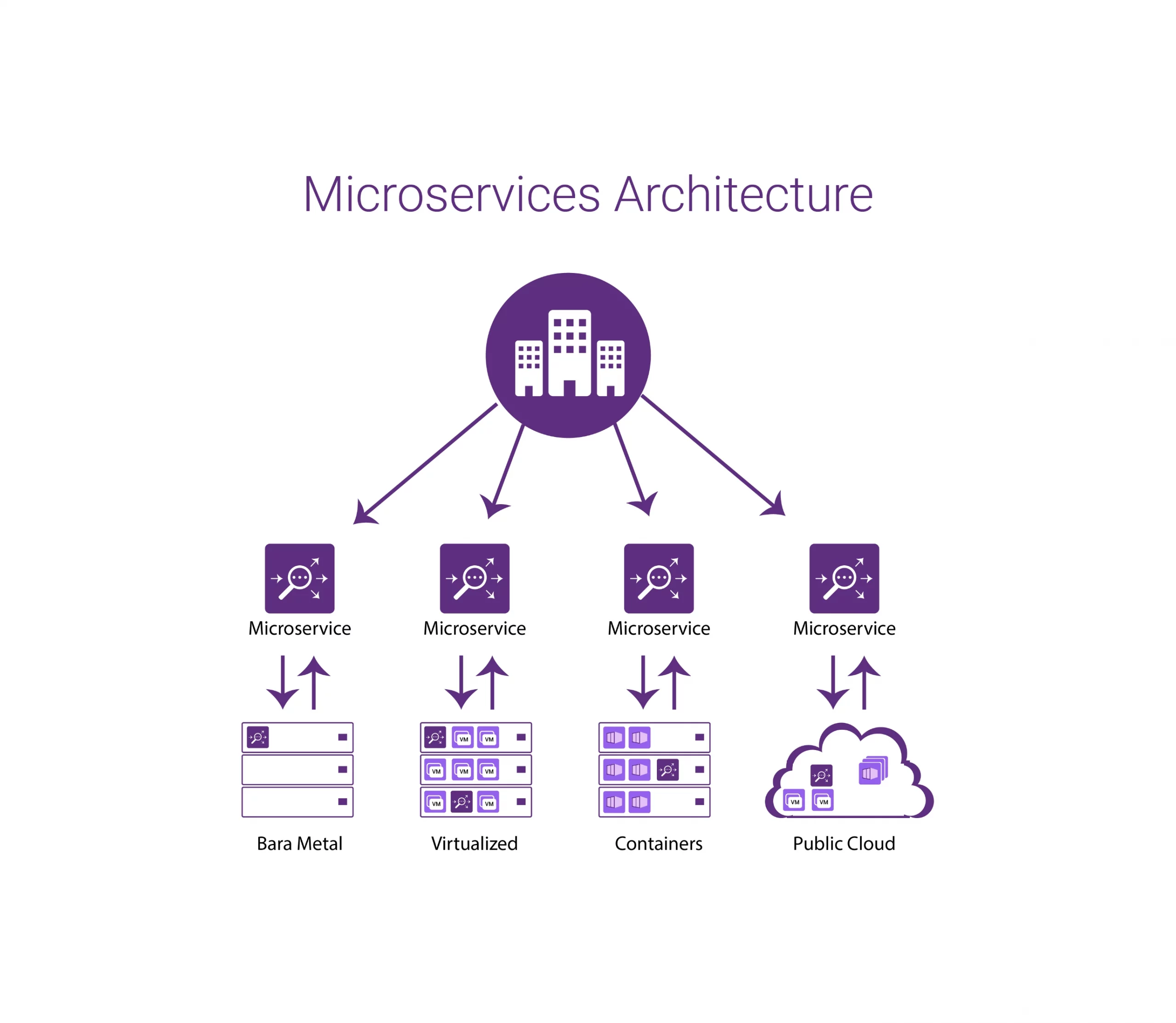
In the simplest terms, microservices act as applications within themselves. When you restructure your applications as a collection of microservices, you’ll achieve maintainability, easy and fast deployment, and scalability. These attributes make it much easier to manage and maintain your company applications.

What are Microservices?

Before you truly begin to think about how you’ll apply microservices to your current applications, you should know a bit about them. Best described as an evolved architectural pattern, microservices involve designing and developing an application as a collection of autonomous, loosely coupled services that can communicate with each other.

Also known as microservice architecture, microservices are a piece of modern software development that enables fast and accurate delivery of large, complex applications. Microservices allow your company to broaden and improve its technology stack. They’re becoming a much-desired component of digital modernization.

Building a Successful Microservices Strategy

Building a microservices strategy can be stressful, to say the least. It can be challenging to know how many (or how few) microservices to employ right out of the gate. As usual, evolving digitally takes a lot of careful planning, and microservices are not an exception to that rule.

There are practices you can put into place that will help you build your microservice architecture that will help new microservice adopters transition from monolith architecture. Before you begin your next project, consider these microservice tips, as many of them will work well for those new to these technology concepts.

These tips will work well for those unfamiliar with microservices to help create a more descriptive and easier transition.

microservices architecture

Microservices Planning and Organization

Before you move forward with attempting to create a microservices architecture, you’ll want to ensure that it’s the right move for your business. Don’t commit to changes just because larger organizations are doing it. Instead, break up your requirements and notice where microservices will add real value.

Also, you’ll have to ask yourself if you can successfully divide your applications into microservices. After all, you’ll want your applications to maintain their core functionality and features, and microservices should enhance these features.

The Transition

The transition from a monolithic architecture to microservices is incredibly long and involved. While most of these changes will fall on the shoulders of your development team, you’ll have to consider your stakeholders.

Think about the amount of time and expertise needed to implement these infrastructure changes and the amount of work your engineering team will have to take on. To convert to a microservices architecture successfully, everyone has to be on board.

Building Teams

There’s no question that the conversion to microservices requires teamwork. One of the first steps in the process (other than getting your team members excited about the transition) is to begin building independent microservices teams. Assign different groups to handle different microservices independently.

Designing Your Microservice

You want to avoid building microservices that are too large or too small or have too many or too few. Microservice architecture is all about finding the perfect balance, which can be challenging for many companies.

If your microservices are too large, you’ll be unlikely to see any benefits from utilizing the architecture, which is disappointing once you’ve put in months of work. If your microservice architecture is too small, you’ll unintentionally drive up operational costs.

Microservices Perform One Function Well

Microservices are meant to perform one function very well (also known as high cohesion), so they’ve got to be developed not to depend on other services to perform that function. You want to achieve a Domain-Driven Design regarding your microservices, ensuring your service covers a single-bounded context.

Security

In the light of any new technological development, you must consider security. Adopting a Development Security Operations (DevSecOps) model helps ensure that your microservice framework is secure. Microservices exist on a distributed structure, which means they are more likely than other services to attack vectors.

Security for microservices requires an entirely different technique than when we’re dealing with a monolithic architecture. DevSecOps will work wonderfully here.

API Communication

Microservices should communicate through an API gateway that handles account and user authentication, requests, and responses. When you have that API gateway set in place, you can redirect traffic away from the gateway and to the most recent version of your application whenever an update takes place.

Microservice Development

If you’ve made it to the development stages of your microservices strategy, you’ve likely realized the number of microservices you should put into place to benefit your company. Remember, development for microservices is a considerable undertaking, and it’s best when done with balance.

Separate Control Strategies

Keep your control strategies for your microservice development separate. This way, you can implement changes that will not affect other services while keeping control logs tidy.

Backward Compatibility & Development Environment

Backward compatibility will assist your company in building production-ready applications quickly. It enhances the service components of the application without breaking callers.

The development environment of your microservices should be consistent across virtual machines, establishing the framework and allowing developers to get started quickly.

Storing Data and Managing Microservices

Each microservice needs a different storage database. You don’t have to use the same data storage for each of your microservices, as long as the two are well-matched. You’ll have to customize storage infrastructure to match your microservice, keeping in mind that storage is one of the key ways to build a solid microservice architecture.

The bottom line here is that you must manage each service independently. At the same time, they must work with other services seamlessly.

Launching and Hosting Your Microservices

Deploying your microservices is crucial to success and helps to save time while you’re coordinating regular upgrades. You don’t want one service to use up an unfair amount of resources because it negatively affects your other microservices.

Dedicated infrastructures are essential to hosting each microservice individually, isolating them from affecting each other directly. Your microservices strategy could crash and burn if you do not intend to keep them separate. Isolation will help avoid a complete and total shutdown in the event of the outage of one service.

Container Storage

Container storage is a fantastic way to keep your microservices organized and operating unassisted. When you containerize your microservices, you can launch services independently without messing with systems and services that exist on different containers.

Containers tend to match the goals of microservice technology because they offer platform independence. This blends perfectly with the purpose of microservices and how we can best maintain them.

Separate Builds and Automate Deployment

There’s no doubt that automation is the future. Automating your microservices through a DevOps workflow is the best way to handle and improve efficiency. Individual builds for your microservices are also essential for facilitating CI and CD.

Maintaining Microservice Operations

A centralized monitoring and logging system will save discrete logs for every microservice you establish. The correct maintenance and operations for microservices include a centralized logging system, aiding in handling errors much faster than possible on monolithic architecture.

microservices architecture

Making the Transition

Deciding if your company is ready for microservices is challenging. The transition can be tricky, often requiring the entire team to lend a hand as changes occur. There’s no question that microservices help manage applications more efficiently, but it’s not right for every business.

In many cases, the delay in transitioning to microservices isn’t due to the architecture being a poor fit for a business, and more that the transition is so complex it keeps companies from trying. How you’ll go about implementing your microservices is very different from how other businesses will choose to do it.

However, the practices mentioned here are universal, fundamental ways to keep yourself on track and your company headed in the right direction regarding developing your microservices.

The Goal of Microservices

The goal of microservices is to improve the development of positive application attributes, including maintainability, testability, and deployability. In short, microservices allow any organization to develop better software at a faster rate.

You’ll be looking to achieve a framework of services that are loosely coupled, distributed, and independent of other application services. Microservices essentially remove the need for applications to be dependent on one another.

A DevOps model is a massive component of helping your microservices endeavor run smoothly. You’ll want to establish the perfect balance of microservices for your company while enabling automation and efficiency.

If your company needs the perfect architecture for continuous delivery, microservices could be perfect for you. The ability to edit services within their containers, taking away their ability to affect other services during maintenance, is revolutionary.

Remember, the microservices have to make sense for an application to work correctly. You may have some instances where microservices will work for you and others where they will not. Any organization that can find a way to implement microservices (with a good balance, not too few, and not too many) should begin planning out the shift today.

Building Your Modern Data Platform with Data Lakehouse

data platform

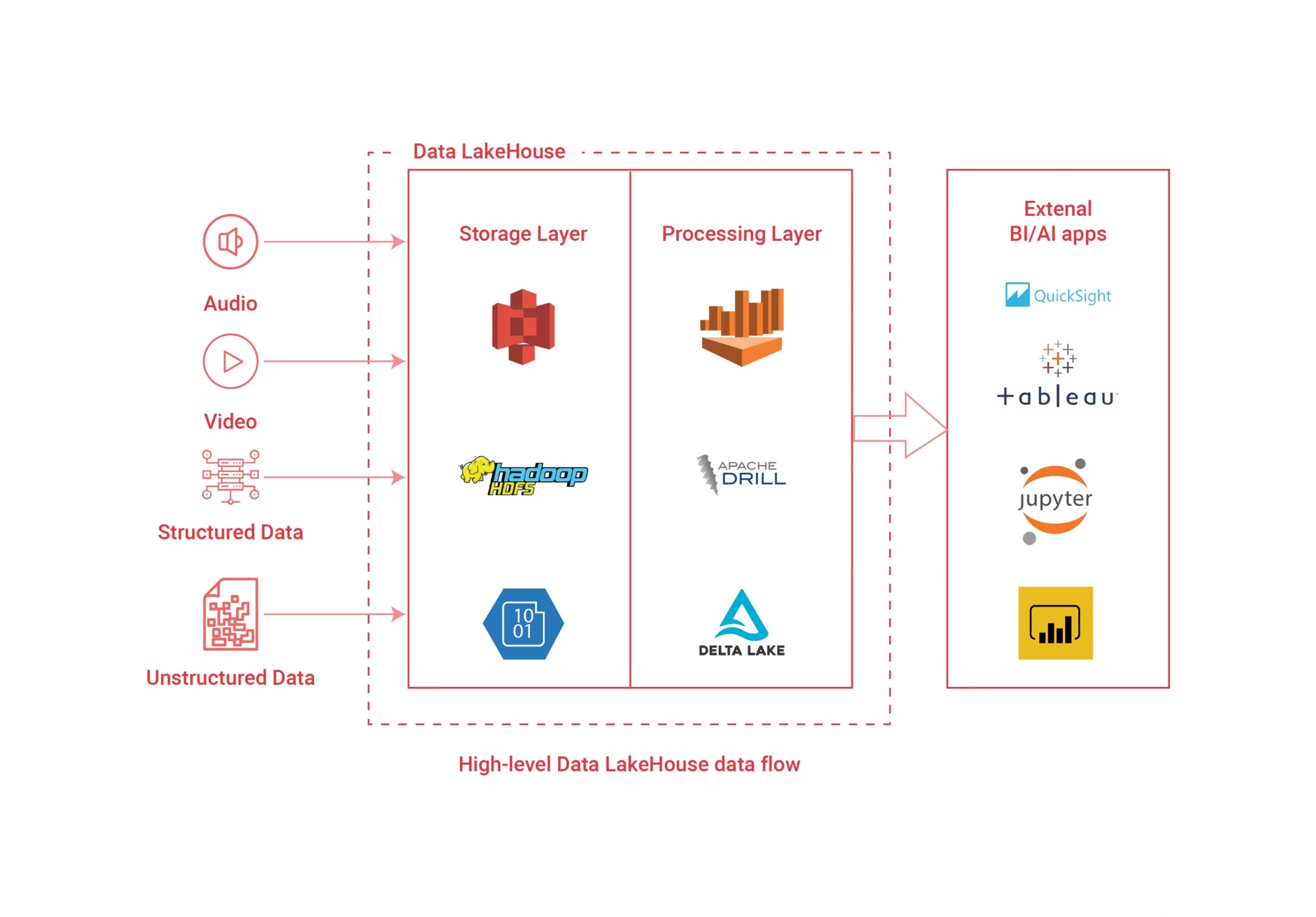
Modern data platforms require a separate storage and processing layer to work efficiently. A data lakehouse is a solution that combines a data warehouse structure (typical in most original legacy tech systems) with the more advanced and convenient features of the data lake.

Data lakehouses enable the same schema and structure as those in your data warehouse, and they apply that structure to unstructured data, like what you’d find in a data lake. Data lakehouses allow users to find and access information more quickly, so your team can begin putting that stored data to work.

Building a Data Platform

Once done out of convenience, building a data platform within your business is now a necessity. Improving your customer experience based on data-given actionable insights will increase revenue and define your brand. However, it can be difficult for companies to pinpoint the right ways to define their data platform.

The technology industry hasn’t exactly developed a blueprint for IT teams to follow, and data layers will look different for every company, typically based on the industry and type of company in question. In this article, we’ll talk about how you can lay the foundation for a modern data platform and utilize that data lakehouse.

Understanding a Data Platform

Think of your data platform as the central nervous system of your company data. Your platform should handle the collection, cleansing, transformation, and application of all data in storage and use it to generate insights. Many companies are data-first and have embraced housing data as an incredibly effective way to scale data.

Gone are the days when companies treated data as a means to an end, final product, or outcome. Instead, data has become more like a type of software. Most companies dedicate entire teams and plenty of time to maintaining and optimizing their data and, in doing so, can achieve accurate data-driven results.

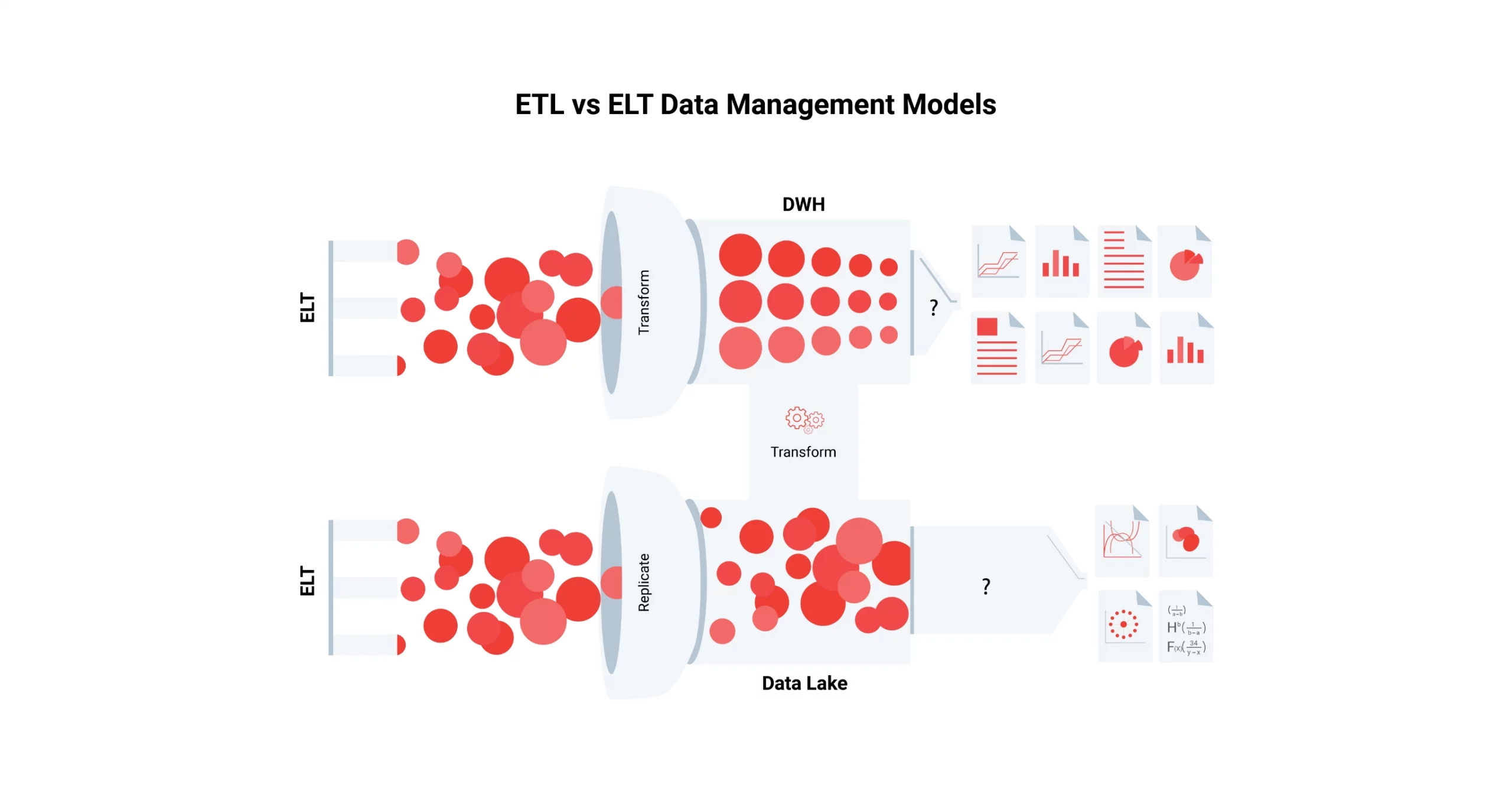
ETL/ELT data pipelines should be layered, which can bring in a certain level of confusion for teams that might be unfamiliar with the data lakehouse or a modern data platform.

How to Build a Modern Data Platform

You cannot build your data platform without a foundation, and each of the platform layers mentioned will assist you in establishing your data lakehouse from the hypothetical ground up. It can be challenging to know where to start, but every business has the same core layers regarding a modern data platform, and they are as follows.

modern data platform

Storage and Processing

You cannot physically have data if you don’t have a place to store and process that data. Not many companies transform and analyze their data when it becomes available, so storage is an absolute necessity. As your company grows, you’ll likely begin to deal with large amounts of data that will become overwhelming if it doesn’t have anywhere to reside in the meantime.

Businesses of all sizes are moving their data to the cloud. The emergence of data storage native to the cloud is everywhere. From data lakes to lakehouses, it’s challenging to come by a company that doesn’t store at least a partial amount of their company data in the cloud.

The cloud offers affordable and accessible storage options for on-premise solutions. The type of storage you’ll choose is entirely related to your business needs, but we’re laying the basis for an effective data lakehouse. Regardless of your direction, you cannot build modern data without the cloud.

Data Delivery

Every modern data platform needs an efficient way to deliver data from one system to another, known as data ingestion. As the amount of data builds, infrastructures tend to become incredibly complex, and many teams are left dealing with mass amounts of structured and unstructured data from various sources.

There are plenty of tools available today to assist internal tech teams in ingesting data. However, there’s no shortage of data teams that build custom tools with code to deliver data from internal and external sources. Artificial intelligence workflow automation is an essential component of the data delivery layer.

Data Transformation

Original data must be cleaned up and readied for analysis and reporting. This cleaning process is called data transformation, and you have to do it to build a modern data platform such as a data lakehouse.

Once you’ve transformed your data, you can move to the modeling stage, which creates a visual representation of your data within the lakehouse. Changing the data makes it understandable, while modeling makes it comprehensive visually. When the graphic layer is complete, you can ready your data for the ever-important analytics phase.

Analytics

There is no point in collecting data if your business can’t effectively use it, which is where analytics come into play. Your data doesn’t have meaning without analytics, and internal statistics are crucial to the data puzzle.

There are plenty of effective analytics software choices available today, and your data or development teams can help you choose the right one for you. The proper analytics layer for your data stack is vital to how you interpret your data, so select your software with care.

Observable Data

Because modern data is so complex, there has to be a certain level of observability for your data team to determine whether the information presented is trustworthy. Your organization does not have the time to deal with partial or incorrect data.

Through effective data observability, your teams can fully comprehend the health of your data. You’ll apply what you’ve learned from your experience with Development Operations to your data pipeline, focusing on usable and actionable data.

Check your data for freshness, proper formats, completeness, schema, and lineage. The right observability software will connect seamlessly to your data platform. This level concerns security, compliance, and scaling mass amounts of observable data.

The Discovery Level

Finally, you need real-time access to your data, and data catalogs and warehouses no longer cut it. Consistent access to reliable data is necessary to running a successful business in any industry, period. Data discovery picks up the slack where lack of support for unstructured data falls short.

The presence of data discovery offers a real-time glance into the health of your data and supports data warehouse and lake optimization. Data discovery will authorize your team to trust that their assumptions regarding your data match the reality of what that data presents.

Utilizing the Data Lakehouse

Each of the steps mentioned above will lead you toward a data lakehouse architecture. The data warehouse paradigm enables data storage in an organized hierarchical structure. The data lakehouse is a piece of that structure that can transform unstructured data into something you can use to establish your business and better your brand.

The level of business intelligence that runs the data portion of your company is an imperative component of your success. It would help to leverage your data software and services into actionable insights every moment your data team is on the job.

There has never been a more crucial time to put the best (and most modern) practices into place to ensure that you’re making reliable data-driven decisions every day. Instant and organized access to your data is crucial for you and those on your team who benefit from that access. Consider building that modern data platform, beginning today.


Nexus logo

Get Started with NexUs Today!

NexAssure logo

Get Started with NexAssure Today!

NexDox logo

Get Started with NexDox Today!

NexOps logo

Get Started with NexOps Today!

NexAA logo

Get Started with NexAA Today!

logo

Let's talk about your next big project.

Looking for a new career?