📢 TVS Next partners with Snowflake to redefine Data and AI outcomes.

Category Archive

Data and AI

Driving Innovation Through Data Architecture

Alex Thompson Data and AI March 22, 2022
Data architecture

Data Architecture

Data architecture is more important than you might think to modernize your applications and drive team and company-wide innovation. Agility is the driving factor behind updating legacy systems and creating an overall successful upgrade. 

The data architecture of today demands flexibility and consistent innovation. However, it can be difficult for companies of all sizes to incorporate flexibility into their existing systems while focusing on deploying new data technologies to flow with the times. 

Consumer markets continue to drive external innovation, encouraging development teams to create ways to better connect with them. Predictive maintenance, real-time alerts, and personalized offers are options that consumers expect from their applications and the businesses they choose to utilize.

The Result of Technical Additions

Data architecture becomes more complex when companies embrace technical additions to older applications, such as stream processing and detailed customer analytics platforms. When data architecture gets too involved, it can create a data lake and hinder the ability of your organization to efficiently deliver new features and capabilities to consumers and ensure the integrity of your AI models. 

In short, too much data in the mix means inaccurate AI results and applications that cannot work correctly. Due to current market demand, slow systems are never an option. Today’s consumer is looking for speed and efficiency around every corner, and unfortunately, if your organization cannot offer them that, there is one right behind yours that can.  

So, how can you continue to build your data architecture without failing and super slow systems? As usual, the answer lies in technology and utilizing artificial intelligence and cloud migration. As companies increase the amount of sensitive and vital data they deem necessary to operate, cloud providers have focused on data modernization while launching features that make lives easier and new and old systems faster. 

If the amount of data you have is slowing down your business processes considerably, it’s time to look into how you’re stacking your data. Data modernization is essential to build a competitive edge successfully, and there’s no longer a way around it.

Shifting Your Data Architecture

Before we dive into the steps you can take to change your data’s architecture, it’s crucial to understand that cloud provider and serverless data platforms have become necessary regarding information storage and access. If you have zero intentions of moving your data to the cloud, you’ll find that you consistently fall behind, even if your data architecture is relatively sturdy.

We exist in a time where analytics tools are the key to success, and businesses need to market faster and with agility. There must be room for flexibility, and the only way to achieve that within your ever-growing data pool is to migrate to the cloud.

Practices such as adopting APIs will give you immediate information regarding your data lake and deliver it to the front-end analytics. The need for efficient data storage has been on the rise for decades and was merely amplified by the COVID-19 pandemic, when the world turned to the internet for, quite literally, everything. 

As we prepare to exist in what we can only refer to as our “new normal,” companies on a global scale must make significant shifts in the way they define, implement, and store data stacks. Leveraging new concepts, the cloud included, is the only way to do this and avoid system overload and failure. 
data architecture

Encompassing all Components

If you want to change the structure of your data architecture, you’ve got to step back and look at the situation from every angle. Making the necessary upgrades and changes to update each of your data activities is crucial. If you must, you can make significant changes while leaving your current data stack as is, but this may cause some issues later down the line. 

For the most part, companies will benefit the most from a complete and careful restructuring of the existing platform. This re-architecting will affect legacy systems and the new technologies you’ve undoubtedly added over the years.

Cloud-Based Data Platforms

If you’ve heard it once, you’ve probably heard it a million times. Switching to a cloud-based platform is the best method for hosting your data while providing your customers with the best experience possible. The cloud is complete technology innovation, and building on it correctly will provide your company with the tools you require to gain a competitive advantage. 

Serverless data platforms and containerized data solutions will enable your company to make better decisions based on accurate AI and human-powered information. Migrating to the cloud gives you the capability to revolutionize how you’re currently sourcing, deploying, and running your data infrastructure.  

Making the switch to a cloud-based platform is not a change you can make overnight, but it’s crucial to change. You cannot keep running on-premise legacy systems and expect to take your company and consumer interactions to the next level. When you utilize serverless or containerized data (or both), you’re taking a step into the future.

Real-Time Data Processing

In the not-so-far past, we processed data in batches. Typically these batches would provide insights that offered information that was a few days (if not weeks) old. While some of this data would prove helpful, it became difficult for business owners to understand where their business stood at the present moment. 

Real-time data processing offers a whole new take on analytics and informed business decisions. Other than access to more accurate data, the good news is that the cost of the platforms that offer real-time data services has dramatically decreased, enabling a whole new host of data capabilities.

Businesses need to remember that real-time data processing includes streaming services. So, not only does access to data as soon as it’s available benefit you (the business owner), but it offers plenty of perks to your clients as well! Examples of technology and AI that allows live data include messaging applications, streaming solutions, and alerting platforms. 

These options allow room within your data architecture, along with plenty of current (more accurate) feedback that can move you forward to higher innovative levels. You need technology that will inspire you to move in your business’s best interest, as well as your customers’ experience.

Moving to Modular Platforms

As frustrating as it can be, doing away with your outdated legacy systems is necessary. It might not be an immediate overhaul, as many businesses successfully operate within a cloud platform while keeping their legacy applications intact.

However, as time goes by, it becomes more difficult to find a balance between the two, which will likely encourage you to move from pre-integrated commercial solutions to the modular platforms that will best serve you and your data architecture.  

data architecture

There are open-source modular components available within the cloud that you can easily replace with new technologies as needed, all while keeping the rest of your data as is. Not only is this crucial to transitioning, but it’s an essential part of enabling new concepts for your data storage and access.

Rigid Data Models Become Flexible 

To successfully transition your data architecture into a system that adds ease and makes sense for your business, you’ve got to move from the rigid data models of yesteryear and leap into the future of flexibility. Pre-defined data models have become increasingly difficult to work with while expressing the inability to provide data that isn’t completely rigid. 

In short, the data development cycle is much too long, and businesses need access to insights as soon as possible. While changes can affect data integrity, a potent edge on the competition and extreme flexibility comes with denormalized data models and a “schema-light” approach. 

There are a few ways to make your data more flexible and readily available. Data point modeling, for example, will ensure that you can change your data in the future without extensive disruption. Graph databases are another way to access real-time capabilities and utilize AI to tap into your unstructured data, which can provide you with some incredible results. 

Technology services, such as the capabilities that come with Microsoft Azure Synapse Analytics, allow the flexibility of accessing standard interfaces and stored data simultaneously. Also, implementing JavaScript Object Notation will enable you to change database structures without requiring you to revise your business information models.


Getting Started

Building your data architecture in a way that drives internal and external innovation is easier now than it has ever been, though it still tends to prove difficult for businesses of all sizes. There’s no question that data technologies evolve quickly, seemingly at the speed of light, and this alone makes change beyond overwhelming for development teams.  

Your goal here is to determine which practices will assist you in evaluating and employing new technologies as they come, adapting to a mindset based on testing and learning. Look to create a data culture within your company, encouraging employee excitement regarding implementing new data into their everyday roles. 

Data, artificial intelligence, and analytics have concreted their roles in regular business functions. Technology leaders that take advantage of new approaches to data architecture are sure to weather the storm.

Using AI and Machine Learning for Better Customer Satisfaction

Alex Thompson Data and AI March 18, 2022
customer satisfaction with ai & ml

Customer Satisfaction with AI & ML

Without a high level of customer satisfaction, most businesses would cease to exist. There is no way to survive in today’s all-around competitive environment without establishing the role you play in your customer satisfaction with ai & ml are the ways that artificial intelligence and machine learning can yield better results.  

Currently, artificial intelligence is one of the leading technology trends, growing in leaps and bounds and gaining the attention and affection of business owners and marketing teams across the globe. Most brands today prefer to deliver a personalized approach to customer service, and in markets that continue to oversaturate with options, it’s an ideal choice. 

It’s not to say that artificial intelligence should replace the relationships you build with your customer base as much as it should enhance it. With AI-run CRMs (customer relationship management) and CDPs (customer data platform), your business can move ahead of the competition by leaps and bounds.  

The best part? AI no longer comes with a sky-high price tag, letting businesses build through AI and ML without breaking budgets. In reality, most tech leaders are utilizing AI technology, and it shows no signs of slowing down, with substantial projected growth within the next five years. 

So, now that you know that it’s likely quite affordable for you to experience the benefits and perks that come with employing AI when it comes to your customers, how should you do it? While no business is the exact same, particular methods and utilization techniques will ensure you’re using AI to its fullest extent concerning customer satisfaction.

Understanding Your Customer

You cannot sell to a demographic that you don’t understand. The combination of artificial intelligence and machine learning can fuel your understanding of your customer while making them feel seen. customer satisfaction with ai & ml It might seem silly, but customers want and expect to feel heard when dealing with any business. If you can tailor your AIML technology to align with that need, you’ll notice growth without question.   Historical and behavioral data are often tracked by artificial intelligence, and unlike traditional analytics software, these tools can gain a much more extensive understanding of customer behavior. Keep in mind that AI is always learning.  AIML consistently analyzes new information and combines it with what it already knows to develop solutions and recommendations. Because of the ability of this incredible technology, business owners and marketing teams can predict the behavior of their past, current, and prospective customers.  When you expect your customer to act in a specific way, you can fully align your content calendar with relevant topics. This targeted content alone will raise the opportunities you have to make sales while increasing social interactions and engagement, kicking off your customer journey the right way.  Connecting with your clientele personally has become essential in the era of options and transparent social feeds. When you establish a connection, you can build trust, and in most cases, that trust results in loyalty. Brand loyalty on behalf of the consumer is imperative to business growth and survival.   Remember, you don’t have to be fully present to begin building that connection, as the employment of AI will jumpstart the outreach and response process for you. When combined with NLP, or natural language processing, we can improve interactions and gain valuable insight.

Predictive Behavior and Decision-Making 

In the past, making essential business decisions typically included massive piles of spreadsheets and printed data analysis. Of course, these papers moved to a digital platform with the invention of computers and the evolution of technology, it still took a long time to go through the presented data. 

Today, decisions are made in real-time and, for the most part, fueled by data collected and presented by artificial intelligence. Machine learning has become such a massive part of the customer experience, and this includes influencing the way you make decisions for your business that directly affect your customer base. 

A fantastic example of data presentation in real-time could be the saved interactions that take place between your customers and your AI messaging system. Not only is this technology easy to implement, but it gives you an excellent idea of what the customer is thinking and feeling, heavily based on their responses to straightforward questions regarding their experience. 

When “speaking” to your customers, AI can make decisions related to the responses your customer is typing and base those decisions on similar customers it’s experienced in the past. From personalized recommendations to recognizing and understanding intent, there is little that AI cannot do to move us forward toward our goals of stellar customer service. 

When engaging with AI, customers are often presented with the opportunity to view content curated just for them. There are few better ways to gain sales and new, dedicated customers. Every interaction with your company is an experience, and you want it to be great every time, even if the customer is showing up with a complaint. 

Machine learning works heavily, especially in real-time data, with the concept of predictive customer behavior using data mining, modeling, and statistics. AI doesn’t come up with its answers out of the blue but instead relies on what it already knows to learn even more. AI understands when and how to interact with your customer, and though AI never comes with a lack of complaints, this is where it truly shines. 

If deeper insights are what you need, then AI is the choice you want to make. Predictive analytics go much further than historical information alone, making AI a powerful tool in the customer experience. When using AI correctly, you’re more likely to generate a sale and provide your customers with various ways to form an emotional connection to your brand.

The Pros and Cons of Chatbots

Though chatbots have been around for quite some time in various forms (the help tool on AOL Instant Messenger comes to mind), companies have only begun to use them to interact with customers in recent years. There are many ways to tailor your chatbot, whether you want it to act merely as customer contact or solve mild to moderate complaints.

Today, many businesses employ the use of chatbots to monitor customer interactions, and that number continues to grow as chatbots become more intelligent and efficient. While AI is a fantastic way to interact with your customers, you must remember that you are not providing a substitute for human interaction but more of a placeholder.

customer satisfaction with ai & ml

Yes, customers absolutely want the tailored experience that a chatbot can offer by gathering information, comparing it to past experiences, and predicting how a customer will behave. However, consumers are more than familiar with a company’s use of AI, and they know when they’re not dealing with a human. In many cases, the interaction will result in the need for human contact. 

Utilizing chatbots in your business is all about finding a balance between artificial and actual human interactions. While NLP has made it possible for chatbots to interact successfully while solving various transactional issues, nothing understands your product as entirely as you do. At times, you’ll have to step in.  

Today, chatbots no longer fail when presented with separate topics during one conversation. They can juggle a stream of random questions without issue, providing a service that rivals human contact to an extent. Still, it’s not a replacement for you. 

To fully enhance your customer’s journey, you’ve got to find the perfect combination of artificial and human intelligence to address your customer needs. Once you step in, you’ll have full access to the data collected by your AI, giving you even more ammunition to make your customer’s experience a fantastic one!

Personalizing Your Customer Experience

Your customers already know that you have other customers, but they want to feel that their business is appreciated and essential. Let’s face it, every sale is important, and through hyper-personalization, AI makes it possible for us to convey that to our clients.

AI uses data in real-time to deliver content specific to the current customer’s experience, creating an incredibly convenient way for consumers to interact with your business. Gone are the days of flipping through page after page of products and content.

Instead, you can utilize AI and create the ultimate customer experience through product, service, and content recommendations. Customers despise entering repeat information, such as shipping and email addresses or telephone numbers. When your AI performs a task as simple as filling that information in for them, you’ll be ahead of the game regarding customer satisfaction. 

Customer Service AI Challenges

It’s not to say that AI comes without challenges because we all know that there are plenty. Those challenges aside, recent years have proven that AI isn’t killing jobs or collecting information to use in nefarious ways. 

When used correctly, AIML can absolutely take your customer experience to new heights by creating a targeted and personalized experience from one customer to another. It’s time for your business to take advantage of predictive analytics and super customized customer experiences, thereby improving your customer journey as a whole across all active channels.

MLOps and the Future of Machine Learning

Alex Thompson Data and AI February 24, 2022
ML Ops

While the compound term ML Ops can sound daunting and confusing at first, especially when things in the tech industry are forever changing, it makes complete sense when it’s broken down into terms we already understand and have become accustomed to using. Simply put, MLOps is the combination of “machine learning” and “DevOps” or development operations. 

MLOps aims to maintain machine learning models within the production industry through reliability and efficiency. The goal of ML Ops is to harness discipline and development in machine learning, which is more than necessary in this aspect of technology and data. So, now you might be asking yourself, but what exactly is MLOps? Let’s break it down a little further.

What is MLOps?

Human beings are creating a large amount of data by the second. While this is fantastic for data analysts as a whole, acquiring huge data amounts and breaking it down to help fuel the way businesses operate are two completely different concepts. It’s all about scaling our machine learning systems and operations to the needs of our businesses. This scaling is the purpose of MLOps.

MLOps encourages communication and collaboration between data scientists, automating the deployment of machine learning in more extensive operations. ML Ops aligns models with the needs of your business and is becoming an independent way to manage machine learning systems that applies to the complete ML life cycle.

MLOps covers the following phases:

Ml Ops

When the MLOps cycle finishes, it restarts again in a constant reassessing and retraining data. Without insight, MLOps seems completely aligned with DevOps, but the two approaches are quite different in reality. 

For example, MLOps is a bit more experimental than DevOps. ML encompasses continuous integration, continuous deployment, and continuous testing. MLOps seeks to keep rolling out models and predicted algorithms without losing precious time while focusing on retraining for optimal predictions and outcomes. MLOps works well within many companies to manage models, experiments, data sets, and software containers. The power of machine learning is great, and through correctly applying MLOps, we can begin to harness it.

The Clear Benefits of Implementing MLOps

There are many benefits of implementing MLOps, as if it’s done correctly, it can control more components than your typical DevOps model. Ignoring MLOps is a huge mistake for any company. It can be frustrating at first, as more roadblocks than clear paths will pop up during the beginning of the implementation process. 

However, the perks of adopting MLOps are undeniable, and they include increasing productivity and building reliable and trusted data models. There’s no question that companies correctly leveraging MLOps are genuinely making an impact in their business and industries.

Communication

Data science and operation teams can come together under the MLOps model, like the frequent friction between them lessens. Through MLOps systems, you can establish flexible data pipelines that will enhance your current development operations systems in place.

Automated Workflows

One of the most significant factors that drive machine learning is the desire to create efficient but automated workflows. Automated, streamlined changes are crucial as shifts in data occur, preventing lags and development hold-ups. MLOps will measure the model’s performance while operating, consistently monitoring behaviour and operation processes.

Outcomes

Explainable AI helps outcomes make sense and lets us know when your machine learning application might be wrong. Not only does this fuel business growth, but it enables you to serve your customer base more efficiently.

Compliance

As machine learning guidelines grow increasingly strict, MLOps can alter models to comply with new guidelines through reproduction processes. As the rules evolve, your models can still play by them without being completely dismantled and restructured.

Feedback

MLOps offer clear feedback when it doesn’t seem possible. ML analytics can often seem completely undecipherable, slowing down training or leading to complete system failure. MLOps can detect the blips that happen in ML technology and understand why that blip occurred, providing you with the information you need to keep it from happening again.

Bias Reduction

Bias reduction is an essential component of machine learning, as bias is rampant without operation management in place. MLOps can guard against certain biases during development, creating systems that avoid extreme rigidity in their reporting. By doing this, MLOps provide reliability and trustworthiness to your company and the machine learning systems you utilize. It’s all about having a better understanding.

Understanding MLOps

In general, MLOps aren’t understood by many, but their implementation has a strong impact across industries, assisting machine learning in growing into a respected aspect of software development. MLOps fuel the future in creating practical machine learning that requires less human intervention. 

If you’re wondering how to integrate MLOps into your current operation, you’re not alone. The software that engages machine learning is growing with no end in sight. Without operations to hold that software responsible, it’s impossible to respect the provided results as the risk for error is too significant. 

MLOps will motivate your teams and suggest collaboration on projects, primarily within the workflow between data and development teams. It’s time to embrace effective machine learning and optimize the lifespan and performance of your models. When it comes to developing MLOps, you’ll want to implement the following steps:

MLOps brings teams together while automating, auditing, and managing model interpretability. MLOps aren’t exactly easy to employ, but they’re well worth the time spent.

The MLOps Results

Companies on a global level can share the results they’re seeing with MLOps, which allows for a broader working knowledge regarding machine learning in an open-source environment. Various fields, including healthcare, public transportation, engineering, manufacturing, and safety, have begun MLOps integration. 

In the long run, a well-adapted MLOps strategy can lead to more productive, accurate, and trusted models. It’s impossible to succeed when you’re operating out of a siloed model mess, even when the processes are automated. Effective machine learning is the best path to take.

Improving Automated Software Testing with Explainable AI

Alex Thompson Data and AI February 17, 2022
Software Testing Using Artifical Intelligence

Software Testing With Artificial Intelligence AI

Testing in software is essential to ensure that systems are running as they should while producing the desired results. Since systems and applications that use machine learning are notoriously challenging to test, there is plenty of room to fix automated software testing with Artificial Intelligence (AI).

Applications that utilize machine learning and AI are typically black boxes, meaning even those that created them have difficulty explaining data results and behavior. Also, given the layers of algorithms present, there is no way to determine if the results they supply are correct. Explainable artificial intelligence may just be the answer needed to any impending AI black box software test.

What is Software Testing?

The definition of software testing is the process of verifying and evaluating that a software application performs the way it’s supposed to perform. However, when we introduce artificial intelligence into automated applications, it can become tough to understand if the given results are correct.

An excellent test management plan can prevent bugs, improve performance and reduce development costs. When machines are learning on their own and algorithms are constantly changing, test results can look completely different than testers might expect. The good news is that it’s entirely possible to test AI and ML applications with explainable AI.

A Look Into Explainable AI

Explainable AI is essentially a type of artificial intelligence that provides system results that humans can understand. Explainable AI contrasts sharply with black box AI systems, where even the designer cannot explain why the AI came to a specific decision. Explainable AI can help us make sense of outcomes, and therefore, test to see if the software in question is making the right decisions.

Development teams worldwide that implement AI should be well-versed in explainable AI. Most companies are all about testing their software, and explainable AI is the way to go in that respect. Here are just a few benefits of explainable AI.

Model Accuracy

Explainable AI determines the accuracy of working AI and ML systems. Accuracy is crucial in any field, primarily medical, as the results our ML applications are giving us have to be correct.

Fairness

Many business owners (and consumers) across the board worry about fairness regarding artificial intelligence. Explainable AI can level the playing field by helping to produce results that make sense. As new AI regulations take hold, righteousness is one of the main talking points.

Transparency

Along with fairness comes transparency. Every business using artificial intelligence needs to have complete transparency. Clarity for consumers and fellow business owners is vital to maintaining a good reputation and providing consumers with correct answers. Explainable AI helps maintain transparency by explaining something we might not understand, providing accurate, solvable data.

Outcomes

Explainable AI helps outcomes make sense and lets us know when your machine learning application might be wrong. Not only does this fuel business growth, but it enables you to serve your customer base more efficiently.

The Importance of Testing Software

Regardless of industry, testing software is essential. First and foremost, IT testing saves money, and you can utilize communications between teams to catch problems before systems go live when you know how your applications perform.

Testing also improves consumer relationships by investing in your software. Knowing your software works before a launch solves potential frustrations, and explainable AI is a massive piece to that puzzle.

Testing software improves overall security, and it should go without saying that security issues with AI and ML applications can grow out of control when data outcomes aren’t understood. Failing software sacrifices both user experience and important personal information. 

Finally, testing your software improves the quality of your product. There is no way to tell if a product is good until it’s tested, and if you’re utilizing layers of artificial intelligence, you need explainable AI to help test software.

Explainable AI: The Beginning

Regarding how deeply we could go into the world of AI and explainable AI, we still, as a society, have only dipped our toes in the water. There is so much that artificial intelligence can do for us, but when we don’t understand the answers, it remains irrelevant and even dangerous.

Explainable AI is perfect for automated, artificially-run operating systems. Not only are you making life easier for your employees and teams by automating tedious tasks, but you’re also ensuring that you get accurate data results from your AI by adding explainable AI.

This fascinating and productive technology has the potential to add complete, understandable accuracy to current AI applications. Though explainable AI is in the semi-early stages, companies need to better understand their automated systems. Results for internal and external data require accuracy, and explainable artificial intelligence is the answer.

Understanding How to Identify and Manage Big Risks with AI

Alex Thompson Data and AI February 10, 2022
Artificial Intelligence AI

There is no question that the future of artificial intelligence and AI technology is bright. However, many organizations are just beginning to mitigate the potential risks of AI and outline a solid framework to deal with those risks.

Artificial intelligence brings about the opportunity for ethical operation issues, and it’s not overlooked that companies could potentially create a bias through the use of AI. For example, both the EU and FTC have enforced regulations regarding artificial intelligence and the inequities that may result from utilizing it.

Before we discuss the risks that come with artificial intelligence, it’s crucial to grasp what it is and what it can do for your business. When you have the correct information, you can prepare risk management accordingly.

What is AI?

If you find yourself wondering what artificial intelligence encompasses, you are not alone. There are many aspects of AI that we use today, both in our professional and personal lives. Every time you ask Alexa a question or tell her to play music or your favorite podcast, you’re engaging with artificial intelligence.

Of course, Alexa doesn’t encompass everything artificial intelligence can do, but it’s a fine example of how we use it regularly. Also, consider when you log onto a company website and ask their chatbot a question. Chatbots are fueled by AI and are a stellar example of how artificial intelligence can take business operations to the next level.

So, the answer to what’s artificial intelligence is simply this:

Artificial intelligence combines science and potent, human, and computer-powered databases that enable problem-solving.

AI technology works in all aspects of our lives, and it definitely makes things easier. However, it’s easy to see where this might become an issue for businesses, primarily significant corporations, that have access to better AI technology and thus have the option to use it unfairly, hence the ever-evolving regulations.

The Risks of Artificial Intelligence

It can be challenging to determine the aspects of AI you want to use for your company and best mitigate the risks within the territory. To control the risk factor, you first have to know them.

Unauthorized Introduction

As companies digitize and switch from old legacy systems to cloud-native applications, there is the potential to introduce artificial intelligence without your development, security, or AI team knowing. Understanding the potential for your employees to, advertently or inadvertently, use unauthorized SaaS applications at work means you can minimize that risk.

Biased Decision-Making

One of the biggest risks of companies regularly implementing AI is the introduction of a decision-making bias into significant platforms and algorithms. AI systems learn on a specific data system, that being the one in which they were initially trained. If that set of data reflects biases or assumptions, AI can then influence system decision-making.

Lack of Transparency

Most companies utilize AI systems to make better business decisions automatically, whether that be from an internal or customer service standpoint. However, the algorithms that come with AI implementation can often become so complex that those responsible for their creation cannot explain it.

AI specialists refer to this phenomenon as the “black box.” Unfortunately, transparency is crucial to good business, and AI can sometimes make that impossible, such as an automatic rejection for a bank loan that should have a stamp of approval.

Legal Responsibility

The issue of legal responsibility concerning AI is a risk for businesses because the topic itself contains many blurred lines. Machine learning can easily encourage a poorly designed AI system to refine itself, making it near impossible to assign legal responsibility if and when things go away.

Protecting Personal Privacy

Regardless of the industry of your business, your customers rely on you to protect the personal information they give you. There are endless amounts of structured and unstructured data that AI systems can manipulate, and when data breaches inevitably occur, your reputation is at stake. Top-of-the-line security measures using artificial intelligence are essential.

Managing Artificial Intelligence Risks

Now that you know the major risks that come with artificial intelligence, you can begin to figure out how to control them when it comes to your company and operations. Perfectly honing your risk management expectations and implementing security measures company-wide can help, but it’s not always possible to have complete control over our AI systems.

The use and growth of AI tools are unavoidable. While the risks are substantial, it will remain near impossible to manage those risks unless we take on the responsibility of learning more about AI systems.

artificial intelligence AI

Adopting Frameworks to Manage Risks

There is no denying that your company has to adopt and enforce a solid framework for managing AI risks. The more you focus on managing risks, the more successful your long-term AI investments will be, creating value without unwanted material erosion.

Prioritizing the management of artificial intelligence risks on an individual level is part of a greater movement to understand what AI can do for us and how we can control it to make it better. Familiarity with AI is truly a group effort. The more we can pinpoint how it will evolve in active use, the easier it will be to dodge the more considerable risks associated with long-term AI use for business.

Why Robotic Process Automation is Not a Silver Bullet to All of Your Automation Problems

Alex Thompson Data and AI January 25, 2022
robotic process automation

As time goes by and new generations move into new workforce positions, and most employees consistently express the desire to work remotely, the need for Robotic Process automation is apparent. The mantra that lives behind most modern companies, even giants like Target and Starbucks, is to work smarter and not harder.

Automation is great for so many things. The main talking points in favor of automation include increased productivity and higher production rates. Automation is fantastic for better use of materials, improved safety, a better quality product, and shorter labor hours for employees, which leads to an uptick in employee satisfaction.

It only makes sense that, as a business owner, you want to cut costs, standardize processes, and minimize errors. However, you might be missing out on all the perks of automation if you’ve invested only in Robotic Process Automation or RPA.

Frustrations that Come with Robotic Process Automation Investment

While many businesses soar utilizing only Robotic Process Automation as their automation technology, plenty don’t. There are many frustrations that business owners have brought to light concerning Robotic Process Automation’s limitations, mainly rigidity.

It is madly irritating to invest in an automation solution that doesn’t solve your pain points, especially when you have to spend more money than you originally intended to see any results at all. Struggling to find a return on investment probably means you’re missing crucial pieces to your automation puzzle.

RPA definitely has its place, but if you cannot seem to make it work, it’s probably time to investigate intelligent automation solutions. Intelligent automation allows for more complex processes, eliminating the amount of unstructured data accumulated with RPA only. Here are a few downfalls to Robotic Process Automation.

Magnification of Errors

Many robots in  Robotic Process Automation cannot detect glaring errors that a human can pinpoint. If your current data has issues, RPA will pass it on through the workflow, which means that mistake is making its way down the line without rectification.

Sustainability in the Long-Term

RPA is popular for fast automation and quick fixes, but there lies a possibility for taking too many shortcuts and ignoring efficiency from the start. A ton of work must go into digitizing and automating administrative processes, and when first implemented, RPA serves as a decoy from establishing efficiency the right way.

Maintenance

RPA systems are notorious for requiring detailed maintenance, and many solutions must be custom-made to fit your business. If you plan to change how your business runs in the future, it’s not likely that your Robotic Process Automation robots will take well to the change. For RPA solutions, minor changes equal massive disruptions.

Risks

RPA is an artificial intelligence that doesn’t solve complicated automation problems like sending or handling purchase invoices. You’ll likely need a more complex form of intelligent automation to complete this job, so investing in RPA might be moot from the very beginning.

Endless Resources

Robotic Process Automation makes it easy for businesses to become overburdened with technical debt and maintenance services. Continually implementing more bots is not cheap, but with RPA, it’s necessary to keep your automation accountable and cover all the bases, sucking up a ton of your internal and financial resources.

Each RPA bot requires system tracking, screen, and field maintenance any time process changes go into effect. Since this is the case, many companies find that it’s too expensive with too much time lost to an automation solution that doesn’t work as well as it should or could.

Finding the Right Solution

Highlighting these issues isn’t to say that Robotic Process Automation won’t work for certain companies and business processes. Instead, it’s about highlighting the benefits of intelligent automation and encouraging business owners to move forward with technology that has more answers and isn’t so rigid and rules-based.

Automation is pointless if it’s not impactful or increases your tech debt. Because of this, we must acknowledge the shortcomings of RPA while recognizing that, in some instances, it holds its own.

Where RPA Does Work

Companies on a global scale find it necessary to upgrade their automation solutions and artificial intelligence. However, RPA does work well regarding some workplace processes, such as clicking and dragging, copying and pasting, making if/then decisions, making simple calculations, and opening emails and email attachments.

It is important to note that RPA carries out these automated tasks without recognizing content and works best with structured data only. Intelligent automation proves to be the missing piece for so many teams worldwide, over and over again.

AIML: All Automation Solutions are Not Made Equal

If your company requires a well-rounded solution to automate data extraction and the processing of important documents, then you’ll need something backed by Machine Learning and Artificial Intelligence. Equipped to handle more complex organizational processes, intelligent automation actually involves humans and asks for help to achieve a better outcome for all.

Benefits of Artificial Intelligence

Artificial intelligence is nothing new, but its capabilities continue to mature year after year. Artificial intelligence is necessary for plenty of jobs within almost every workplace, including:

best robotic process automation

Machine Learning Perks

Machine Learning is the force behind many innovative technologies, from security and anti-virus applications to supplying the shopping algorithm you see on your Amazon homepage. Machine Learning isn’t perfect, but it has many benefits when applied correctly, and it could have a lasting impact on you and your company goals.

  • Identify trends and patterns easily
  • Machine Learning algorithms can improve with time
  • Adapt without human intervention
  • Automated predictive analytics

Companies want accuracy and reliability from their automated solutions, especially when it comes to handling increasingly challenging everyday processes. With RPA, one bot performs the same task repeatedly, without adapting or reaching out for human help.

With intelligent automation, the playing field changes completely. There’s no doubt about it; intelligent automation drives better outcomes, period.

The Answer is Intelligent Automation

Intelligent automation is the answer to seamlessly automating your complex business functions. Not only does intelligent automation enable your company or organization to work alongside entirely flexible automation, but intelligent automation assists you in reaching your business goals and objectives.

If you want to quickly accomplish tasks that grow increasingly difficult by the day with accuracy and stellar connectivity, then intelligent automation is for you. Here are just a few benefits to executing intelligent automation.

  • Increasing process efficiency at a high level
  • Optimizing back-office operations
  • Reduce costs and risks
  • Increase workplace productivity while catching automation errors along the way
  • Service and product innovation technologies
  • Improve your customer experience
  • Monitor fraud detection
  • Reduce business costs
  • Save your time for essential tasks
  • Cut way down on human errors
  • Reconcile your data from various company systems
  • Trace audits and analytics
  • Amp up client service times
  • Skyrocket employee satisfaction
  • Endless flexibility to create new processes and modify older ones
  • Formulate predictions based on collected data

Of course, intelligent automation also has its pitfalls, but when compared to the perks, it’s easy to make the decision. To be fair, there are periodic problems that might pop up when implementing intelligent automation:

robotic process automation   robotic process automation

With Intelligent Automation, your company no longer adheres to legacy software and current methodologies. Software changes often interrupt how an RPA solution works, but intelligent software is not susceptible to crashes and malfunctions because of minor or major modifications.

Intelligent Automation and Long-Term Company Goals

There is no better solution than intelligent automation to help your company achieve long-term goals. Your business needs automation that opens doors instead of restricting processes. While streamlining is essential and possible with RPA, there is no room to evolve.

Intelligent automation provides many businesses with the choice to move forward, successfully automating processes that involve unstructured data and without requiring out-of-reach training data sets. This type of high-maintenance, low-performance automation (RPA) is simply out of reach for many enterprises.

RPA is not entirely unaffordable, to begin with, but keeping up with it and maintaining it every time you update anything within your process or workflow becomes costly very quickly. When you’re spending too much in one area, it limits cash flow to other parts of your business.

By implementing intelligent automation from the very beginning, you’ll cut costs in the long run while setting yourself up to succeed without stalling due to your automation choice. Companies stuck in one spot due to the restrictions placed on them by their current automation solution become one of two things: frustrated with way too much money invested or completely irrelevant.

To build a future-proof foundation, you have to begin with intelligent automation.

FAQ

What is Robotic Process Automation (RPA)?

RPA is a form of business process automation that leverages software robots—or “bots”—to mimic human interactions with applications, automating repetitive, rule‑based tasks by working through graphical user interfaces

What are the three main types of RPA?

The three primary RPA deployment types are: Attended Automation — bots triggered and guided by human operators.

Unattended Automation — bots that run autonomously without human initiation.

Hybrid Automation — a mix of both, where bots and humans collaborate on the process workflows.

Is RPA a form of Artificial Intelligence (AI)?

Not exactly. While RPA may integrate AI components, it's fundamentally based on predefined workflows and robotic execution—not on intelligent learning or adaptive reasoning

What are typical examples of RPA in use?

Examples include bots that extract structured data from invoices and enter it into accounting systems, automate email handling (like extracting attachments), perform repetitive copy‑paste routines, generate reports, or populate CRM entries—all without content recognition or human judgment

How Modern Data Architecture Drives Business Performance

Alex Thompson Data and AI January 11, 2022
modern data architecture

Modern Data Architecture

From helping businesses make educated decisions to reducing operating costs, big data really is a big deal.
But why?

As technology continues to evolve, so does the need for insight into customer behavior and market trends. Even though most businesses are using big data, not everyone knows how to use it effectively.

To make the most out of data and analytics, you need to understand how modern data architecture operates and the reasoning behind it.

In this guide, we’ll dig deeper into big data and discuss the role of a data architect. We’ll also discuss how modern data architecture can bring your business into the future.

What is Big Data?

Big data is large volumes of data, both structured and unstructured, which businesses are inundated with every day.

But it’s not just the type or sheer amount of data that’s important; it’s how it’s used to make strategic business decisions.

What is Data Architecture?

In only a few short years, businesses shifted from traditional data mining and storage to more streamlined methods.

That’s where data architecture comes in.

Businesses that operate on modern data can anticipate future needs of consumers. They use this information to review emerging market trends and optimize their marketing strategies.

Organizations that fail to upgrade to modern data architecture ultimately lose customers and reduce their market share.

In simplest terms, data architecture defines the tools a business utilizes to analyze and manage data.

Modern data architecture takes things a step further.

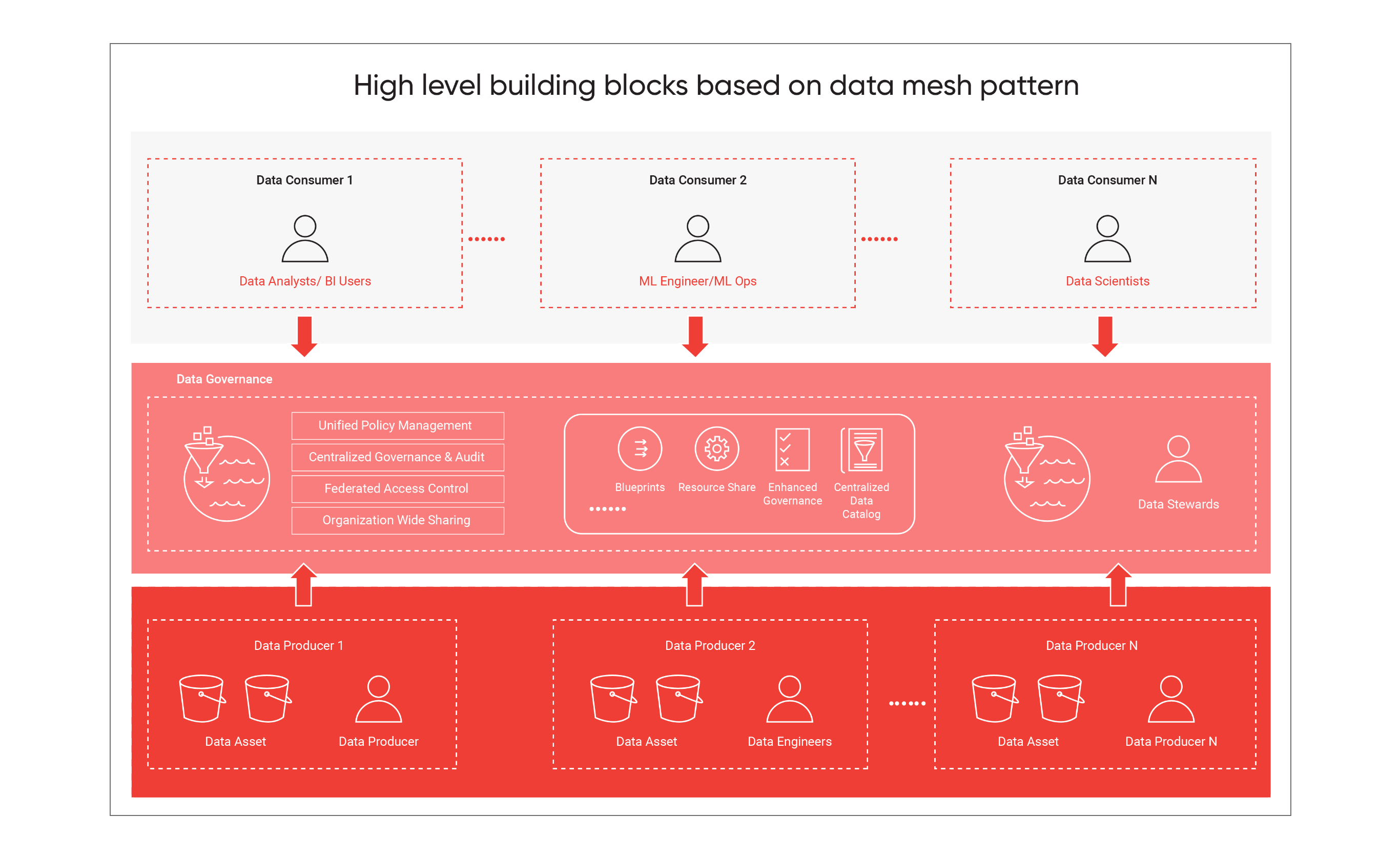
Modern data architectures are platforms that bridge the gap between decision-makers and IT professionals.

With modern data architecture, the processes used to capture and deliver important data within the business are also an integral part.

More importantly, modern data architecture outlines how the parties will consume the data and how it’s delivered.

What is Data Architect?

Similar to architects who design residential homes, data architects create blueprints for specific data flows and processes.

The blueprints are based on the objectives within a business or organization. More specifically, they’re visionaries who design the framework for enterprise data and its management.

A data architect works closely with internal stakeholders, alongside external vendors, to create a data strategy that helps businesses make data-driven decisions.

modern data architecture

Data architects also work to define reference architectures, which serve as guides for team members to expand current data systems.

Pillars of Successful Data Architecture

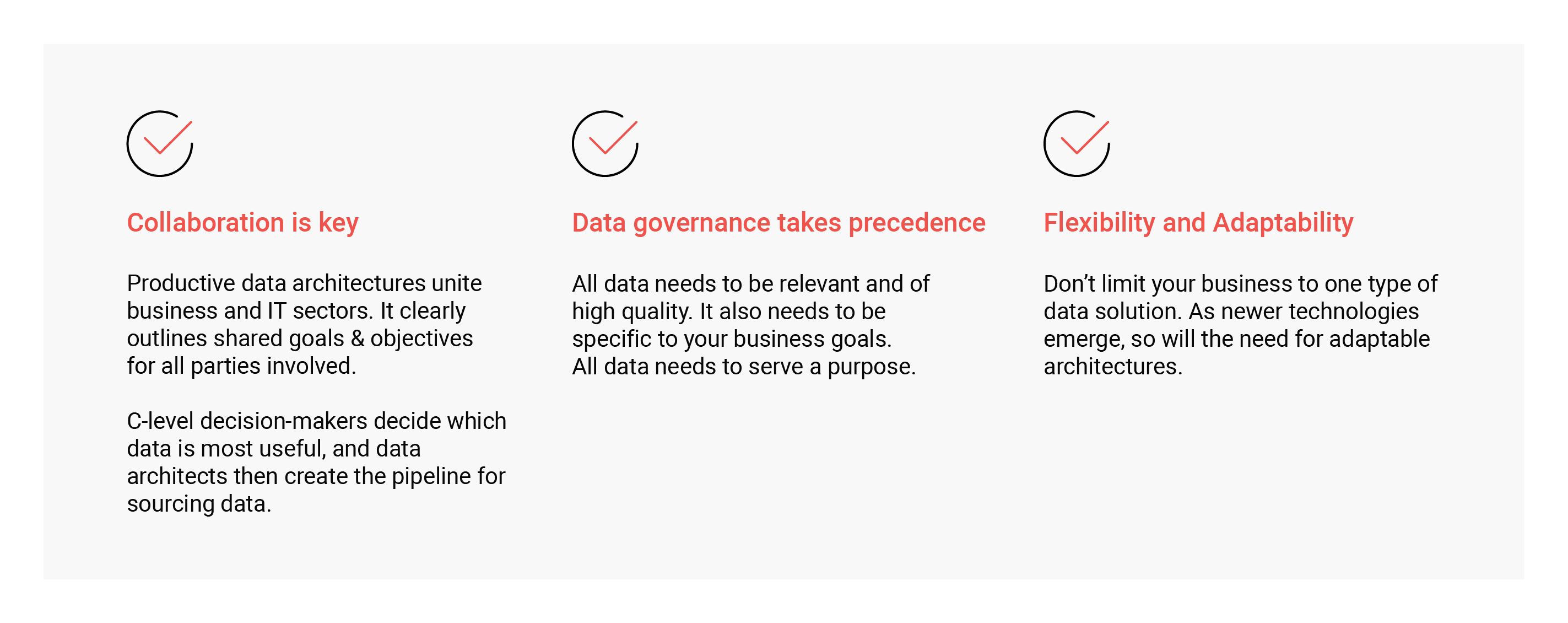
Well-designed modern data architecture always flows from right to left; specifically, from the data consumer to the data source.

Previously, data architectures were data warehouses. And because of their initial design and technology used, managing them was a time-consuming process.

Unfortunately, the gap between requests for data and final delivery often resulted in revenue loss or missed opportunities.

While modern data architecture still delivers usable data to a warehouse, it’s more agile and adaptable. It can change and evolve in response to the user’s needs.

With that said, there are basic components to modern data architecture that define its framework:

  1. User-centric. As mentioned above, the focus is now on the user and their needs. Users can be either internal or external stakeholders. Their needs may vary depending on their department or role. Data architects can now collect and deliver requested data to meet the user’s objectives.
  2. Adaptive. In modern data architectures, data flows from the source to the user. Successful data architecture always encourages collaboration.

It combines data from all parts of the business, in addition to external sources, into one specific place. Within this structure, data is seen as a shared asset.

  1. Scalability. One of the most important pillars of modern data architecture is its scalability. Unlike traditional limitations seen in data lakes or databases, newer data architectures are faster and are easily accessible on the cloud.
  2. Automation. Automating processes using cloud-based tools slashes production time. Processes that once took months to create are now built in just a few hours.
  3. Intelligence. In conjunction with automation, machine learning and AI are the foundation of modern data architecture.

AI can swiftly identify and correct errors in data reporting, create structures for new data and advise on incoming data with in-depth analytics.

  1. Elasticity. Scalability is only part of the puzzle. When it comes to modern data architecture, being able to roll back or scale on-demand is even more important. Elasticity gives administrators the power to shrink or scale without limitation.
  2. Security. Security features are built into the data architecture to limit who has access to it. Well-designed architectures are aware of both current and emerging security threats. They’re also GDPR and HIPAA compliant.

 How Data Architecture and the Cloud Work Together

Even though it seems like cloud computing is relatively new, theoretically, it’s been around for 40 years.

But with such an accelerated shift to a more cloud-based model, it’s important to understand how data architecture and the cloud work together.

With rapidly changing demands of data, businesses need scalable or elastic architectures at their disposable.

Thankfully, the cloud allows for rapid scalability, which is a cost-effective solution. It’s especially useful in cases of on-demand development as well as prototyping.

The cloud is also resilient. It can process large amounts of big data quickly in real-time. According to Gartner Research, enterprise data spending will account for approximately 15% of global spending on IT by 2024.

It’s also estimated that over 70% of businesses and organizations currently using the cloud are also planning on increasing cloud spend when they expand their modern data architecture.

Modern Data Architecture and Your Business

The main goal of data architecture is to streamline the way businesses gather, store, distribute and ultimately use data.

Another important goal is to provide valuable data to the right people within the business or organization.

Not so long ago, when specific data was needed, a request was made, and IT would find a way to deliver it in a timely manner.

This typically involved hours of manpower prior to delivery. In turn, this type of architecture made it difficult to access the right information when necessary.

Modern data architecture breaks the barrier between strategists and IT.

It enhances collaboration, communication, workflow, and productivity. Businesses can determine which data is most useful, the best way to source it and how to distribute it to the right internal stakeholders.

Data Fabric and Architecture

In today’s digital landscape, change is inevitable. Businesses that consider data a strategic asset will be better equipped to navigate that change.

But to stay one step ahead, businesses and organizations alike need to use data fabrics to guarantee unlimited access to all their data sources.

Let’s break it down.

Every business needs to use data analytics to its fullest potential. To streamline the process, you also need data agility.

Data agility connects and then combines the data from various sources for review.

Data fabrics house the connections between all the data, regardless of type or where it comes from.

They can also tell you what the data does, and how it relates to other relevant data. Without data fabrics, your ability to use data analytics to its fullest potential might be limited.

Data Architecture Strategies

Similar to marketing, you need to have a solid strategy when developing your data architectures.

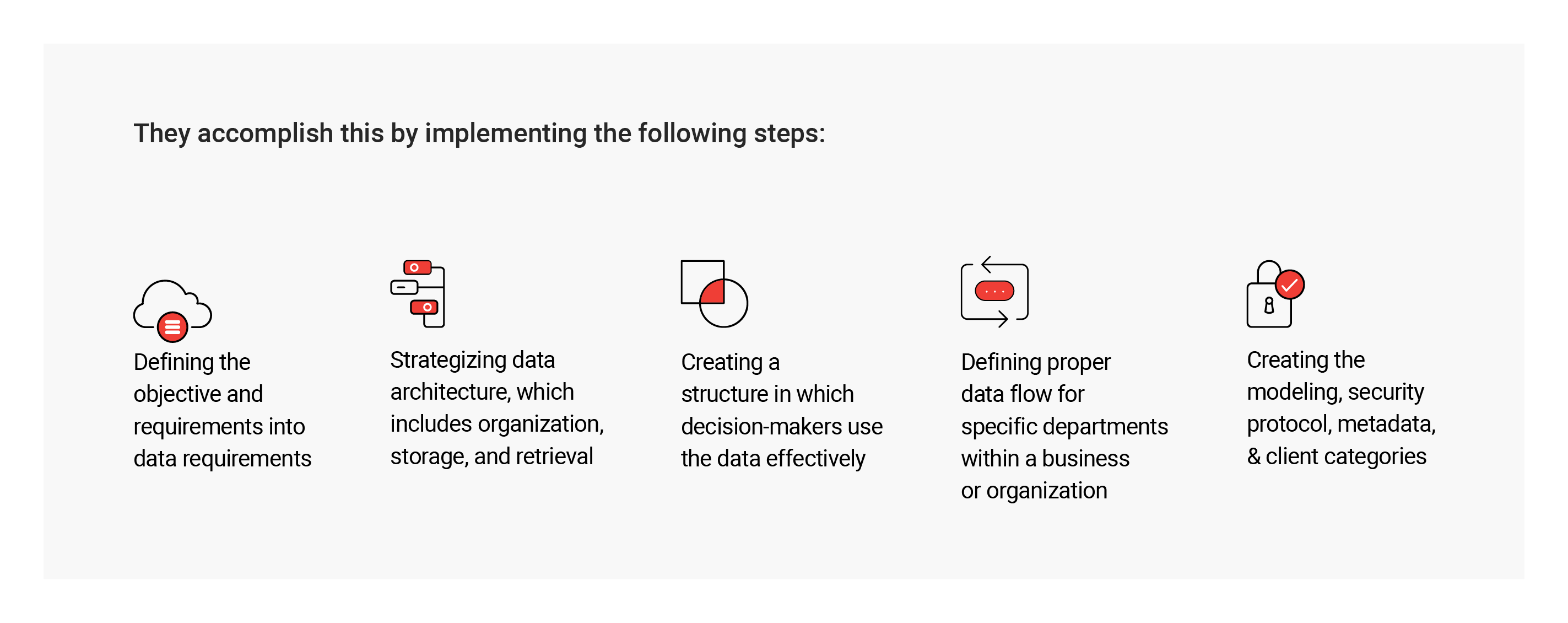
Here are a few things to keep in mind:

modern data architecture

Information and Data Architectures

It’s also important to understand the difference between information and data architectures. Data architecture is about sourcing, collecting, and using available data.

Informational architectures are more about using the data that’s collected to make strategic business decisions.

The Takeaway

For businesses that embrace modern data architecture, the future has never been brighter. But as traditional methods of data collection, storage, and disbursement fade into the background, the need for meeting customer demands will only continue to grow.

At TVS Next, we help clients harness the power of AI and data assets. And as technology and data analytics continue to expand, businesses that use the power of modern data architecture will have an edge over those that don’t.

The Key Components for Data Modernization

Alex Thompson Data and AI November 12, 2021

Data Modernization is at the forefront of every organization’s digital transformation initiative. While the transformation itself could be of the business model and processes or the organization’s culture, no real change can occur until data is modernized and made functional.

Imagine trying to create a flexible and open work culture, but your employees are still burdened by having to work with complex and outdated systems and data. Or you want to try and explore other business models and revamp your processes, but you have little to no insight into what your organization is currently doing. Therefore, it is inevitable that change, or digital transformation, in this case, must happen from all fronts for it to yield positive results. 

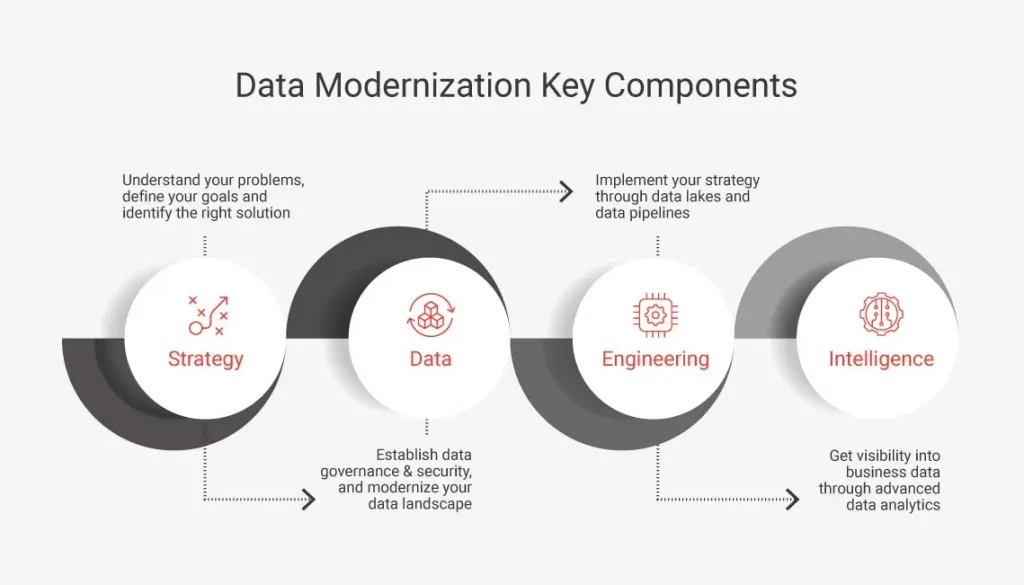
The following are the key components required for the success of a data modernization project: 

  • Strategy 
  • Data  
  • Engineering  
  • Intelligence 

Strategize Your Vision

To flawlessly execute a task, one requires a failproof way of doing it. Strategy is the first key component in every organization’s Data Modernization Project. 

First, analyze your current applications and their architecture. Understand your current data processes and the existing bottlenecks in your system. When you do this, you will arrive at a problem statement encompassing all the issues with your current system. Then identify your immediate and future business goals. Once you’ve set your goals, it is time to create a plan to solve your problems and provide a solution to meet all your requirements. Finally, ensure you invest in the right technology and people who can perfectly execute your plan.  

Focus on Data and Data Platform 

 What is an essential component of data modernization? Hint: It’s there in the name.  

Data is undoubtedly the focal point of data modernization. 

When you have succeeded at data modernization, your data will be completely integrated, be immediately available to anyone who needs it, adhere to security protocols, retain high quality, and provide valuable insights.  

 Here’s how you can ensure all the above:  

  • Choose the right platform to drive data transformation 
  • Modernize your data landscape 
  • Setup a data lake as a central repository for all data 
  • Establish data governance and ensure data security 
  • Build intelligent systems to harness the power of data 

Create Value Through Intelligence 

I have migrated and modernized my data; What next?  

To produce business value, you should convert your data into an intelligent business aid.  

Therefore, ‘Intelligence’ is the final but critical component of data modernization, generating real-time business insights that drive intelligent decision-making. 

Once your data is transformed into a viable product, build intelligent dashboards that show real-time information. Customize the analytics to deliver insights that align with your business requirements and help improve how your organization operates. Ensure you democratize data and create visibility into data for every stakeholder. Leverage existing AI tools in the market or build one on your own to accelerate processing and obtain advanced insights. Finally, incorporate automation wherever possible. 

Summary 

Here’s a quick look into the key components of data modernization and the focus points for each component: 

Strategy: Understand your problems, define your goals and identify the right solution 

Data: Establish data governance and security, and modernize your data landscape 

Engineering: Implement your strategy through data lakes and data pipelines. 

Intelligence: Get visibility into business data through advanced data analytics 

A Leap into the Cloud

Alex Thompson Data and AI September 8, 2021
Cloud

A Guide to Persuade Your Entire Organization to Embrace the Cloud

We don’t need to educate people about cloud anymore. The technological aspects of cloud migration, such as choosing a hybrid cloud or omni cloud model, and running serverless applications that are cloud-native, are oft-talked about.

And yet, Gartner predicts that lack of cloud skills will delay organizations’ cloud adoption process by two or more years.

When it comes to convincing apprehensive members of your organization that cloud adoption is a necessary step for digital transformation, you have to deal with two different groups:

  • Skeptical board members &
  • Reluctant employees

Here’s a guide on how you can do it:

1) Audit Existing Applications

Before you embark on the cloud migration journey, the first step is to audit your existing IT infrastructure. Find out the bottlenecks of your existing system, and causes for operational issues and delays. Assessing your applications will help you identify what needs to be changed immediately, and what can be continued to be put to good use. A complete re-engineering of the entire organization’s technology infrastructure might not always be required. Sometimes, retaining some applications as-is might save a lot of time and resource.

2) Present Business Needs

When discovery and assessment of your existing infrastructure is complete, it will give you a better understanding of technological gaps and issues that require addressing. This will help you formulate a business case that specifically meets your organization’s needs. There are multiple business benefits to migration such as decreased IT spending for infrastructure, software and maintenance, and improved security, accessibility and process streamlining.

3) Explain Risks

The necessity for future proofing businesses has never been more realised than since *you-know-what* happened. Explain to your stakeholders about how failing to innovate could potentially bring your business to a standstill during unforeseen circumstances. Also explain the risks of being the business that’s left behind without modernizing while all your competitors advance with the aid of technology.

4) Identify Pain Points

When people are reluctant to trust new technology, there’s often a valid reason behind it. Members of the older generation may feel that they do not have the skills and abilities to quickly embrace the technology change. It’s important to deliver a solution that is not too complex for use, and when the new tools or applications directly meet their needs, many members of your organizations will readily embrace the change.

Not providing adequate training to all your members could also be another issue that might slow down the process. Include orientation and training programs as a part of your migration strategy, and also provide simple guides for people to refer to until they get used to the new system.

5) Throw Light on Individual Benefits

For the business stakeholders, decrease in spending, increase in profits, better security, higher productivity & operational efficiency and enterprise mobility are very appealing benefits.

For other users, the ability for collaborations anywhere, anytime and from any device, empowering them to truly work from anywhere might be a solid benefit that draws them in.

6) Build a Shared Vision

Cloud adoption might mean different things to people in varying levels across the organization. While helping your team members understand what the benefits of cloud adoption for them may be, it’s also important to build a big-picture of how the modernization project will impact the entire organization as a whole.

Building a shared vision not only means creating a roadmap with your success outlined, it also means creating a project where every team and individual is included. That can be achieved by assigning ownerships to everyone, and including every user from inception till the end. When each person bears a little bit of the weight of the huge initiative of cloud migration, the entire process will seem easy and effortless.

How to leverage automation for business success

Alex Thompson Data and AI September 7, 2021

Organizations very well know the importance of taking the right action at the right time. Be it recruiting a right candidate, or converting a lead into a customer, multiple right actions performed by multiple people combine together to drive the organization’s success. So, what drives these actions? A number of factors such as the available data, experiences and skills of the people involved, their cognitive bias, and also the time required versus the time available to perform the action.

What if the negatives of individual decision making could be removed altogether, and only the positive aspects are harnessed to perform the right actions at the right time? That’s what automation is all about.

For different parts of your organizational engine

Everything happening in an organization can be automated to a certain level. How do you know if something can be automated? Any function that requires a certain process to be followed can be automated. Here are some automation examples:

Human Resources

The HR department is a very valuable asset to every company, for they bring in every employee and make sure everyone is paid on time. Some of the automation possibilities in the HR department include:

  • Sourcing the right talent meeting the company’s needs
  • Onboarding and offboarding automation
  • Automating time logging, leave requests and payroll processing
  • Defining the KPIs and letting bots find out the top performing employees

Finance

Accounts payable, accounts receivable, cash-flow management, maintaining balance sheets, invoice generation are some of the many automation possibilities within the finance department. Automating finance operations has the added benefit of ensuring accuracy and preventing human errors.

Sales & Operations

Salespersons can leverage automation to schedule appointments, send emails, resources and reminders. AI based chatbots on websites are available 24/7, expanding a company’s horizons across countries and beyond time-zones.

Tech Support

Anybody in IT would know that most of the support tickets are pretty repetitive: Access request, license request, password reset request, or asset request. By automating such service desk tickets, the workforce engaged to provide tech support on shift-basis could be deployed into more valuable projects.

Marketing

Marketing automation entails automated campaigns, dynamic content that changes based customer persona, contact segmentation for better targeting, and research and development. In all, marketing automation saves money by knowing where to spend it, without the hassle of hundreds of hours of research into targeting.

When every business function is automated, not only does it save time and money for the organization, it also frees up skilled workforce to engage in more valuable work that requires human intelligence. Automating repetitive tasks also ensures process compliance. Futuristic businesses have begun delegating work to bots and automation.

Interested in how automation will fit into your business case ?


Nexus logo

Get Started with NexUs Today!


    NexAssure logo

    Get Started with NexAssure Today!


      NexDox logo

      Get Started with NexDox Today!


        NexOps logo

        Get Started with NexOps Today!


          NexAA logo

          Get Started with NexAA Today!


            TVS Next new logo

            Let's talk about your next big project.

            Looking for a new career?