
Category Archive

Data and AI

Measuring ROI in AI: Finding Value that Isn’t Financial

cauvery k Data and AI May 20, 2022
ROI from Artificial Intelligence

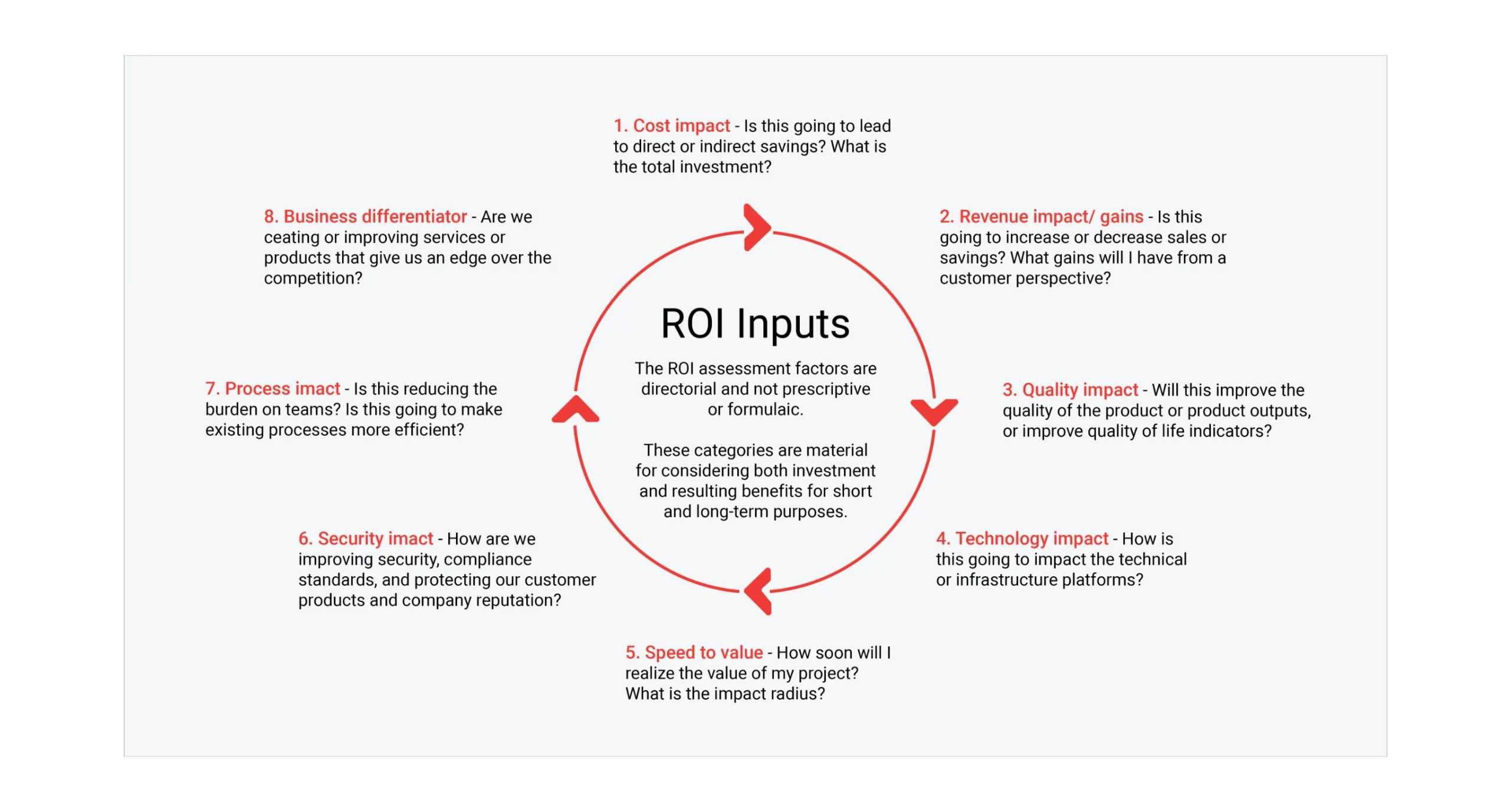
It’s crucial to consider your return on investment in artificial intelligence endeavors. When you know your potential ROI, you can plan and customize your production plan approach based on what you want to get out of the deployment. The ROI of any AI project will determine where you allocate your resources and invest your time.

You must note that AI systems require plenty of experimentation, and calculating ROI requires more than an all-or-nothing approach. Plenty of estimates come into play, differing according to industry, making a return on investment analysis essential early on.

Business leaders can justify some AI use cases by studying noticeable potential gains, but other cases will need more to determine worth. Intelligent prioritization means putting high-value products first, but you have to decide what that means to your company.

Correctly Measuring the ROI of AI

It’s only natural that business leaders have begun to look to capitalize on AI opportunities. Still, predicting future returns can be challenging, as well as determining which part of your business the investment should target. Business owners have to understand which AI capabilities can enable better business performance overall before they attempt to measure the true ROI of AI systems.

There are ways to measure ROI without only limiting the process to financial returns. There are varying ways for business leaders to think about success regarding AI projects, and they’re not as hard to implement as one might think. So yes, while financial gains in utilizing AI are essential, plenty of other factors make AI well worth the investment of time and money.

Assessing the Future Value of AI Systems

Artificial intelligence is all about the future, including assessing the future value of the AI systems we implement today. When business leaders think about what AI can do for business, it’s usually highly well-marketed instances that stem from very well-defined pieces of the sector, such as the world’s best chess player losing to an AI program.

However, it’s important to note that while AI can solve a problem like chess, it’s because the game has a distinct endpoint. Unfortunately, most issues that pop up in business and Fortune 500 companies do not have a definite measurable outcome. So, you can see where the primary circulating examples of AI and what it can do for your company could be very different.

Most businesses face real-life problems, such as successful product launches and improving customer experience. In short, the topics are sketchy and, at the very least, complex, with the potential for various undefined outcomes. The challenge comes in gauging the ROI on an acquisition when the result of that investment in itself is unclear.

If business leaders don’t understand the core of the business problem that they want to solve, then it’s impossible to determine ROI from a perspective that isn’t financial. The framing of your problem is essential, as there are open-ended issues where AI and ML were not previously in use.

To eradicate questions involving your ROI for AI, you have to pinpoint exactly what your business question entails. Knowing if AI can positively add to your solution is the first step in determining if it’s worth your time.

Scaling AI-Related Problem Solving

Companies of all sizes focus on solving problems on a scale that will impact that functional area (such as development or operations) as well as the business overall. To gain deeper insight into what you want AI to solve, you must frame and reframe the issue at hand, and it’s a nonnegotiable prerequisite to determining your ROI in AI.

You’ve got to pinpoint whether your problem is inefficiency or an improved customer journey. What do you hope to solve or gain by employing artificial intelligence in your company systems and applications?

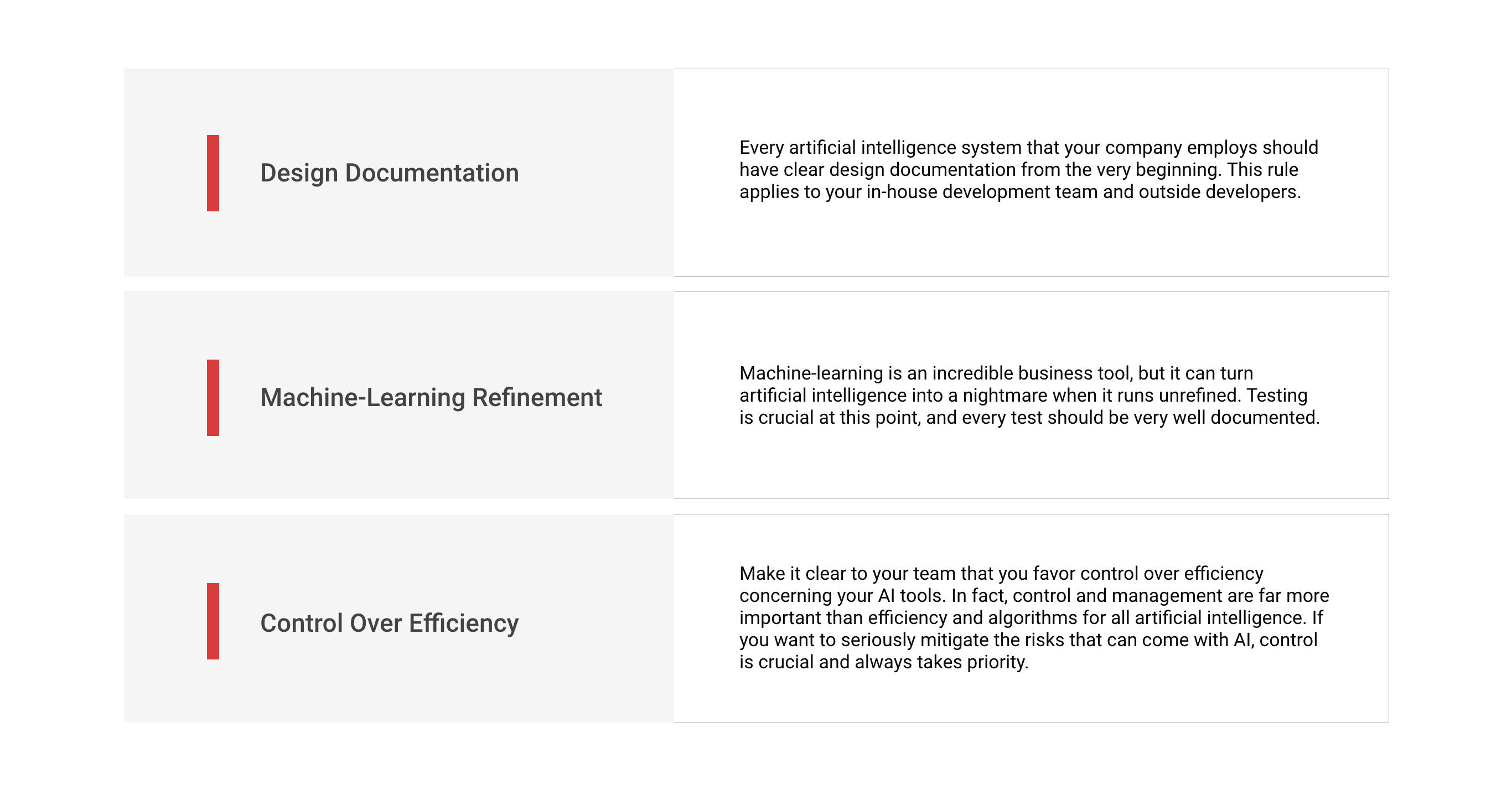
Problem-solving on a scare contains three solutions after you’ve efficiently framed the issue at hand.
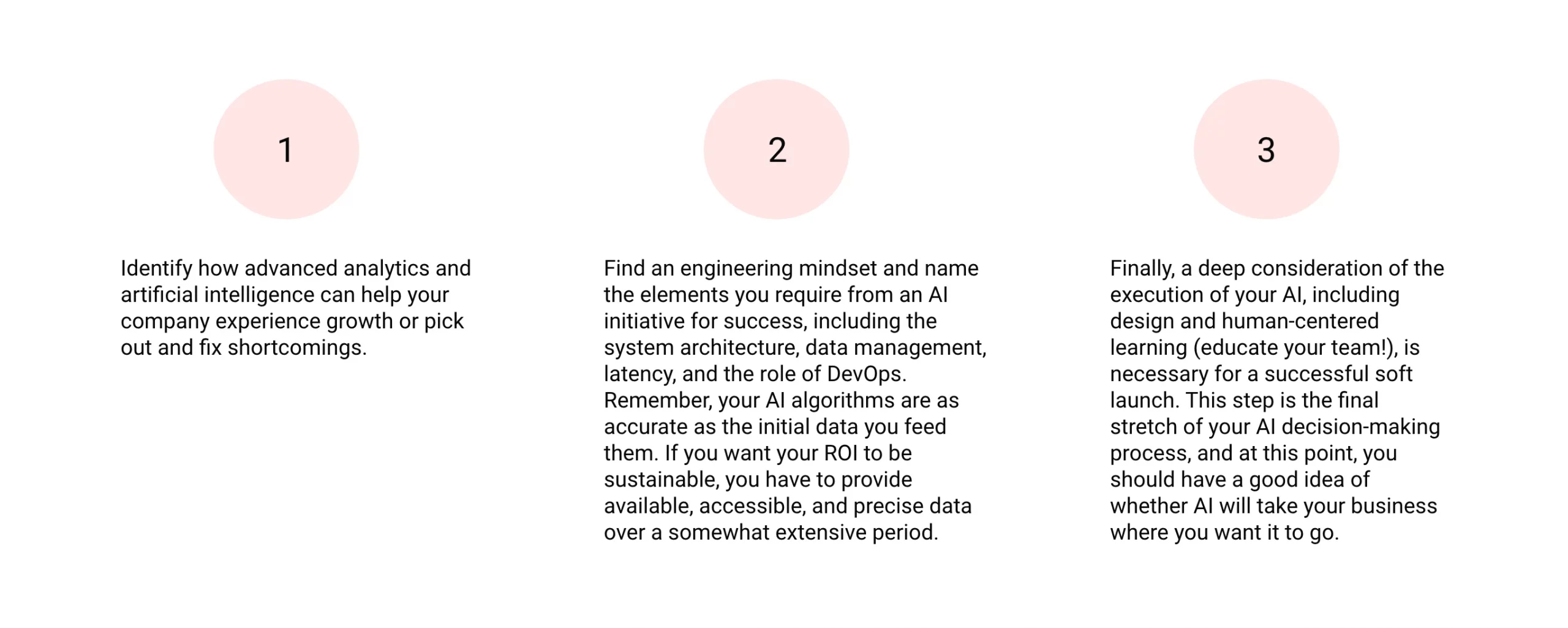
When scaling your AI-related problem solving, keep in mind that every decision your business makes will impact a human in one way or another. For these three problem-solving elements to come together, solving problems at scale, you need to establish improved sophistication within your algorithm and engineering and embrace a better overall understanding of human behavior.

Once you’ve made an effort to take these steps, you’ll have a better idea of what AI can do for you. At this point, you’ve probably noticed that artificial intelligence can’t work for you if you don’t put the research and effort in first. Lack of preparation is why so many businesses fail at the correct utilization of AI and never see a return on their investment

Finding AI Success

Finding the success you want for your company with AI depends on several factors. First, you have to understand that there isn’t one way to get everything right. The use of AI comes with testing, learning, experimenting, and failing. However, business leaders must also pick up what they’ve learned from past failures and understand that those lessons will be important in the near future.

For example, it’s not unheard of to execute 30 to 40 different AI initiatives in a six to eight-week time to show progress. When you focus on working through various AI solutions in a relatively short amount of time, your company will quickly define problems within the software and execution and determine progress and potential future success.

From these 30 to 40 choices, you could come away with four or five that you work into your company at scale. It’s a distinct process of elimination.

AI Requires a Thirst for Innovation

In general, AI and digital modernization require a thirst for innovation and a desire to make your company operations better, more manageable, and provide improved outcomes for your business, employees, and consumers. Your ROI on your AI endeavors comes from an initiative for success and the drive for teams from various areas of expertise to work together.

AI projects succeed when the approach comes from a collaborative framework, and an agile work mode typically yields better outcomes. Also, documenting and compiling past results increases the probability of success, and AI helps businesses become less linear.

The approach to business that will probably always prevail over human intelligence and futuristic machine algorithms is the combination of humans and machines. The value of the success of your AI initiative comes from realizing that AI asks for many business aspects to come together to improve customer experience. If you’re achieving this, can you justify that as an overall improvement on your ROI?

Looking at return on investment has to be cognitive in a way that we look at financial gains from implementing modern software and when the moving parts of a company come together to add value. Measuring ROI in any artificial intelligence journey should focus on how the opportunity affects your business, and financial ROI is only one part of a much more intricate story.

Improving Your ROI from AI

Staying dedicated to digitalization and automation is part of the ROI puzzle. Your business depends on it, and it’s crucial never to stop looking for solutions. You can commit yourself to maximize your efficiency and ROI while focusing on the areas of your business where ROI makes a difference. Regardless of your ROI focus, you’ll always want to be able to demonstrate your success areas.
ROI from Artificial Intelligence

The correct implementation of AI takes plenty of work and a lot of trial and error, and it’s a risk for almost any company, no matter how established. If you concentrate on how AI assists your company in moving forward, you’ll find that those financial gains will also come, and you’ll cast yourself far above your competition. Find the value your AI brings, and place your focus on every area that shows improvement.

How Data Fabric Can Resolve DWH and the Constraints of Data Lakes

data fabric

As the world of cloud computing modernizes digitally and finds more efficient, security-driven ways to store data continues to evolve; we see the evolution of data architectures everywhere. If you’re in the technology or business industries, you’ve likely heard of data fabric.

In short, data fabric is a relatively new data architecture pattern that operates by linking different data sources in a compact cloud environment. Data fabric allows business applications, data management tools, and end-users to securely access data that your company stores in various target locations.

Data fabric technology secures access to varying data storage systems in any location, whether on-premises, in the cloud or in a hybrid or multi-cloud environment. Data fabric allows your APIs to enable two-way access to your stored data. In short, data fabric acts as a security layer that stretches across your applications and data assets to ensure smooth and easy entry to different systems.

The Purpose of Data Fabric

There are a few targeted purposes of data fabric architecture. Aside from controlled and widespread system security, data fabric focuses on metadata management, data reusability, cross-application access, data standardization and quality, and data discoverability.

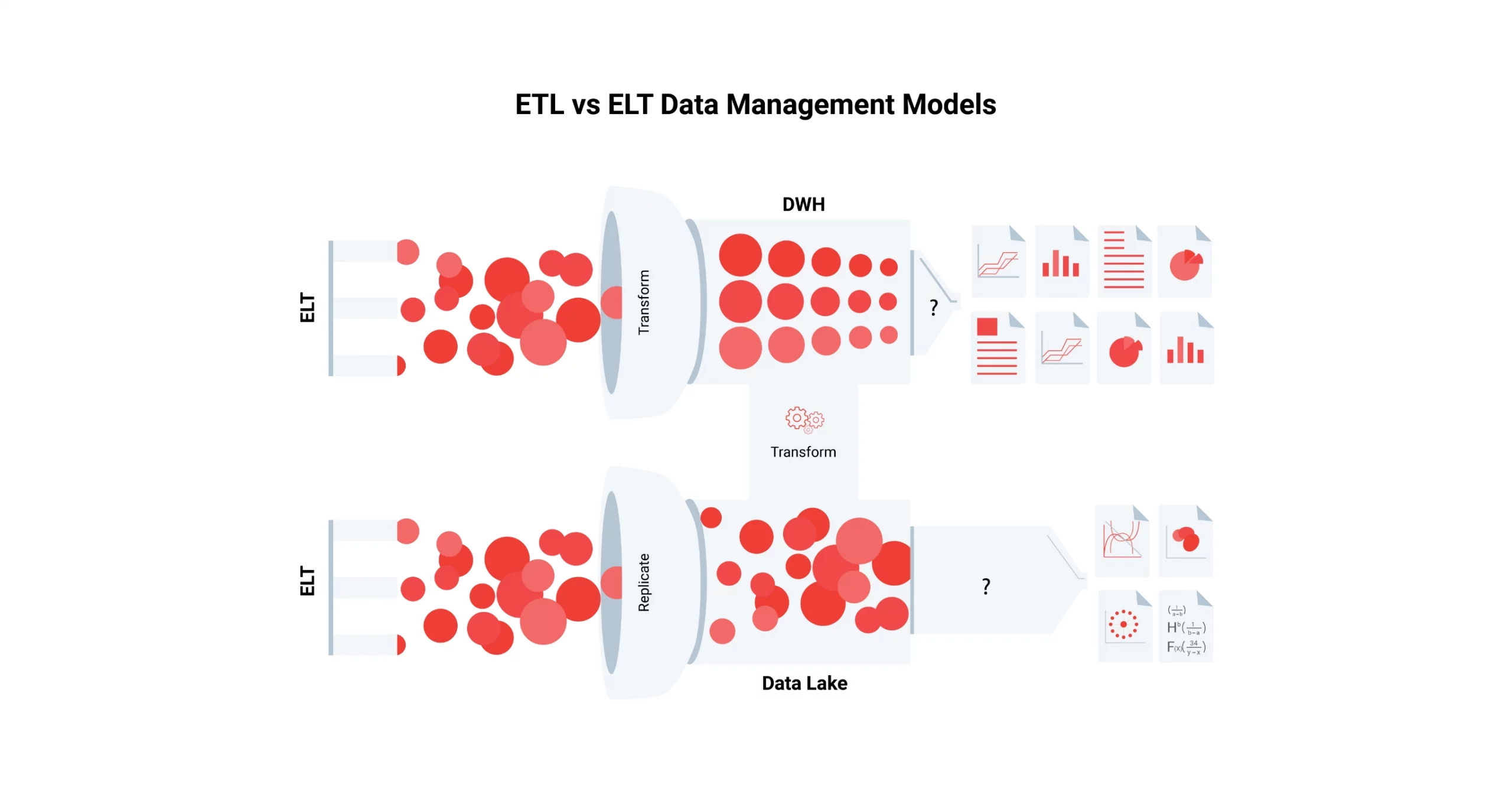
Data fabric looks to eliminate the days of one-way integration, making it possible for companies on an ever-evolving portfolio of products to interlink and exchange data between applications. While data warehouse (DWH) and data lake technologies aim to break application information barriers, they typically offer better connectivity and cloud-based storage than anything. For example, the purpose of a data lake is to store data until it’s retrieved for further examination and analysis.

Big data is everything. To be blunt, data-driven companies have more success than those that are not because the answers to their setbacks and roadblocks are right in front of them. There’s no doubt that data is the future, and the rapid growth of big data is proof of that.

As businesses on a global scale continue to migrate toward new data management approaches, the birth of new architecture designed to help work through the constraints of DWH and data lakes is necessary.

The Adoption of Data Fabric Architecture

Data-driven companies show substantial growth in contrast to those that operate on different approaches. Businesses that focus on analytics can anticipate changes in the market and understand consumer intent, creating the ability to outlast the competition and design a flawless customer journey.

It’s no secret that investing in analytics pays off, so why are companies hesitant to take the plunge? Regardless of the circumstances, we naturally want to see positive results, and it’s not uncommon for business owners to overlook the technical constraints that accompany relying on a mix of outdated legacy systems and cloud-native solutions for data management.

New architectures, such as microservices, tend to catch the eye of many leaders as possible resolutions. Still, when it comes to data management and exchanges, many data solutions do not coincide.

The Three Layers of Data Information

Typical modern businesses have three ways, or layers, to produce data-consuming applications. These include on-premise legacy systems, data warehouses to store and organize some data, and cloud-based platforms or integrations.

Most legacy software likely relies on older connectivity standards, while modern applications use newer architectures. Companies typically extract and transform data and load it into a targeted destination, like a data lake or DWH.

Many businesses exist on a half-migrated way of life regarding cloud-based solutions. The desire to make the complete migration is due to the multi-purpose business systems and functions of cloud computing. Customer relationship management and essential needs like accounting and HR systems are interconnected in the cloud, creating a ton of valuable data that ends up in a connected data lake in its raw state or, again, stored in a DWH.

How can businesses stop existing halfway on various data storage and operational platforms? There has to be a way to establish a secure and practical connection between the three layers of data information and fully transform into an organized, data-driven business.

Enter: Data Fabric

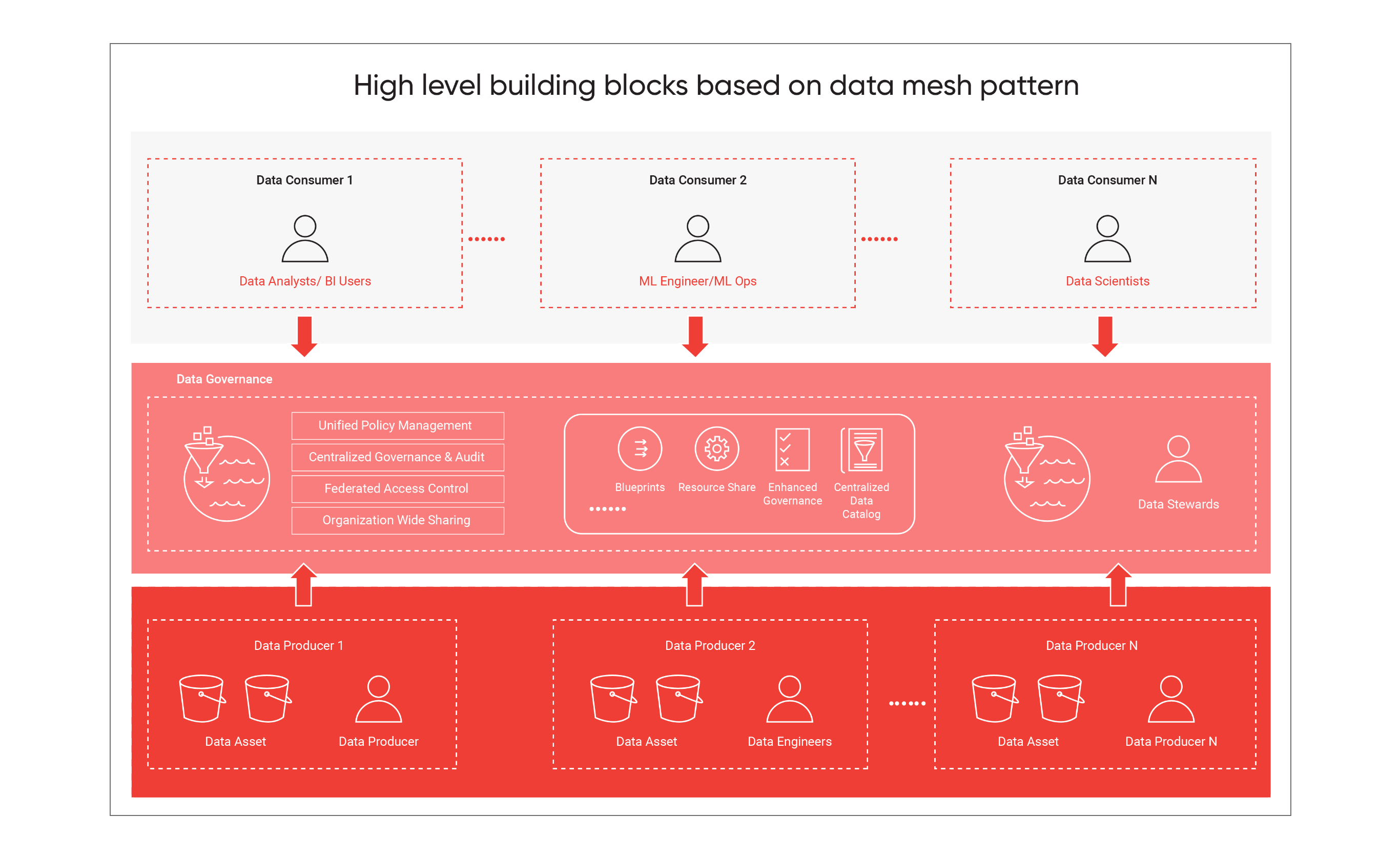
This connectivity issue is the exact challenge that data fabric intends to solve. Data fabric is unlike DWHs and data lakes because it doesn’t require businesses to move their data. Instead, data fabric architecture aims for better data monitoring between these connected systems, including on-premise legacy systems, cloud hybrids, or data lakes and warehouses.

How Data Fabric Initiates Change

Today, there’s no shortage of data anywhere, especially in business. Most companies have an extreme amount of data coming in from various locations. It can be incredibly challenging to figure out where to put that data and how to approach the analytics.

Data fabric architecture can help reduce the burden that many companies face regarding the complexities of data and analytics. There is quite a bit that falls under this umbrella.

Data Access

Company data has to be interoperable and, at the same time, remain compliant with data usage regulations and exhibit strict permissions. It can be hard to accomplish this level of regulated data access without overseeing many users.

Data fabric can help by enforcing the correct data governance practices automatically. The data fabric technology helps to standardize data formats and create codes for user access permissions and all usage rights. Data fabric is the perfect way to build siloed data infrastructures that offer insight into how different services and users consume company data.

Management and Distribution

Perfectly-timed access to data is essential for training AI models and predictive analytics solutions. Corporate insights are crucial for business leaders, but it’s challenging to deliver.

Even in major corporations, very few have analytics fully integrated into daily operations, which borderlines on absurd. Analytics is one of the essential components of making consumer predictions. The fact that giant, global companies don’t embrace them as they should proves that making the digital modernization leap isn’t something that happens overnight.

Data fabric can assist by centralizing data management, backed by data regulations and policies. Development teams can configure data fabric architecture to prevent unbalanced load allocation and optimize data workload assignments within your internal tech structure.

In this situation, data fabric allows users in any location to access the data they need at high speed. Data fabric architecture can provide the predictive analytics solution many companies need to thrive.

data fabric

Security

Few things are more important than data security, both from a consumer and business owner perspective. Dealing with leaked customer and sensitive business data is never desirable, but the rising rate of cyberattacks would suggest it’s never out of the question.

Security factors have made business owners incredibly reserved regarding which third parties they grant access to their data. Integrating additional partners into an already-sensitive business ecosystem is stressful and overwhelming, no matter how much experience you have in the business world.

As we move into a new way of doing, it will become impossible for companies to remain competitive while embracing a platform-based way of collaborating and exchanging data with differing organizations. It’s expansion at its finest.

Data fabric helps in the way of security by establishing standard security regulations for every connected API. As a result, this architecture can ensure consistent protection across all business data points, managing those security regulations from one platform. Data fabric has the potential to spark an ongoing evaluation of user access credentials and usage patterns. You will have the peace of mind of always knowing what is happening with your data.

Compliance

With the big data boom came an influx of regulatory compliance rules that companies must follow. Almost every industry faces high regulation, especially healthcare and finance, as consumer data within these fields are undeniably sensitive. Specific constraints have come into play, and as a result, businesses tend to ditch their analytics projects due to the cost of isolating sensitive data.

Data fabric can help with compliance by allowing unified standards when transforming and utilizing collected data. Also, you can configure data fabric architecture to trace data, which is a factor required by compliance provisions. It helps you comply with changing regulations while using your data to increase revenue. You’ll always know where your data rests, stores, and who has access to it.

Data Fabric vs. Data Lakes and DWH

Data fabric architecture does not intend to replace data lakes and DWH. Instead, it complements the issues within these data storage methods while focusing on compliance, access, and implementing analytics.

Data lakes and warehouses each hold their own space in business data storage. Still, they’re full of restrictions, including swamping, a lack of data strategy and management, low tech maturity, limited scalability, and higher operational costs.

Data fabric can fill in the gaps presented by data lakes and DWHs and better connect any application that draws data from them. Data fabric forces a reassessment of management approaches while creating a consistent approach to managing data safely and securely to make sense for big data and big business. In short, there is more than one way to store your data.

The Data Modernization Challenge

data modernization challenges

Data modernization and artificial intelligence are taking over the business world. These days, you can’t turn around without hearing phrases like “machine learning” or “digital modernization.”

Every business owner everywhere has at least a small stake in wanting to digitize their business. After all, it’s near impossible to remain relevant without modernizing legacy technology platforms. Data challenges are no stranger to every company on Earth since modernization is the driving factor behind those data challenges.

While many major corporations, big businesses, and modern start-ups have gotten a handle on modernizing their digital processes and embracing cloud computing, smaller but established companies are struggling to make the change. For the most part, these struggles relate to time and capacity.

Data Management in the Modern World

As data management continues to revolutionize, enterprises of all shapes and sizes are experiencing issues with data quality and integrating cloud-based technology platforms. While many businesses are right in the middle of an attempt at modernizing their current data, the way companies keep their data is evolving from an on-premise-centered approach to hybrid architecture.

Shaping Modern Data Architecture

As companies target legacy technology modernization across the globe, leaders in the tech industry have identified some significant players regarding how businesses choose to manage their data. Though the companies may be radically different, the data management elements remain the same.

Open-Source Frameworks

These templates for software development, typically designed by a social network of software developers, are extremely common among businesses shifting how they manage their data. Open-source frameworks are free to use, and they allow all companies to access the big data infrastructures necessary to implement modernization.

Cloud-Computing

Overall, cloud computing is relatively simple regarding user-friendliness and data storage. Many providers boast cloud storage and other cloud-related perks for relatively low prices. The availability of cloud-hosting companies is encouraging businesses to invest by integrating or moving their legacy systems to the cloud. Migration to the cloud is one of the leading players in data modernization, without question.

Analytics Tools

The evolution of analytics tools is playing its part in the desire that many companies have to modernize their data. Overall, analytics and end-user reporting are better (and more sophisticated) than they have ever been before.

The addition of the Citizen Analyst role is prevalent in many modernizing companies that focus heavily on analytics. A Citizen Analyst is a person who is knowledgeable in analytics and machine learning (ML) systems and algorithms. Your CA, should you choose to have one on staff, will assist the modernization process by identifying profitable business opportunities.

data modernization challenges

Data Challenges and Modernization Barriers

As the world races toward an even newer and more modern digital era, it’s clear that there are companies left behind. It was once possible to forego a presence on the internet as a business, but those days are long gone. To remain relevant and in line with, or above, your competitors, you have to focus on modernization and your customer journey.

Data challenges and modernization barriers are prevalent, but they don’t have to stop a business from being profitable digitally. However, it’s almost impossible to maintain profits while ignoring modernization.

Data Quality

We touched on this very briefly at the beginning of this article, but data quality is a massive hindrance regarding the mechanical aspects of modernization. Data issues, such as inconsistency and incompleteness, impact company migration to the cloud. Most of them stem from the inability to keep high-quality data both during and after the transition.

Data Sprawl

It can be incredibly challenging to integrate cloud data and on-premise data. The amount of various digital information created, collected, shared, stored, and analyzed by businesses make up their data sprawl. Depending on the size of the enterprise, the sheer size of this data may be overwhelming to move, primarily if you’re dealing with the data showing up as incomplete.

The Role of “Big Data”

Modernization through data strategy is a fantastic concept if properly embraced. Thousands of companies are not using a “big data” platform or data stored in a greater variety, with increasing volumes and more velocity.

This lack of use has nothing to do with the effectiveness of storing data on a “big data” platform. Instead, it suggests that companies have trouble finding the role that “big data” should play within their existing data. They know they have to modernize, but they don’t know where to start, and this state of overwhelm is one of the most significant data modernization challenges in existence.

Compliance Concerns

Data challenges are prevalent in the form of compliance concerns. With the consistent modernization and movement of primarily sensitive data, plenty of regulations and data protection mandates are rising to the surface.

Obviously, we need rules and regulations in place to protect sensitive data for businesses and consumers. However, many companies worry about the inability to meet ever-changing compliance regulations, potentially facing fines.

The need for regulated data safety isn’t going anywhere anytime soon, so companies must find a way to comply if they’re going to focus on digital modernization and the up-leveling of their business. Regardless of your feelings on the topic, there’s no question that it’s definitely a challenge for data modernization.

Successfully Modernizing Data

Harnessing the power of your current (and ever-growing) database is essential to achieving growth and excellence in your business operations. Successfully modernizing legacy systems means complying with mandates, enabling priceless analytics for your company, and providing a fantastic consumer experience.

Modernization barriers tend to come in the same form for every business, but this doesn’t mean you can’t succeed at launching a digital revolution. However, you’ll have to clear a few roadblocks (other than data quality) along the way.

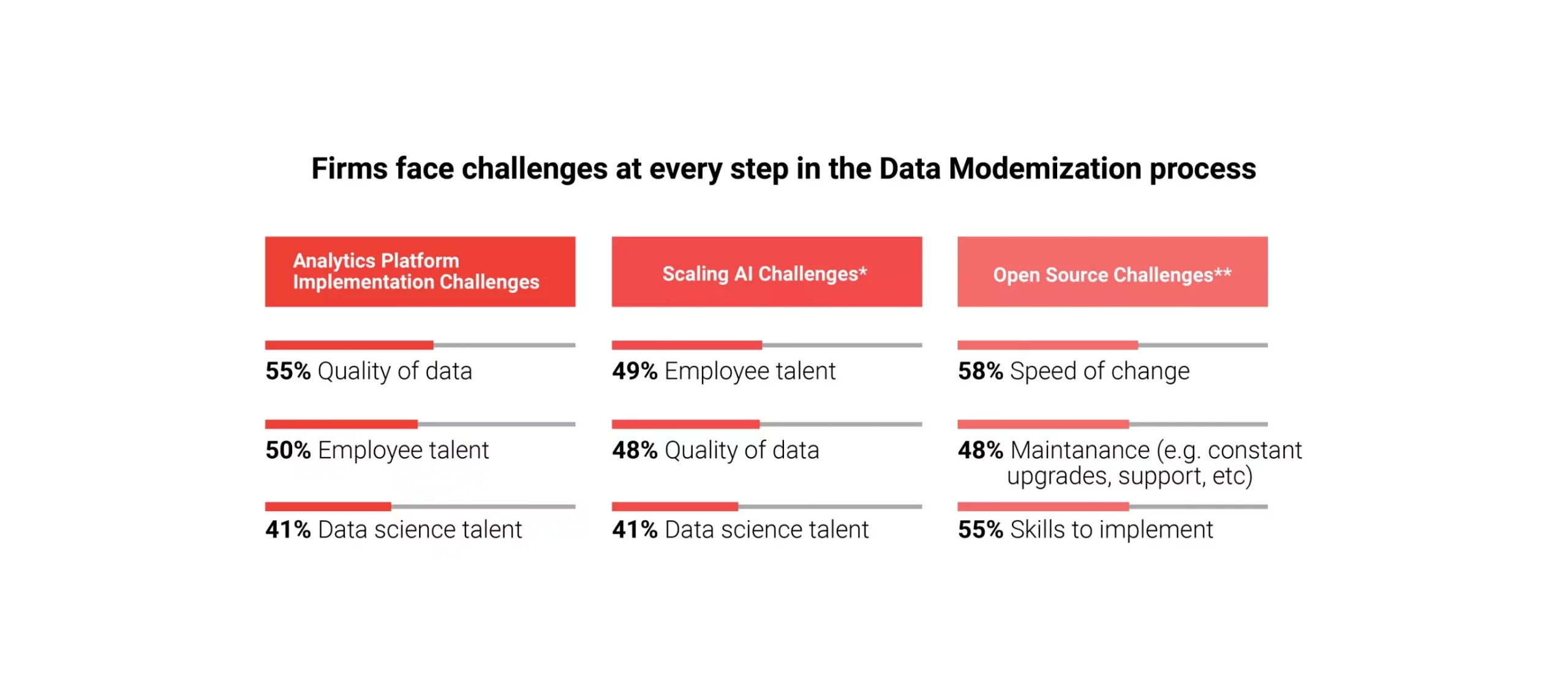
Misaligned Employee Skills

More often than not, the current skill set of your employees does not align with your data management needs. Everyone struggles (to a certain degree) to find talent for their workforce. When it comes to data modernization, the amount of knowledge your employees have or don’t have can directly impact data management and the implementation of new solutions.

For example, you’ve hit a wall if you’re attempting to employ an advanced analytics platform that your employees do not have the skill set to use. Data Science professionals are essential to data modernization, so this is a problem for many companies.

Open-Source Hurdles

Even though open-source tools open the world of data modernization to almost everyone, many businesses are too wrapped up in security concerns to consider using them. When utilizing an open-source platform, the speed of change is significant, affecting the entire organization if everyone is operating on different pages.

Digital modernization requires company-wide support and effort. Maintenance is also a challenge for open-source, as is the implementation of the applications. As you can see, workplace talent is crucial to pulling off successful data modernization.

Early Stages of Basic Solutions

The most basic data storage solutions are in the (very) early development stages for many businesses, which is quite troublesome. Data lakes and data governance tools are foundational for data-driven companies. Still, because so many of these businesses are in the early stages of fundamental data storage, problems are sure to arise regarding the ability to move forward to a more modernized approach. They’re simply not ready.

Unsatisfied with Implementation

If there’s one thing that many companies have learned throughout attempting to modernize their data, purchasing or downloading the framework to upgrade the way you keep your digital information doesn’t automatically mean you have a complete solution.

Many organizations remain unhappy with the way their data tools are governed or implemented and their analytics platforms and data lakes. It’s not to say that this dissatisfaction comes from the tool itself, but instead that it lacks the ability to meet the needs of the business.

data challenges

Our Recommendations

With so many companies stuck in the middle of a digital modernization mess, we understand that the bottom line for businesses is to have access to systems that show results immediately. However, technology cannot solve your problems on its own.

To get the best out of data modernization, we suggest:

  • Test emerging technology as it evolves at a rapid pace. The technology you implement today could become obsolete within the next five years, so select a provider that stays in tune with these changes.
  • Put the cloud at the center of your modernization strategy, as it’s designed to deal with operational workloads and analytics with high levels of security.

Choose to work with a provider that focuses on the priorities and initiatives of your business. Tangible results come from providers that understand outcomes.

Overcoming Data Modernization Challenges

It’s frustrating to sit in the middle of operating on old legacy systems and attempting to modernize your data with neither end of the spectrum working in your favor. Your best bet is to partner with a service provider that can focus on results while building hybrid strategies.

There are too many benefits to organizing and digitizing your data to work for your business, contributing to growth instead of simply existing for reference. Data modernization can’t be ignored, so ensure that you’re taking the right path.

Building Your Modern Data Platform with Data Lakehouse

data platform

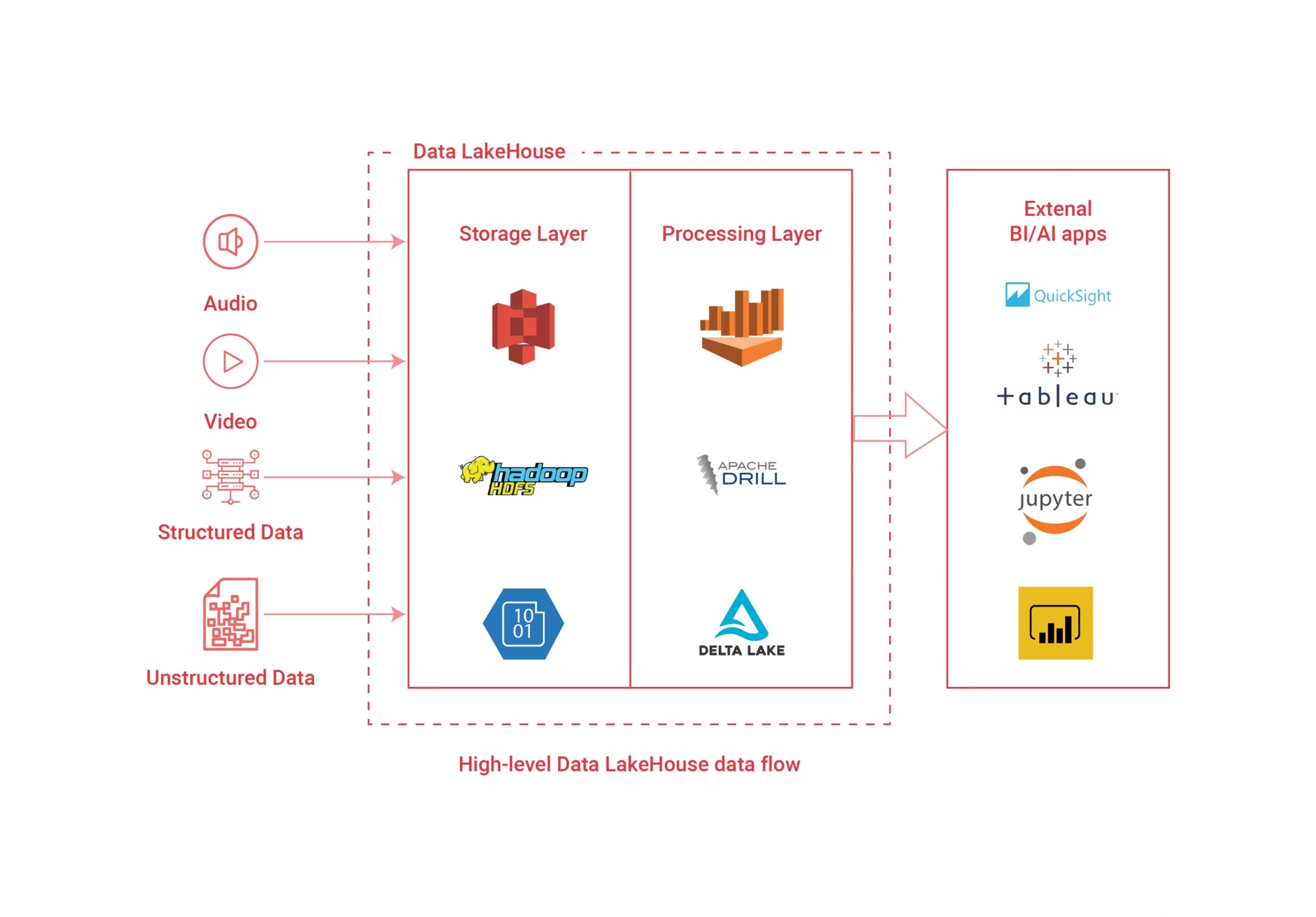
Modern data platforms require a separate storage and processing layer to work efficiently. A data lakehouse is a solution that combines a data warehouse structure (typical in most original legacy tech systems) with the more advanced and convenient features of the data lake.

Data lakehouses enable the same schema and structure as those in your data warehouse, and they apply that structure to unstructured data, like what you’d find in a data lake. Data lakehouses allow users to find and access information more quickly, so your team can begin putting that stored data to work.

Building a Data Platform

Once done out of convenience, building a data platform within your business is now a necessity. Improving your customer experience based on data-given actionable insights will increase revenue and define your brand. However, it can be difficult for companies to pinpoint the right ways to define their data platform.

The technology industry hasn’t exactly developed a blueprint for IT teams to follow, and data layers will look different for every company, typically based on the industry and type of company in question. In this article, we’ll talk about how you can lay the foundation for a modern data platform and utilize that data lakehouse.

Understanding a Data Platform

Think of your data platform as the central nervous system of your company data. Your platform should handle the collection, cleansing, transformation, and application of all data in storage and use it to generate insights. Many companies are data-first and have embraced housing data as an incredibly effective way to scale data.

Gone are the days when companies treated data as a means to an end, final product, or outcome. Instead, data has become more like a type of software. Most companies dedicate entire teams and plenty of time to maintaining and optimizing their data and, in doing so, can achieve accurate data-driven results.

ETL/ELT data pipelines should be layered, which can bring in a certain level of confusion for teams that might be unfamiliar with the data lakehouse or a modern data platform.

How to Build a Modern Data Platform

You cannot build your data platform without a foundation, and each of the platform layers mentioned will assist you in establishing your data lakehouse from the hypothetical ground up. It can be challenging to know where to start, but every business has the same core layers regarding a modern data platform, and they are as follows.

modern data platform

Storage and Processing

You cannot physically have data if you don’t have a place to store and process that data. Not many companies transform and analyze their data when it becomes available, so storage is an absolute necessity. As your company grows, you’ll likely begin to deal with large amounts of data that will become overwhelming if it doesn’t have anywhere to reside in the meantime.

Businesses of all sizes are moving their data to the cloud. The emergence of data storage native to the cloud is everywhere. From data lakes to lakehouses, it’s challenging to come by a company that doesn’t store at least a partial amount of their company data in the cloud.

The cloud offers affordable and accessible storage options for on-premise solutions. The type of storage you’ll choose is entirely related to your business needs, but we’re laying the basis for an effective data lakehouse. Regardless of your direction, you cannot build modern data without the cloud.

Data Delivery

Every modern data platform needs an efficient way to deliver data from one system to another, known as data ingestion. As the amount of data builds, infrastructures tend to become incredibly complex, and many teams are left dealing with mass amounts of structured and unstructured data from various sources.

There are plenty of tools available today to assist internal tech teams in ingesting data. However, there’s no shortage of data teams that build custom tools with code to deliver data from internal and external sources. Artificial intelligence workflow automation is an essential component of the data delivery layer.

Data Transformation

Original data must be cleaned up and readied for analysis and reporting. This cleaning process is called data transformation, and you have to do it to build a modern data platform such as a data lakehouse.

Once you’ve transformed your data, you can move to the modeling stage, which creates a visual representation of your data within the lakehouse. Changing the data makes it understandable, while modeling makes it comprehensive visually. When the graphic layer is complete, you can ready your data for the ever-important analytics phase.

Analytics

There is no point in collecting data if your business can’t effectively use it, which is where analytics come into play. Your data doesn’t have meaning without analytics, and internal statistics are crucial to the data puzzle.

There are plenty of effective analytics software choices available today, and your data or development teams can help you choose the right one for you. The proper analytics layer for your data stack is vital to how you interpret your data, so select your software with care.

Observable Data

Because modern data is so complex, there has to be a certain level of observability for your data team to determine whether the information presented is trustworthy. Your organization does not have the time to deal with partial or incorrect data.

Through effective data observability, your teams can fully comprehend the health of your data. You’ll apply what you’ve learned from your experience with Development Operations to your data pipeline, focusing on usable and actionable data.

Check your data for freshness, proper formats, completeness, schema, and lineage. The right observability software will connect seamlessly to your data platform. This level concerns security, compliance, and scaling mass amounts of observable data.

The Discovery Level

Finally, you need real-time access to your data, and data catalogs and warehouses no longer cut it. Consistent access to reliable data is necessary to running a successful business in any industry, period. Data discovery picks up the slack where lack of support for unstructured data falls short.

The presence of data discovery offers a real-time glance into the health of your data and supports data warehouse and lake optimization. Data discovery will authorize your team to trust that their assumptions regarding your data match the reality of what that data presents.

Utilizing the Data Lakehouse

Each of the steps mentioned above will lead you toward a data lakehouse architecture. The data warehouse paradigm enables data storage in an organized hierarchical structure. The data lakehouse is a piece of that structure that can transform unstructured data into something you can use to establish your business and better your brand.

The level of business intelligence that runs the data portion of your company is an imperative component of your success. It would help to leverage your data software and services into actionable insights every moment your data team is on the job.

There has never been a more crucial time to put the best (and most modern) practices into place to ensure that you’re making reliable data-driven decisions every day. Instant and organized access to your data is crucial for you and those on your team who benefit from that access. Consider building that modern data platform, beginning today.

Evolution of the Modern Data Center: Embrace a Hybrid Cloud Environment

cauvery k Data and AI April 1, 2022
hybrid cloud infrastructure

There’s no question that the public cloud is gathering momentum and attention from a mass number of enterprises and corporations. Businesses of all sizes are dabbling in digital transformation, and the cloud is their final destination.  

Updating legacy systems and embracing a complete digital upgrade is not for the faint of heart. However as IaaS systems and SaaS systems become imperative to enhancing customer experience, it’s inevitable. Regardless of the fact that moving business systems to the public cloud has sparked great interest, many companies refuse to take the leap.

Hesitancy to Embrace the Cloud

If operating on the cloud follows through on every promise, such as improved scalability and reduced IT costs, then what is keeping companies from marking the move? There are a few perceived issues that hold various businesses back regarding digital transformation and moving systems to the cloud. 

First of all, it’s a huge job. Embracing a cloud environment, though necessary, is a whole lot easier said than done. The reluctance to move while continuing to operate via internal-infrastructure teams could come down to a better total cost of ownership. Operating costs over the lifespan of a business are extremely individual. 

It would be ignorant to advise every business that moving to a cloud environment would be financially beneficial. At best, it can only be assumed based on what we’ve seen in the past. With change comes a certain level of fear, primarily when that change might be impossible to avoid.

Safeguarding Sensitive Information

Many business owners and their development teams fear the inability to safeguard sensitive information in an online-only cloud environment. There is an assumed lack of control concerning security features and regulatory needs.

In reality, there is no online security system that is completely foolproof, period. Yes, the cloud is extremely secure. It depends on which operating system and the company you choose to utilize to host your cloud, but security features are typically extensive and state of the art. Again, this hesitancy is understood, because nothing is completely hacker-proof. To set minds at ease, business owners should speak, in detail, with the cloud service providers they think they’d like to work with. Information is the key to making a decision.

Established Skill-Set Enterprises

Companies that hesitate to move to a hybrid cloud environment worry quite a bit about the established skill-set they already have that pertains to their legacy systems. Years have been put into the way your company currently operates, and change is virtually terrifying.

Business owners that are satisfied with the way their business is currently run should think hard about embracing a cloud hybrid environment, mostly because it’s beneficial, and partly because it’s completely inevitable.

Navigating the Inevitable Multi Cloud Infrastructure

If you aren’t familiar, the multi-cloud concept is the way businesses operate on more than one cloud service. It could be two or more public cloud services, or one public and one private. The combinations are endless, and so are the corporate benefits.

Utilizing the multi-cloud is a fantastic way to scale business operations and put a SaaS application into effect while running on old legacy systems. The biggest benefit of the multi-cloud is the fact that businesses can take advantage of specific services from different cloud vendors to put together a system that works for them. 

While it seems simple to operate on a multi-cloud infrastructure, it is not. Companies attempting to gather the best of both worlds are struggling to evolve their services because they lack a strategy that makes sense. 

The bottom line here is that various cloud providers offer shiny services and attractive features that encourage businesses to use more than one. While this approach to the cloud works well when executed correctly, the service gaps are becoming more apparent. If your multi-cloud services do not mesh well, it’s your customers that will face the largest amount of discomfort, and that will show in your numbers. 

Hybrid Cloud Infrastructure

Addressing Multi Cloud Issues

To fully address the issues that come with the multi-cloud, including the pressure to build faster systems that jump-start growth and encourage speed and fast delivery times, it’s crucial to fully grasp a firm knowledge of the necessary technology.  

The time has come for internal and infrastructure teams to seriously alter the approach they are taking to utilizing cloud platforms and putting them into action. Proper planning is beyond essential. It is completely inappropriate for us to register for cloud services because they’re offering a feature that will work for our business without assessing how it will affect other business operations. 

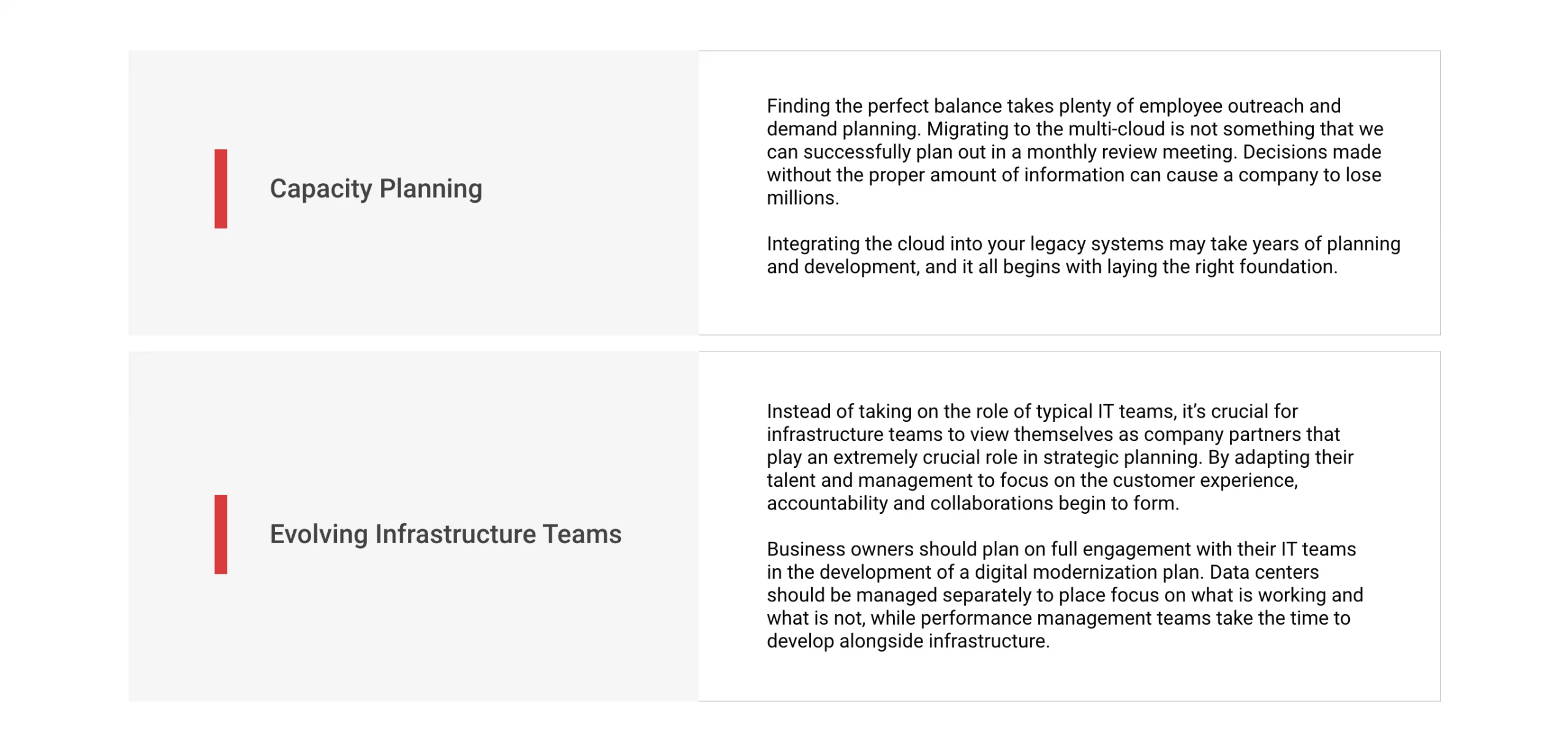
Companies, and every employee within, must fully embrace planning, service operations, capacity delivery, and strategic sourcing. Without encompassing every piece of this puzzle, and negating to inform your teams in regard to what changes to expect every step of the way, it is impossible to see transformative change on a digital scale. 

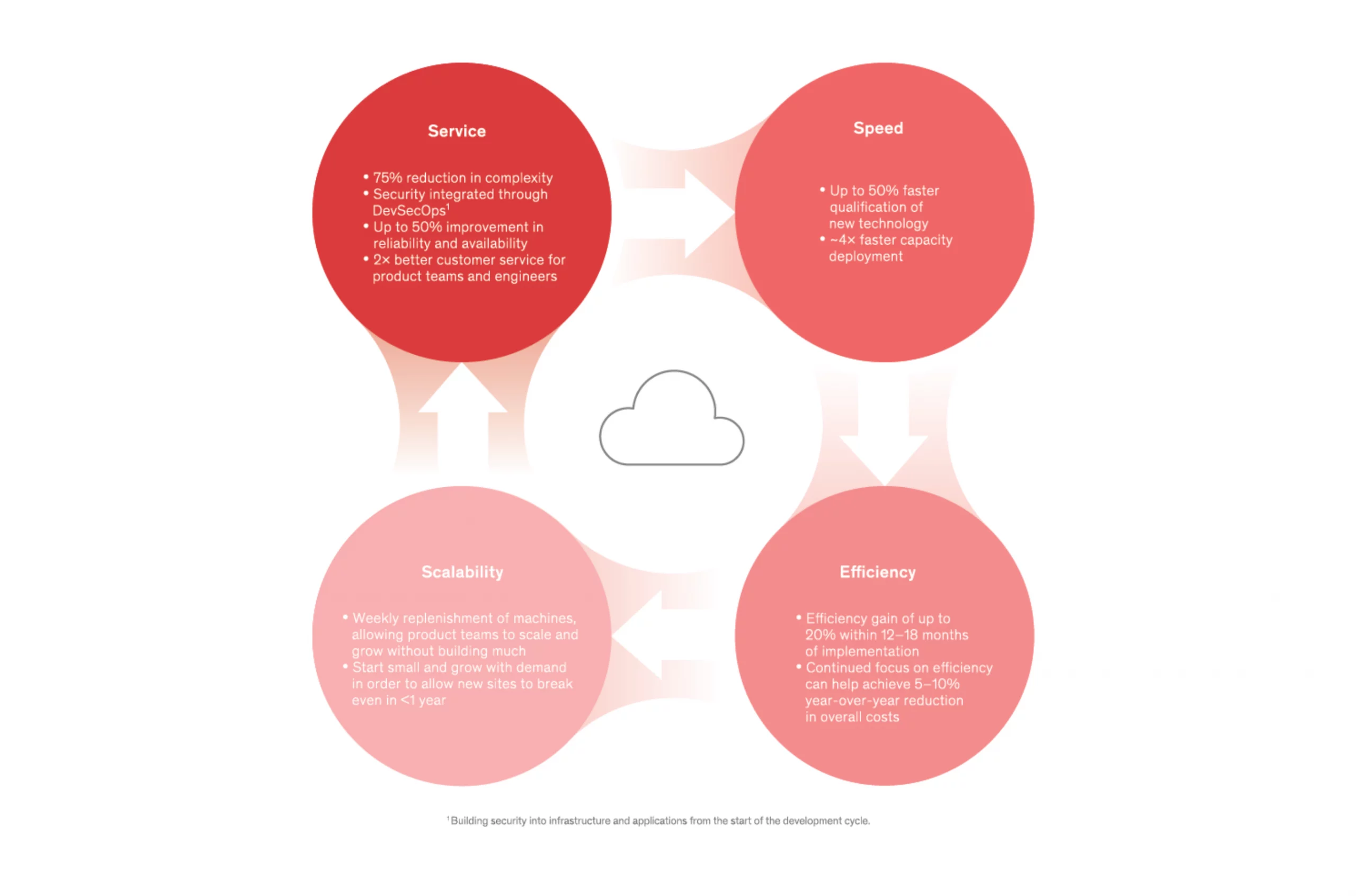
Using the hybrid multi-cloud to its full extent means experiencing extreme savings in labor and expenditures while fueling your capacity to deliver. The whole point of this venture is to improve the customer experience, and when you plan strategically, you will see massive improvement.

A Focus on Internal Infrastructure

There is an obvious gap between companies that can financially support an almost overnight switch from legacy systems to a hybrid multi-cloud. Amazon Web Services and Microsoft Azure have made it undeniably apparent when internal-infrastructure teams are not what they should be. 

Plain and simple, consumers appreciate the pricing transparency, delivery capacity, and overall journey taken with the public cloud and the perks it has to offer. Customers have become comfortable with relying on “hyperscale” companies (like Amazon) to deliver the latest technology and absolute best in customer attentiveness. 

Because of the massive success seen from operating on cloud technology, there is a substantial amount of attention drawn to those with internal-infrastructures. The cycle is far too long and capacity remains fixed, often with teams predicting business needs too many business quarters in advance. All of this increases the possibility of error. 

It’s not to say that those companies that run on an internal infrastructure don’t have some advantages. For example, they have a much more intricate knowledge of the company itself and the customer base. Because of these factors, it is easier for them to deliver an excellent total cost of operations in most cases. 

In short, those companies with internal infrastructure can find both hardware and software customer solutions. Internal infrastructure is not bad, but it shouldn’t inhibit growth into external infrastructure where it’s necessary.

The Answer: A Hybrid Data Center

A hybrid, world-class data infrastructure is the answer to finding the balance between companies that are hyperscale and those that rely on internal operations. There is no wrong or right way, but there is a way that comes highly recommended by tech and business experts around the globe, and that is finding a balance between legacy systems and the multi-cloud. 

It’s difficult for companies to harness operational agility by using the cloud only. Instead, they should be assessing the way their infrastructure is stacked and evaluating how it works. If they want to increase speed, reduce costs, and ramp up services, complete integration is required.

Hybrid Cloud Infrastructure

Moving to the Cloud Means Teamwork

While it might sound tacky, moving successfully to cloud services while keeping the necessary legacy systems intact takes teamwork. Every person on every team has to know their role and move forward with the company as a partner.

When you work on the same level as companies that place their focus on hyperscaling, you have to seriously upgrade your operations. Design and engineering talent will become an in-house necessity, and that’s just fine, because having the talent on hand makes it possible to continue to succeed in a hyperscale multi-cloud environment. 

The bottom line means embracing digital service, planning for capacity and taking a more strategic approach to sourcing. When your internal IT teams can manage all of the above, it means your company is well on its way to embracing a hybrid cloud environment and meeting customer expectations.

Driving Innovation Through Data Architecture

cauvery k Data and AI March 22, 2022
Data architecture

Data Architecture

Data architecture is more important than you might think to modernize your applications and drive team and company-wide innovation. Agility is the driving factor behind updating legacy systems and creating an overall successful upgrade. 

The data architecture of today demands flexibility and consistent innovation. However, it can be difficult for companies of all sizes to incorporate flexibility into their existing systems while focusing on deploying new data technologies to flow with the times. 

Consumer markets continue to drive external innovation, encouraging development teams to create ways to better connect with them. Predictive maintenance, real-time alerts, and personalized offers are options that consumers expect from their applications and the businesses they choose to utilize.

The Result of Technical Additions

Data architecture becomes more complex when companies embrace technical additions to older applications, such as stream processing and detailed customer analytics platforms. When data architecture gets too involved, it can create a data lake and hinder the ability of your organization to efficiently deliver new features and capabilities to consumers and ensure the integrity of your AI models. 

In short, too much data in the mix means inaccurate AI results and applications that cannot work correctly. Due to current market demand, slow systems are never an option. Today’s consumer is looking for speed and efficiency around every corner, and unfortunately, if your organization cannot offer them that, there is one right behind yours that can.  

So, how can you continue to build your data architecture without failing and super slow systems? As usual, the answer lies in technology and utilizing artificial intelligence and cloud migration. As companies increase the amount of sensitive and vital data they deem necessary to operate, cloud providers have focused on data modernization while launching features that make lives easier and new and old systems faster. 

If the amount of data you have is slowing down your business processes considerably, it’s time to look into how you’re stacking your data. Data modernization is essential to build a competitive edge successfully, and there’s no longer a way around it.

Shifting Your Data Architecture

Before we dive into the steps you can take to change your data’s architecture, it’s crucial to understand that cloud provider and serverless data platforms have become necessary regarding information storage and access. If you have zero intentions of moving your data to the cloud, you’ll find that you consistently fall behind, even if your data architecture is relatively sturdy.

We exist in a time where analytics tools are the key to success, and businesses need to market faster and with agility. There must be room for flexibility, and the only way to achieve that within your ever-growing data pool is to migrate to the cloud.

Practices such as adopting APIs will give you immediate information regarding your data lake and deliver it to the front-end analytics. The need for efficient data storage has been on the rise for decades and was merely amplified by the COVID-19 pandemic, when the world turned to the internet for, quite literally, everything. 

As we prepare to exist in what we can only refer to as our “new normal,” companies on a global scale must make significant shifts in the way they define, implement, and store data stacks. Leveraging new concepts, the cloud included, is the only way to do this and avoid system overload and failure. 

data architecture

Encompassing all Components

If you want to change the structure of your data architecture, you’ve got to step back and look at the situation from every angle. Making the necessary upgrades and changes to update each of your data activities is crucial. If you must, you can make significant changes while leaving your current data stack as is, but this may cause some issues later down the line. 

For the most part, companies will benefit the most from a complete and careful restructuring of the existing platform. This re-architecting will affect legacy systems and the new technologies you’ve undoubtedly added over the years.

Cloud-Based Data Platforms

If you’ve heard it once, you’ve probably heard it a million times. Switching to a cloud-based platform is the best method for hosting your data while providing your customers with the best experience possible. The cloud is complete technology innovation, and building on it correctly will provide your company with the tools you require to gain a competitive advantage. 

Serverless data platforms and containerized data solutions will enable your company to make better decisions based on accurate AI and human-powered information. Migrating to the cloud gives you the capability to revolutionize how you’re currently sourcing, deploying, and running your data infrastructure.  

Making the switch to a cloud-based platform is not a change you can make overnight, but it’s crucial to change. You cannot keep running on-premise legacy systems and expect to take your company and consumer interactions to the next level. When you utilize serverless or containerized data (or both), you’re taking a step into the future.

Real-Time Data Processing

In the not-so-far past, we processed data in batches. Typically these batches would provide insights that offered information that was a few days (if not weeks) old. While some of this data would prove helpful, it became difficult for business owners to understand where their business stood at the present moment. 

Real-time data processing offers a whole new take on analytics and informed business decisions. Other than access to more accurate data, the good news is that the cost of the platforms that offer real-time data services has dramatically decreased, enabling a whole new host of data capabilities.

Businesses need to remember that real-time data processing includes streaming services. So, not only does access to data as soon as it’s available benefit you (the business owner), but it offers plenty of perks to your clients as well! Examples of technology and AI that allows live data include messaging applications, streaming solutions, and alerting platforms. 

These options allow room within your data architecture, along with plenty of current (more accurate) feedback that can move you forward to higher innovative levels. You need technology that will inspire you to move in your business’s best interest, as well as your customers’ experience.

Moving to Modular Platforms

As frustrating as it can be, doing away with your outdated legacy systems is necessary. It might not be an immediate overhaul, as many businesses successfully operate within a cloud platform while keeping their legacy applications intact.

However, as time goes by, it becomes more difficult to find a balance between the two, which will likely encourage you to move from pre-integrated commercial solutions to the modular platforms that will best serve you and your data architecture.  

data architecture

There are open-source modular components available within the cloud that you can easily replace with new technologies as needed, all while keeping the rest of your data as is. Not only is this crucial to transitioning, but it’s an essential part of enabling new concepts for your data storage and access.

Rigid Data Models Become Flexible 

To successfully transition your data architecture into a system that adds ease and makes sense for your business, you’ve got to move from the rigid data models of yesteryear and leap into the future of flexibility. Pre-defined data models have become increasingly difficult to work with while expressing the inability to provide data that isn’t completely rigid. 

In short, the data development cycle is much too long, and businesses need access to insights as soon as possible. While changes can affect data integrity, a potent edge on the competition and extreme flexibility comes with denormalized data models and a “schema-light” approach. 

There are a few ways to make your data more flexible and readily available. Data point modeling, for example, will ensure that you can change your data in the future without extensive disruption. Graph databases are another way to access real-time capabilities and utilize AI to tap into your unstructured data, which can provide you with some incredible results. 

Technology services, such as the capabilities that come with Microsoft Azure Synapse Analytics, allow the flexibility of accessing standard interfaces and stored data simultaneously. Also, implementing JavaScript Object Notation will enable you to change database structures without requiring you to revise your business information models.

Getting Started

Building your data architecture in a way that drives internal and external innovation is easier now than it has ever been, though it still tends to prove difficult for businesses of all sizes. There’s no question that data technologies evolve quickly, seemingly at the speed of light, and this alone makes change beyond overwhelming for development teams.  

Your goal here is to determine which practices will assist you in evaluating and employing new technologies as they come, adapting to a mindset based on testing and learning. Look to create a data culture within your company, encouraging employee excitement regarding implementing new data into their everyday roles. 

Data, artificial intelligence, and analytics have concreted their roles in regular business functions. Technology leaders that take advantage of new approaches to data architecture are sure to weather the storm.

Using AI and Machine Learning for Better Customer Satisfaction

cauvery k Data and AI March 18, 2022
customer satisfaction with ai & ml

Customer Satisfaction with AI & ML

Without a high level of customer satisfaction, most businesses would cease to exist. There is no way to survive in today’s all-around competitive environment without establishing the role you play in your customer satisfaction with ai & ml are the ways that artificial intelligence and machine learning can yield better results.  

Currently, artificial intelligence is one of the leading technology trends, growing in leaps and bounds and gaining the attention and affection of business owners and marketing teams across the globe. Most brands today prefer to deliver a personalized approach to customer service, and in markets that continue to oversaturate with options, it’s an ideal choice. 

It’s not to say that artificial intelligence should replace the relationships you build with your customer base as much as it should enhance it. With AI-run CRMs (customer relationship management) and CDPs (customer data platform), your business can move ahead of the competition by leaps and bounds.  

The best part? AI no longer comes with a sky-high price tag, letting businesses build through AI and ML without breaking budgets. In reality, most tech leaders are utilizing AI technology, and it shows no signs of slowing down, with substantial projected growth within the next five years. 

So, now that you know that it’s likely quite affordable for you to experience the benefits and perks that come with employing AI when it comes to your customers, how should you do it? While no business is the exact same, particular methods and utilization techniques will ensure you’re using AI to its fullest extent concerning customer satisfaction.

Understanding Your Customer

You cannot sell to a demographic that you don’t understand. The combination of artificial intelligence and machine learning can fuel your understanding of your customer while making them feel seen. customer satisfaction with ai & ml It might seem silly, but customers want and expect to feel heard when dealing with any business. If you can tailor your AIML technology to align with that need, you’ll notice growth without question.   Historical and behavioral data are often tracked by artificial intelligence, and unlike traditional analytics software, these tools can gain a much more extensive understanding of customer behavior. Keep in mind that AI is always learning.  AIML consistently analyzes new information and combines it with what it already knows to develop solutions and recommendations. Because of the ability of this incredible technology, business owners and marketing teams can predict the behavior of their past, current, and prospective customers.  When you expect your customer to act in a specific way, you can fully align your content calendar with relevant topics. This targeted content alone will raise the opportunities you have to make sales while increasing social interactions and engagement, kicking off your customer journey the right way.  Connecting with your clientele personally has become essential in the era of options and transparent social feeds. When you establish a connection, you can build trust, and in most cases, that trust results in loyalty. Brand loyalty on behalf of the consumer is imperative to business growth and survival.   Remember, you don’t have to be fully present to begin building that connection, as the employment of AI will jumpstart the outreach and response process for you. When combined with NLP, or natural language processing, we can improve interactions and gain valuable insight.

Predictive Behavior and Decision-Making 

In the past, making essential business decisions typically included massive piles of spreadsheets and printed data analysis. Of course, these papers moved to a digital platform with the invention of computers and the evolution of technology, it still took a long time to go through the presented data. 

Today, decisions are made in real-time and, for the most part, fueled by data collected and presented by artificial intelligence. Machine learning has become such a massive part of the customer experience, and this includes influencing the way you make decisions for your business that directly affect your customer base. 

A fantastic example of data presentation in real-time could be the saved interactions that take place between your customers and your AI messaging system. Not only is this technology easy to implement, but it gives you an excellent idea of what the customer is thinking and feeling, heavily based on their responses to straightforward questions regarding their experience. 

When “speaking” to your customers, AI can make decisions related to the responses your customer is typing and base those decisions on similar customers it’s experienced in the past. From personalized recommendations to recognizing and understanding intent, there is little that AI cannot do to move us forward toward our goals of stellar customer service. 

When engaging with AI, customers are often presented with the opportunity to view content curated just for them. There are few better ways to gain sales and new, dedicated customers. Every interaction with your company is an experience, and you want it to be great every time, even if the customer is showing up with a complaint. 

Machine learning works heavily, especially in real-time data, with the concept of predictive customer behavior using data mining, modeling, and statistics. AI doesn’t come up with its answers out of the blue but instead relies on what it already knows to learn even more. AI understands when and how to interact with your customer, and though AI never comes with a lack of complaints, this is where it truly shines. 

If deeper insights are what you need, then AI is the choice you want to make. Predictive analytics go much further than historical information alone, making AI a powerful tool in the customer experience. When using AI correctly, you’re more likely to generate a sale and provide your customers with various ways to form an emotional connection to your brand.

The Pros and Cons of Chatbots

Though chatbots have been around for quite some time in various forms (the help tool on AOL Instant Messenger comes to mind), companies have only begun to use them to interact with customers in recent years. There are many ways to tailor your chatbot, whether you want it to act merely as customer contact or solve mild to moderate complaints.

Today, many businesses employ the use of chatbots to monitor customer interactions, and that number continues to grow as chatbots become more intelligent and efficient. While AI is a fantastic way to interact with your customers, you must remember that you are not providing a substitute for human interaction but more of a placeholder.

customer satisfaction with ai & ml

Yes, customers absolutely want the tailored experience that a chatbot can offer by gathering information, comparing it to past experiences, and predicting how a customer will behave. However, consumers are more than familiar with a company’s use of AI, and they know when they’re not dealing with a human. In many cases, the interaction will result in the need for human contact. 

Utilizing chatbots in your business is all about finding a balance between artificial and actual human interactions. While NLP has made it possible for chatbots to interact successfully while solving various transactional issues, nothing understands your product as entirely as you do. At times, you’ll have to step in.  

Today, chatbots no longer fail when presented with separate topics during one conversation. They can juggle a stream of random questions without issue, providing a service that rivals human contact to an extent. Still, it’s not a replacement for you. 

To fully enhance your customer’s journey, you’ve got to find the perfect combination of artificial and human intelligence to address your customer needs. Once you step in, you’ll have full access to the data collected by your AI, giving you even more ammunition to make your customer’s experience a fantastic one!

Personalizing Your Customer Experience

Your customers already know that you have other customers, but they want to feel that their business is appreciated and essential. Let’s face it, every sale is important, and through hyper-personalization, AI makes it possible for us to convey that to our clients.

AI uses data in real-time to deliver content specific to the current customer’s experience, creating an incredibly convenient way for consumers to interact with your business. Gone are the days of flipping through page after page of products and content.

Instead, you can utilize AI and create the ultimate customer experience through product, service, and content recommendations. Customers despise entering repeat information, such as shipping and email addresses or telephone numbers. When your AI performs a task as simple as filling that information in for them, you’ll be ahead of the game regarding customer satisfaction. 

Customer Service AI Challenges

It’s not to say that AI comes without challenges because we all know that there are plenty. Those challenges aside, recent years have proven that AI isn’t killing jobs or collecting information to use in nefarious ways. 

When used correctly, AIML can absolutely take your customer experience to new heights by creating a targeted and personalized experience from one customer to another. It’s time for your business to take advantage of predictive analytics and super customized customer experiences, thereby improving your customer journey as a whole across all active channels.

MLOps and the Future of Machine Learning

cauvery k Data and AI February 24, 2022
ML Ops

While the compound term ML Ops can sound daunting and confusing at first, especially when things in the tech industry are forever changing, it makes complete sense when it’s broken down into terms we already understand and have become accustomed to using. Simply put, MLOps is the combination of “machine learning” and “DevOps” or development operations. 

MLOps aims to maintain machine learning models within the production industry through reliability and efficiency. The goal of ML Ops is to harness discipline and development in machine learning, which is more than necessary in this aspect of technology and data. So, now you might be asking yourself, but what exactly is MLOps? Let’s break it down a little further.

What is MLOps?

Human beings are creating a large amount of data by the second. While this is fantastic for data analysts as a whole, acquiring huge data amounts and breaking it down to help fuel the way businesses operate are two completely different concepts. It’s all about scaling our machine learning systems and operations to the needs of our businesses. This scaling is the purpose of MLOps.

MLOps encourages communication and collaboration between data scientists, automating the deployment of machine learning in more extensive operations. ML Ops aligns models with the needs of your business and is becoming an independent way to manage machine learning systems that applies to the complete ML life cycle.

MLOps covers the following phases:

Ml Ops

When the MLOps cycle finishes, it restarts again in a constant reassessing and retraining data. Without insight, MLOps seems completely aligned with DevOps, but the two approaches are quite different in reality. 

For example, MLOps is a bit more experimental than DevOps. ML encompasses continuous integration, continuous deployment, and continuous testing. MLOps seeks to keep rolling out models and predicted algorithms without losing precious time while focusing on retraining for optimal predictions and outcomes. MLOps works well within many companies to manage models, experiments, data sets, and software containers. The power of machine learning is great, and through correctly applying MLOps, we can begin to harness it.

The Clear Benefits of Implementing MLOps

There are many benefits of implementing MLOps, as if it’s done correctly, it can control more components than your typical DevOps model. Ignoring MLOps is a huge mistake for any company. It can be frustrating at first, as more roadblocks than clear paths will pop up during the beginning of the implementation process. 

However, the perks of adopting MLOps are undeniable, and they include increasing productivity and building reliable and trusted data models. There’s no question that companies correctly leveraging MLOps are genuinely making an impact in their business and industries.

Communication

Data science and operation teams can come together under the MLOps model, like the frequent friction between them lessens. Through MLOps systems, you can establish flexible data pipelines that will enhance your current development operations systems in place.

Automated Workflows

One of the most significant factors that drive machine learning is the desire to create efficient but automated workflows. Automated, streamlined changes are crucial as shifts in data occur, preventing lags and development hold-ups. MLOps will measure the model’s performance while operating, consistently monitoring behaviour and operation processes.

Outcomes

Explainable AI helps outcomes make sense and lets us know when your machine learning application might be wrong. Not only does this fuel business growth, but it enables you to serve your customer base more efficiently.

Compliance

As machine learning guidelines grow increasingly strict, MLOps can alter models to comply with new guidelines through reproduction processes. As the rules evolve, your models can still play by them without being completely dismantled and restructured.

Feedback

MLOps offer clear feedback when it doesn’t seem possible. ML analytics can often seem completely undecipherable, slowing down training or leading to complete system failure. MLOps can detect the blips that happen in ML technology and understand why that blip occurred, providing you with the information you need to keep it from happening again.

Bias Reduction

Bias reduction is an essential component of machine learning, as bias is rampant without operation management in place. MLOps can guard against certain biases during development, creating systems that avoid extreme rigidity in their reporting. By doing this, MLOps provide reliability and trustworthiness to your company and the machine learning systems you utilize. It’s all about having a better understanding.

Understanding MLOps

In general, MLOps aren’t understood by many, but their implementation has a strong impact across industries, assisting machine learning in growing into a respected aspect of software development. MLOps fuel the future in creating practical machine learning that requires less human intervention. 

If you’re wondering how to integrate MLOps into your current operation, you’re not alone. The software that engages machine learning is growing with no end in sight. Without operations to hold that software responsible, it’s impossible to respect the provided results as the risk for error is too significant. 

MLOps will motivate your teams and suggest collaboration on projects, primarily within the workflow between data and development teams. It’s time to embrace effective machine learning and optimize the lifespan and performance of your models. When it comes to developing MLOps, you’ll want to implement the following steps:

MLOps brings teams together while automating, auditing, and managing model interpretability. MLOps aren’t exactly easy to employ, but they’re well worth the time spent.

The MLOps Results

Companies on a global level can share the results they’re seeing with MLOps, which allows for a broader working knowledge regarding machine learning in an open-source environment. Various fields, including healthcare, public transportation, engineering, manufacturing, and safety, have begun MLOps integration. 

In the long run, a well-adapted MLOps strategy can lead to more productive, accurate, and trusted models. It’s impossible to succeed when you’re operating out of a siloed model mess, even when the processes are automated. Effective machine learning is the best path to take.

Improving Automated Software Testing with Explainable AI

cauvery k Data and AI February 17, 2022
Software Testing Using Artifical Intelligence

Software Testing With Artificial Intelligence AI

Testing in software is essential to ensure that systems are running as they should while producing the desired results. Since systems and applications that use machine learning are notoriously challenging to test, there is plenty of room to fix automated software testing with Artificial Intelligence (AI).

Applications that utilize machine learning and AI are typically black boxes, meaning even those that created them have difficulty explaining data results and behavior. Also, given the layers of algorithms present, there is no way to determine if the results they supply are correct. Explainable artificial intelligence may just be the answer needed to any impending AI black box software test.

What is Software Testing?

The definition of software testing is the process of verifying and evaluating that a software application performs the way it’s supposed to perform. However, when we introduce artificial intelligence into automated applications, it can become tough to understand if the given results are correct.

An excellent test management plan can prevent bugs, improve performance and reduce development costs. When machines are learning on their own and algorithms are constantly changing, test results can look completely different than testers might expect. The good news is that it’s entirely possible to test AI and ML applications with explainable AI.

A Look Into Explainable AI

Explainable AI is essentially a type of artificial intelligence that provides system results that humans can understand. Explainable AI contrasts sharply with black box AI systems, where even the designer cannot explain why the AI came to a specific decision. Explainable AI can help us make sense of outcomes, and therefore, test to see if the software in question is making the right decisions.

Development teams worldwide that implement AI should be well-versed in explainable AI. Most companies are all about testing their software, and explainable AI is the way to go in that respect. Here are just a few benefits of explainable AI.

Model Accuracy

Explainable AI determines the accuracy of working AI and ML systems. Accuracy is crucial in any field, primarily medical, as the results our ML applications are giving us have to be correct.

Fairness

Many business owners (and consumers) across the board worry about fairness regarding artificial intelligence. Explainable AI can level the playing field by helping to produce results that make sense. As new AI regulations take hold, righteousness is one of the main talking points.

Transparency

Along with fairness comes transparency. Every business using artificial intelligence needs to have complete transparency. Clarity for consumers and fellow business owners is vital to maintaining a good reputation and providing consumers with correct answers. Explainable AI helps maintain transparency by explaining something we might not understand, providing accurate, solvable data.

Outcomes

Explainable AI helps outcomes make sense and lets us know when your machine learning application might be wrong. Not only does this fuel business growth, but it enables you to serve your customer base more efficiently.

The Importance of Testing Software

Regardless of industry, testing software is essential. First and foremost, IT testing saves money, and you can utilize communications between teams to catch problems before systems go live when you know how your applications perform.

Testing also improves consumer relationships by investing in your software. Knowing your software works before a launch solves potential frustrations, and explainable AI is a massive piece to that puzzle.

Testing software improves overall security, and it should go without saying that security issues with AI and ML applications can grow out of control when data outcomes aren’t understood. Failing software sacrifices both user experience and important personal information. 

Finally, testing your software improves the quality of your product. There is no way to tell if a product is good until it’s tested, and if you’re utilizing layers of artificial intelligence, you need explainable AI to help test software.

Explainable AI: The Beginning

Regarding how deeply we could go into the world of AI and explainable AI, we still, as a society, have only dipped our toes in the water. There is so much that artificial intelligence can do for us, but when we don’t understand the answers, it remains irrelevant and even dangerous.

Explainable AI is perfect for automated, artificially-run operating systems. Not only are you making life easier for your employees and teams by automating tedious tasks, but you’re also ensuring that you get accurate data results from your AI by adding explainable AI.

This fascinating and productive technology has the potential to add complete, understandable accuracy to current AI applications. Though explainable AI is in the semi-early stages, companies need to better understand their automated systems. Results for internal and external data require accuracy, and explainable artificial intelligence is the answer.

Understanding How to Identify and Manage Big Risks with AI

cauvery k Data and AI February 10, 2022
Artificial Intelligence AI

There is no question that the future of artificial intelligence and AI technology is bright. However, many organizations are just beginning to mitigate the potential risks of AI and outline a solid framework to deal with those risks.

Artificial intelligence brings about the opportunity for ethical operation issues, and it’s not overlooked that companies could potentially create a bias through the use of AI. For example, both the EU and FTC have enforced regulations regarding artificial intelligence and the inequities that may result from utilizing it.

Before we discuss the risks that come with artificial intelligence, it’s crucial to grasp what it is and what it can do for your business. When you have the correct information, you can prepare risk management accordingly.

What is AI?

If you find yourself wondering what artificial intelligence encompasses, you are not alone. There are many aspects of AI that we use today, both in our professional and personal lives. Every time you ask Alexa a question or tell her to play music or your favorite podcast, you’re engaging with artificial intelligence.

Of course, Alexa doesn’t encompass everything artificial intelligence can do, but it’s a fine example of how we use it regularly. Also, consider when you log onto a company website and ask their chatbot a question. Chatbots are fueled by AI and are a stellar example of how artificial intelligence can take business operations to the next level.

So, the answer to what’s artificial intelligence is simply this:

Artificial intelligence combines science and potent, human, and computer-powered databases that enable problem-solving.

AI technology works in all aspects of our lives, and it definitely makes things easier. However, it’s easy to see where this might become an issue for businesses, primarily significant corporations, that have access to better AI technology and thus have the option to use it unfairly, hence the ever-evolving regulations.

The Risks of Artificial Intelligence

It can be challenging to determine the aspects of AI you want to use for your company and best mitigate the risks within the territory. To control the risk factor, you first have to know them.

Unauthorized Introduction

As companies digitize and switch from old legacy systems to cloud-native applications, there is the potential to introduce artificial intelligence without your development, security, or AI team knowing. Understanding the potential for your employees to, advertently or inadvertently, use unauthorized SaaS applications at work means you can minimize that risk.

Biased Decision-Making

One of the biggest risks of companies regularly implementing AI is the introduction of a decision-making bias into significant platforms and algorithms. AI systems learn on a specific data system, that being the one in which they were initially trained. If that set of data reflects biases or assumptions, AI can then influence system decision-making.

Lack of Transparency

Most companies utilize AI systems to make better business decisions automatically, whether that be from an internal or customer service standpoint. However, the algorithms that come with AI implementation can often become so complex that those responsible for their creation cannot explain it.

AI specialists refer to this phenomenon as the “black box.” Unfortunately, transparency is crucial to good business, and AI can sometimes make that impossible, such as an automatic rejection for a bank loan that should have a stamp of approval.

Legal Responsibility

The issue of legal responsibility concerning AI is a risk for businesses because the topic itself contains many blurred lines. Machine learning can easily encourage a poorly designed AI system to refine itself, making it near impossible to assign legal responsibility if and when things go away.

Protecting Personal Privacy

Regardless of the industry of your business, your customers rely on you to protect the personal information they give you. There are endless amounts of structured and unstructured data that AI systems can manipulate, and when data breaches inevitably occur, your reputation is at stake. Top-of-the-line security measures using artificial intelligence are essential.

Managing Artificial Intelligence Risks

Now that you know the major risks that come with artificial intelligence, you can begin to figure out how to control them when it comes to your company and operations. Perfectly honing your risk management expectations and implementing security measures company-wide can help, but it’s not always possible to have complete control over our AI systems.

The use and growth of AI tools are unavoidable. While the risks are substantial, it will remain near impossible to manage those risks unless we take on the responsibility of learning more about AI systems.

artificial intelligence AI

Adopting Frameworks to Manage Risks

There is no denying that your company has to adopt and enforce a solid framework for managing AI risks. The more you focus on managing risks, the more successful your long-term AI investments will be, creating value without unwanted material erosion.

Prioritizing the management of artificial intelligence risks on an individual level is part of a greater movement to understand what AI can do for us and how we can control it to make it better. Familiarity with AI is truly a group effort. The more we can pinpoint how it will evolve in active use, the easier it will be to dodge the more considerable risks associated with long-term AI use for business.


Nexus logo

Get Started with NexUs Today!

NexAssure logo

Get Started with NexAssure Today!

NexDox logo

Get Started with NexDox Today!

NexOps logo

Get Started with NexOps Today!

NexAA logo

Get Started with NexAA Today!

logo

Let's talk about your next big project.

Looking for a new career?